-
Posted by Simon Gravenall
- |
-
25 Sep, 2026
THURSDAY was World Maritime Day. The International Maritime Organization theme is From Policy to Practice.
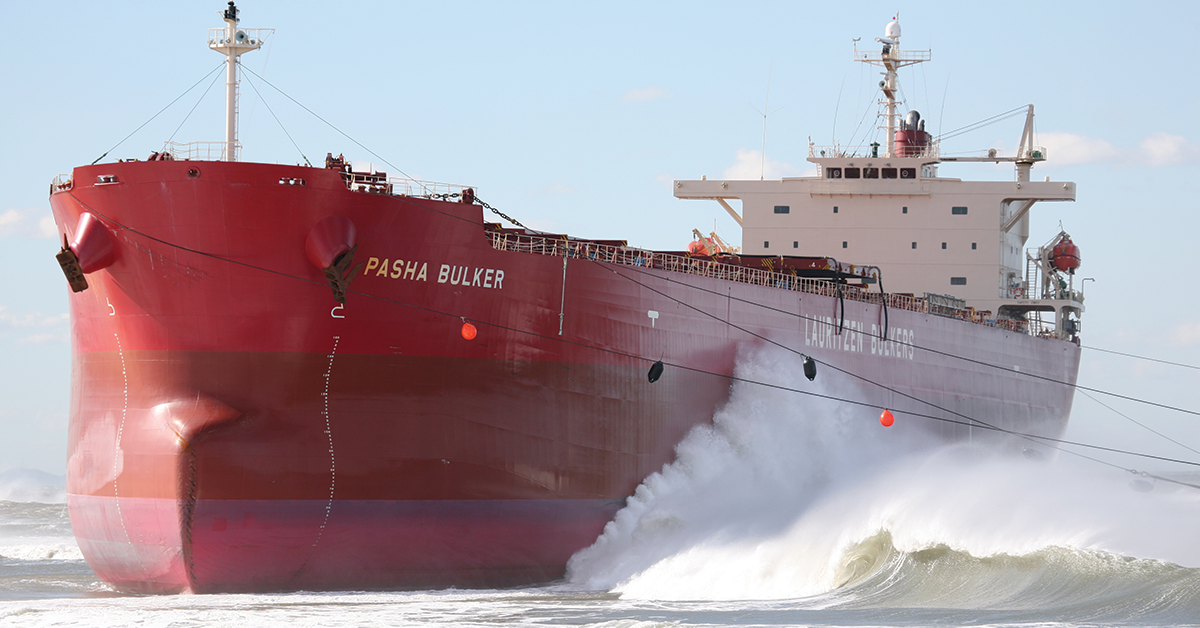
Last Friday a laden Capesize went aground off Gladstone. Four days spent getting a salvor on board is the delay we keep choosing. Would a salvor on day one have refloated her sooner? We don't know, and in hindsight we never will.
The MERCOM powers took their current form in 2006, just before the Pasha Bulker incident. I have been making the same point since.
Call it the Pasha Clause. An agreement with a salvor in place before the ship arrives, mobilised day one, not negotiated from scratch while the ship sits on the ground. The plan always comes from the casualty. The agreement is what you arrange in advance.
It does not need Canberra. Ports and terminals can require this today. That is their commercial right. Other ports have been talking about it. Now one has done it. Port Hedland already requires a salvage plan. It is just not connected to a salvor. That is the missing link, and a port can close it on its own. Start with a full risk audit. Have it verified by an independent party.
On cost, an agreement gets you a reasonably-priced tug, not the spot market arrangement you get when you are ringing around mid-casualty. The insurers can see the value. So a question for the International Group of P&I Clubs. Does that not lead to lower premiums?
So what is the relief worth? To the owner trying to get their ship back. To the charterer. To the port the cargo was bound for. To the receiver whose plant runs on it. That is the whole maritime supply chain, and every day of delay adds cost.
A suggestion for port CEOs. Go to your marine team and ask what your risk plans and response are based on. If the answer is oil, you have a problem.
Through the IMO we have improved the ships. Since 2010, ships of roughly 25,000 tonnes and above have been built with bunker tanks engineered inside the hull, protectively located and capped in size. Sixteen years of newbuildings designed to survive a low speed grounding without spilling.
The Australian Maritime Safety Authority MERCOM powers turn on an actual or imminent threat of oil pollution. We have engineered that trigger out. Do not expect MERCOM to ride in on a white horse and direct an owner to appoint a salvor. The industry needs to ask government to extend those powers to other maritime casualty events.
So what about the port? The trade. The operation. The disruption. If your response framework hangs off a pollution threat, none of that has been accounted for.
Then ask your marine team three more things. Have you taken this into account? Have you built a plan to minimise it? Have you tested it?
And the one that matters most. Who verified it? Handing it to your own harbour master to review their own work is not verification. It is a harbour master looking in a mirror and agreeing with themselves.
This is a contributed opinion and the views or opinions expressed in this article do not necessarily reflect those of Daily Cargo News.