
Rail industry strives for harmony … but a long way to go
-
Posted by Max Berry
- |
-
30 Jul, 2026
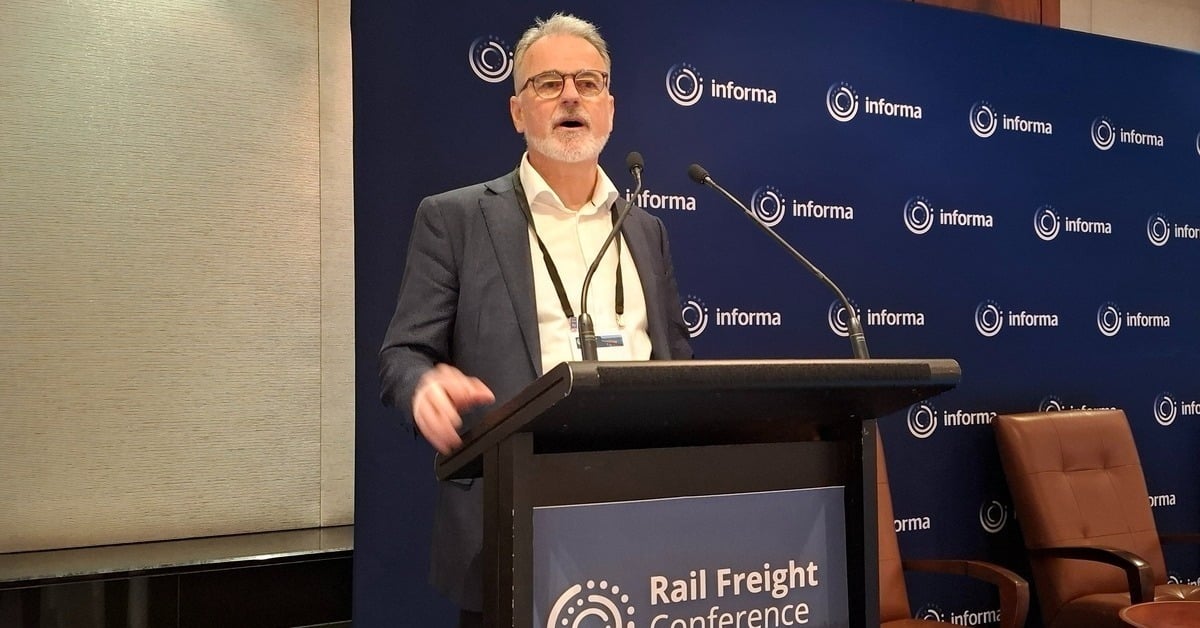
THE QUEST for a strategic national approach to rail freight was a recurring theme among speakers at Informa’s Rail Freight Conference in Melbourne this week (29-30 July).
From integrating Australia’s disparate state-based networks and multiple [said to be 18] track managers to finding a path to interoperability of rail operator assets across networks, rail industry leaders lamented the continuing fragmentation of Australia’s rail freight networks and the transfer of freight from rail to road it continues to cause.
“We need a framework and system-level view, not a list of projects,” Infrastructure Australia chief executive Adam Copp told the conference in the first keynote, noting that freight projects comprised two of IA's five highest priority projects.
“Because ultimately, Australia's future freight productivity will be determined less by individual projects and more by how effectively our freight system works as a whole. Australia's freight task is continuing to grow,” Mr Copp said.
“And over the next 25 years, thanks to population growth, Australia's domestic freight task is set to increase by at least 26%.”
National Transport Commission CEO Michael Hopkins told the conference that the push for interoperability through rail standards harmonisation – for example in signalling and train radio communications – was driven by the rail industry, not government.
“It’s not often you get an industry come to you [in government] and say, ‘I think we need more regulation’. But to get more interoperability that’s what happened,” Mr Hopkins said.
Launched in 2023, the rail standards harmonisation project is now under way across the National Network for Interoperability, Mr Hopkins said, “but there’s a long way to go”.
But a detailed presentation from Paul Williams, Pacific National’s head of technology transformation, relating the rail operator’s experience with electronic train control systems (ETCS) showed the barriers to achieving interoperability.
An industry discussion paper suggested rail operators did not need to adopt the expensive ETCS if they could demonstrate equivalent outcomes from other train control systems.
“Where we ended up, pretty quickly after that actually, was the the communiqué from the meeting of ministers of transport and infrastructure that … mandated ETCS conformance as the sole interoperability pathway for the National Network for Interoperability," Mr Williams said.
“So we started with a model that said interoperable outcome-focused, and we ended up with a conformance to a very specific and very tight functional specification called ETCS. “So what we've moved from is an equivalent outcome to a mandated conformance.”