-
Posted by Allen Newton
- |
-
21 Oct, 2026
CONTAINER shipping networks are being reshaped by conflict, drought, extreme weather and shifting trade policy, with freight forwarders warning that global supply chains are now facing multiple, overlapping disruptions rather than isolated events.
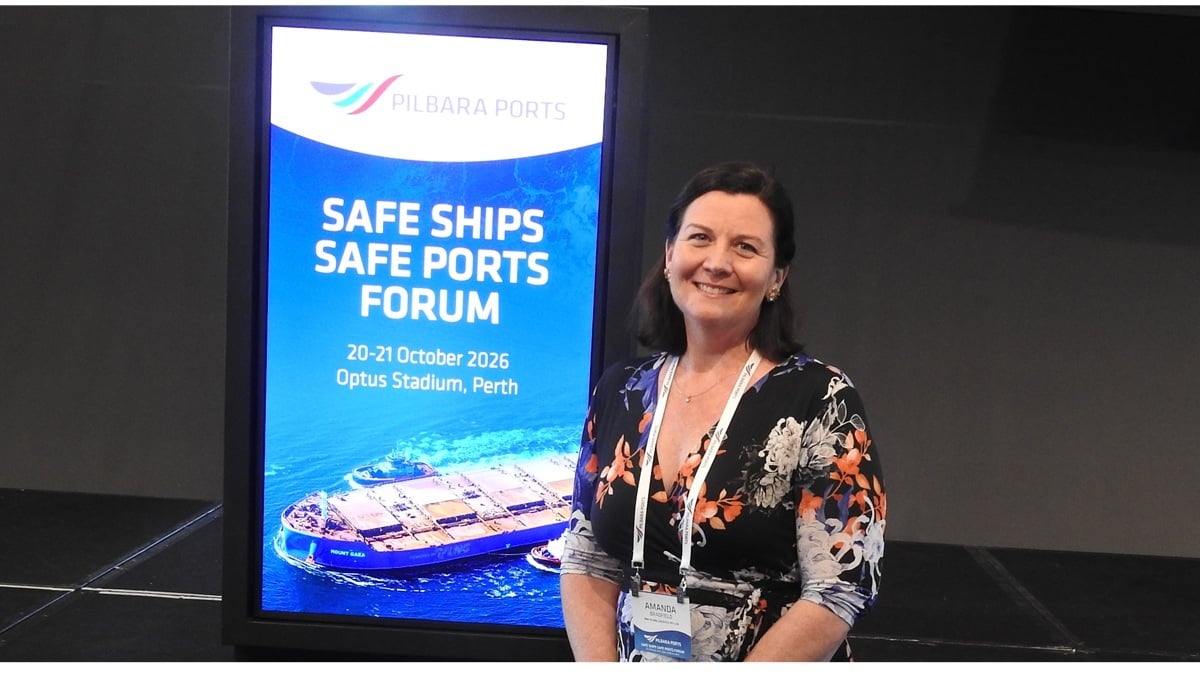
Speaking at the 2026 Safe Ships, Safe Ports Forum in Perth, Fremantle‑based freight forwarder Amanda Bradfield, director of End to End Logistics, said the industry must prepare for “the next inevitable change” as conditions that shipping relies on continue to shift without warning.
Ms Bradfield said containerised shipping — already operating with tight schedules and limited spare capacity — is being forced to adapt to a series of crises that have altered major trade routes, extended voyage times and increased costs across the supply chain.
“What I want to focus on today is what happens when the conditions that we rely on begin to change, how shipping responds, and what that means for our industry,” she said.
Red Sea crisis: 1066 days of disruption
Ms Bradfield said the Red Sea crisis remains one of the most consequential shocks to global container shipping. Since Houthi forces attacked the vehicle carrier Galaxy Leader in November 2023, carriers have diverted services away from the Bab el‑Mandeb Strait, adding 10–14 days to Asia–Europe voyages and reducing effective network capacity.
Although some services have begun returning to the Suez Canal, weekly container capacity through the waterway in early October averaged 753,000 TEU — just over half of pre‑crisis levels.
Strait of Hormuz: no alternative route
Ms Bradfield warned that the Middle East conflict has created a more severe challenge in the Strait of Hormuz, where around 20 million barrels of oil move daily. For these volumes, there is no viable alternative to the Strait of Hormuz, whereas shipping can bypass the Red Sea..
The sinking of the container ship GFS Pride on 13 October and more than 113 confirmed incidents recorded by the IMO highlight the scale of risk to crews and vessels.
“Seafarers are being injured or killed, vessels are being damaged or destroyed, and crews are facing the very real dangers of working in an active conflict zone,” Ms Bradfield said.
Panama Canal: drought reshapes global flows
Ms Bradfield said drought‑driven restrictions at the Panama Canal have forced carriers to reduce cargo loads and compete for limited transit slots.
Daily transits fell from 36–38 to 22 during the 2023–24 drought, with auction prices for guaranteed passage reaching US$5 million.
The shortage of water has pushed some operators to reroute via Cape Horn or the Strait of Magellan, adding fuel costs and sailing time.

Black Sea: grain exports collapse
The war in Ukraine continues to disrupt Black Sea shipping, with attacks on ports and commercial vessels pushing cargo onto constrained Danube routes.
Ms Bradfield said Black Sea wheat loadings fell to 1.6 million tonnes in September 2026 — 78% lower than the previous year.
Recent drone attacks have extended risks into the western Black Sea, sinking vessels and leaving seafarers missing.
South China Sea: geopolitical tension over critical corridor
While still open, the South China Sea remains a high‑risk region due to escalating confrontations between China and neighbouring states.
The corridor carries 43% of global seaborne oil shipments and 34% of global LNG, making any disruption potentially severe.
Weather shocks: typhoons and river droughts
Ms Bradfield highlighted extreme weather as another major disruptor.
Typhoons Bavi and Dolphin removed 500,000 TEU of capacity from China’s major ports in two weeks.
Exceptionally low water levels on the Rhine forced barges to reduce loads and diverted freight to road and rail.
Piracy resurgence off Somalia
After years of decline, Somali piracy has re‑emerged, coinciding with vessels diverting around Africa to avoid the Red Sea.
Six commercial vessels have been hijacked since April, with more than 90 seafarers held captive at one point.
Trade policy: tariffs reshape supply chains
Ms Bradfield said geopolitical trade measures — including US tariffs and China’s proposed export controls on AI and chip technologies — are reshaping manufacturing patterns and shipping routes.
Global trade reached US$35 trillion in 2025, but supply chains remain deeply interconnected, meaning changes in one region ripple across multiple markets.
Costs rising across the supply chain
Ms Bradfield said disruptions are driving up fuel consumption, emergency fuel surcharges, risk surcharges, freight rate volatility and inventory costs due to longer transit times.
With only 0.9% of the global container fleet idle in October 2026, delays quickly cascade through ports and networks.
Industry response: visibility, options, flexibility, relationships
Ms Bradfield concluded that shipping companies and cargo owners must focus on four fundamentals:
-
Visibility across the supply chain.
-
Options for alternative routes or modes.
-
Flexibility to adjust schedules.
-
Relationships that support rapid problem‑solving.
“We can’t control what happens around the world, but we can control how prepared we are to respond,” she said.