-
Posted by Allen Newton
- |
-
06 Jul, 2026
BHP MINE-site workers have voted to accept a new enterprise agreement, but a dispute at the Port of Port Hedland is unresolved.
The new enterprise agreement is for BHP’s Mining Area C and South Flank operations, which eases pressure across two of the Pilbara’s biggest iron‑ore hubs — but the dispute at Port Hedland, the world’s largest bulk‑export port, still threatens WA’s export supply chain.
Workers at the two mine sites voted to accept a revised agreement that delivers a 16% pay rise over four years, improved allowances and a new delayed‑flight payment scheme.
The deal stabilises conditions for more than 1800 employees across BHP’s inland operations.
However, the settlement does not extend to Port Hedland, where negotiations between BHP and three unions — the Electrical Trades Union (ETU), Australian Manufacturing Workers’ Union (AMWU) and the Australian Workers’ Union (AWU) — remain ongoing. Together, these unions represent roughly 450 port workers across maintenance and production roles.
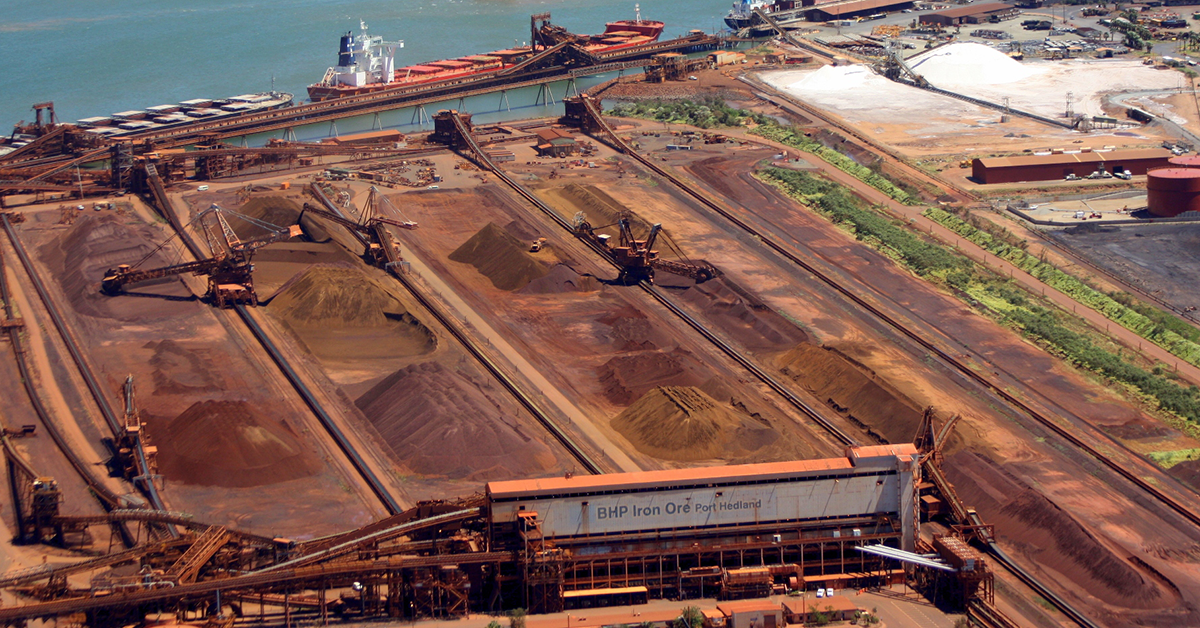
Port Hedland handles more iron ore than any port in the world, and BHP’s berths form a major share of its throughput.

Industrial instability at the port carries significant operational risk.
ETU and AMWU members have already voted overwhelmingly in favour of protected industrial action, authorising stoppages ranging from 30 minutes to 24 hours. The AWU is finalising its own ballot through the Fair Work Commission.
With protected action authorised, unions can issue five days’ notice before implementing stoppages, bans or work‑to‑rule measures. Even short disruptions can affect: vessel scheduling; tidal‑window movements; stockpile management; ship‑loading efficiency; demurrage costs for carriers; and overall export volumes.
BHP has acknowledged the seriousness of the situation. In an official statement, a company spokesperson said BHP is focused on reaching an agreement that maintains “industry‑leading pay and conditions” and confirmed it has “strong contingency plans in place to protect our people and ensure safe, reliable operations can continue.”
The company has previously warned that a full shutdown of Port Hedland could cost more than $120 million per day, underscoring the scale of the risk.
The unions say the mine‑site agreement shows progress but does not address long‑standing concerns specific to port operations. They argue that workers at Port Hedland remain on disparate individual contracts despite performing identical work, and are seeking: consistent conditions; transparent classification and progression structures; enforceable rights; and improved job security.
Union leaders say they will continue pushing for a Port Hedland agreement that reflects the complexity and critical importance of port‑side work in BHP’s Pilbara supply chain.
While no industrial action has yet occurred at Port Hedland, the authorisation of protected action means the port remains the centre of gravity in the dispute.
Any disruption — even brief — can ripple through the Pilbara export chain, affecting carrier arrivals, tug and pilot scheduling, and the port’s carefully managed tidal windows.
The mine‑site agreement reduces immediate pressure inland, but full stability will only return once Port Hedland negotiations are resolved.