-
Posted by Allen Newton
- |
-
30 Sep, 2026
Franmarine’s Fremantle pilot is testing controlled in-water hull cleaning under strict biosecurity rules, offering regulators a national model as rising vessel traffic and tougher global biofouling standards reshape maritime maintenance.
AUSTRALIA’s maritime biosecurity system is entering a new era — one defined by rising vessel movements, climate-driven pest spread and a global shift towards mandatory biofouling management.
A key player in this shift is Franmarine, a West Australian underwater sustainment company now six months into the country’s first commercial inwater hull cleaning pilot.
The Fremantle pilot is more than a local trial. According to CEO Adam Falconer-West, regulators are viewing the framework as a template for national adoption.
“This is being viewed by stakeholders as a model that can be replicated out into other jurisdictions and port authorities, both domestically and internationally,” he said.
The pilot allows Franmarine to clean vessels in port waters under strict environmental controls — something long prohibited in Australia. Every vessel is inspected first, with biofouling assessed for invasive species and the coating condition for chemical contamination. Cleaning proceeds only when the risk is acceptable.
Everything removed from the hull is captured, filtered to 10 microns and UV-treated before the water is returned to the harbour.
Articles in this feature
For regulators, the attraction is clear: a controlled, auditable, data-rich process that reduces biosecurity risk while enabling vessels to maintain underwater assets without leaving the water.
The International Maritime Organization (IMO) is now taking “very tangible steps” towards mandating biofouling management and inwater cleaning globally, Mr Falconer-West said. Franmarine is participating in regional IMO workshops, sharing Australia’s experience with some of the world’s strictest standards.
“Australia has the highest or most stringent biosecurity and inwater cleaning standards in the world,” he said.
We now have over 100 vessels on the platform … it’s that data that we’re sharing with the regulators to ensure freedom of navigation from a marine biosecurity perspective.
Adam Falconer-West, Franmarine
The stakes are high. New Zealand’s Craft Risk Management Standard already turns vessels away if they do not meet biofouling requirements — a scenario Mr Falconer-West notes has disrupted cruise itineraries and commercial schedules.
Franmarine’s commercial advantage lies in its end-to-end process, combining inspection, cleaning, capture, containment, filtration, UV treatment and post-clean inspection into a single workflow. The pre and post clean inspection process also includes 3D scanning to measure changes in surface roughness and convert it to changes in drag, fuel-cost and emissions. All of this is logged in the company’s MarineStream platform, which is integrated directly with its underwater hardware.
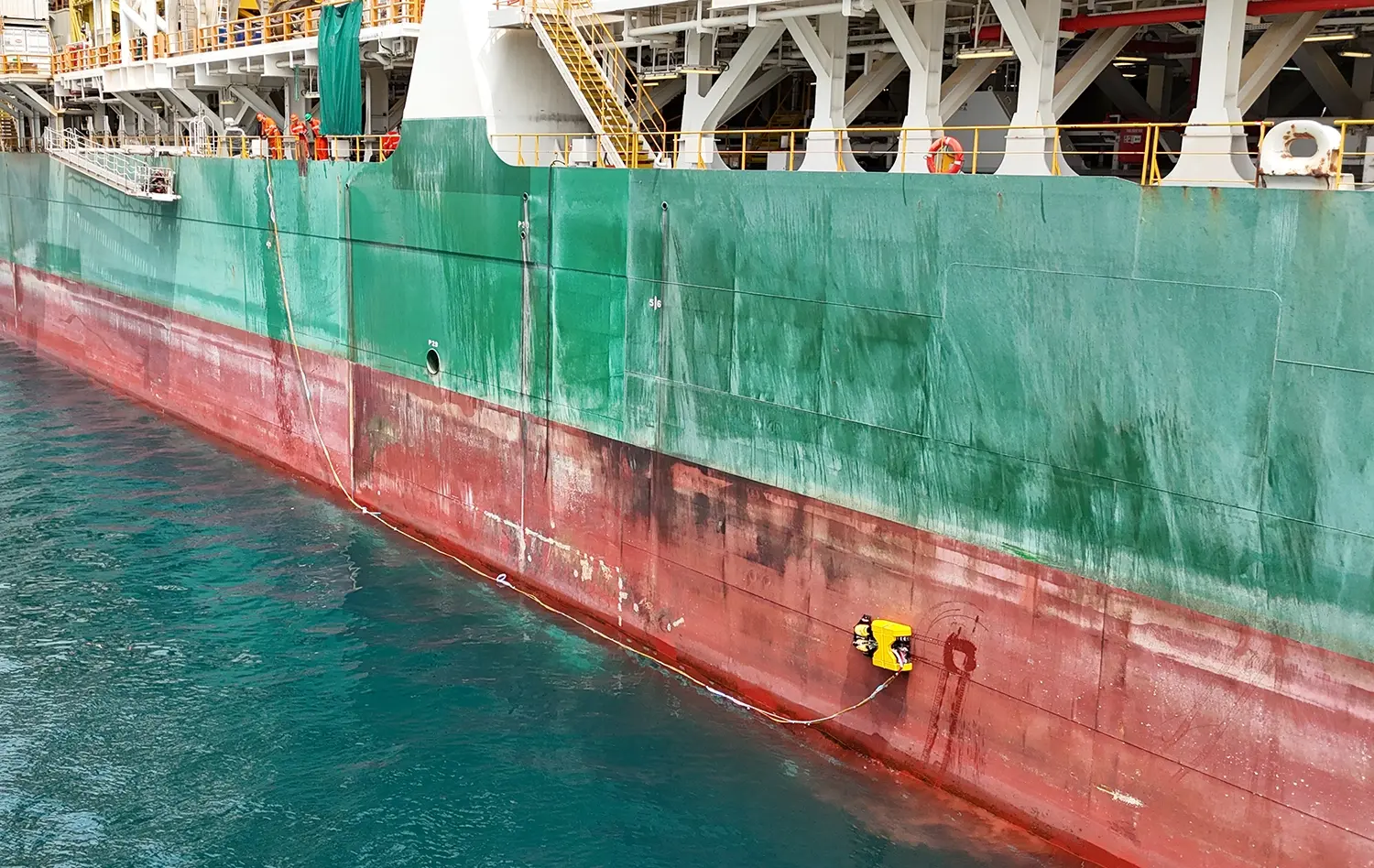
Image: Franmarine
“We now have over 100 vessels on the platform … it’s that data that we’re sharing with the regulators to ensure freedom of navigation from a marine biosecurity perspective,” Mr Falconer-West said.
The platform also simplifies compliance across the fragmented regulatory landscape. Each jurisdiction has its own nuances, but MarineStream automatically adjusts inspection criteria based on the vessel’s port of call.
Franmarine positions its service as a credible alternative to dry docking, especially as operators push for extended docking cycles.
“Industry as a whole is trying to move to extended docking cycles… underwater maintenance needs to be performed in order to achieve those objectives,” Mr Falconer-West said.
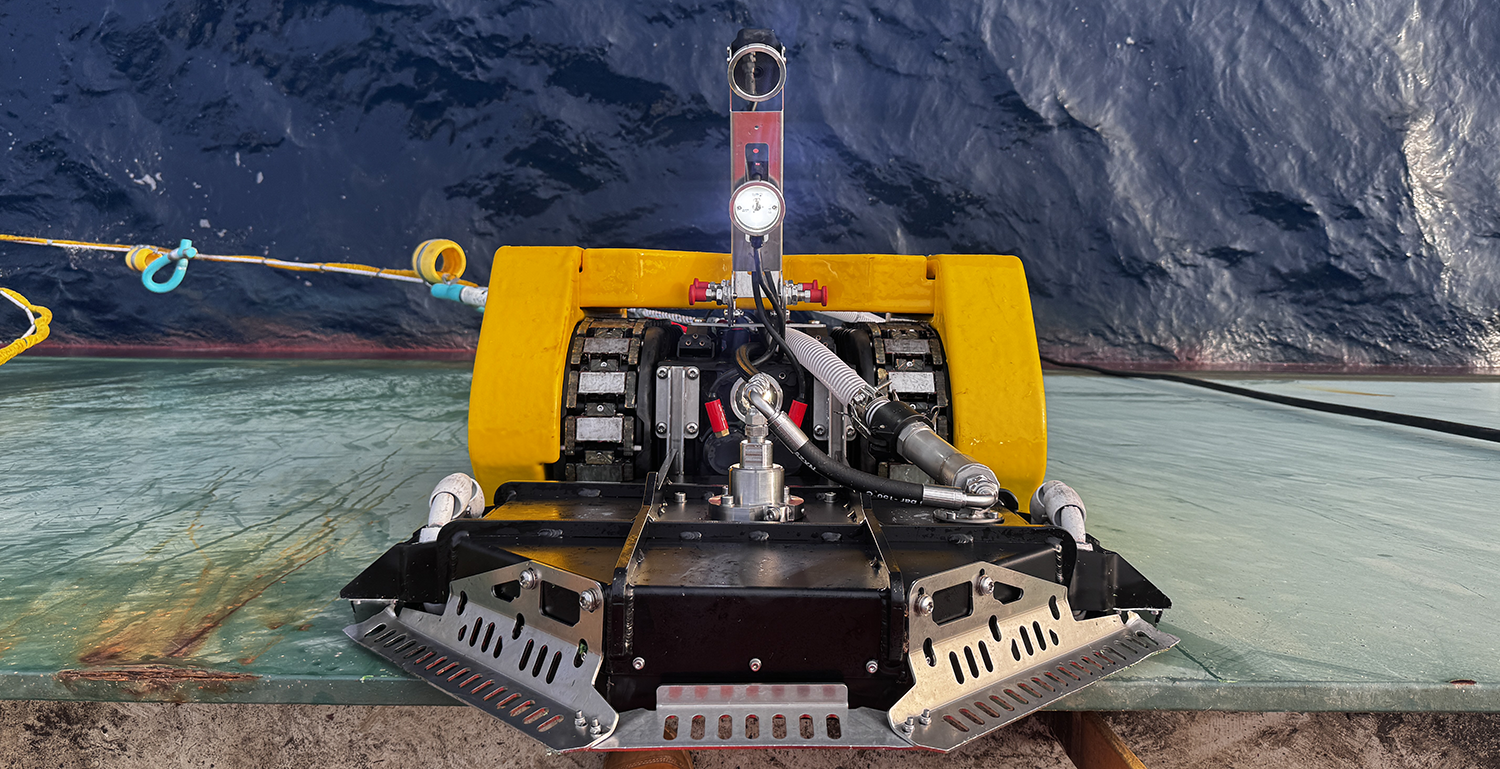
Dry docking requires elevated work platforms, high pressure water blasting and extensive waste capture. Inwater cleaning, by contrast, uses robotics for broad surfaces and specialised tools for niche areas, all while the vessel remains operational.
Franmarine is already operational in WA and NSW, supporting both commercial shipping, the Royal Australian Navy, United States Navy, Royal Navy and Royal New Zealand Navy.
The company’s international engagements, including the UK, the US, Ecuador, Sri Lanka and South Africa, reflects growing global interest in Australian-developed technology.
“It puts us in a competitive advantage position and is why there’s increasing interest in our technologies,” Mr Falconer-West said. “For us, it’s promising, given the export potential of what we have built.”
The Fremantle pilot runs for three years, reviewed annually. If the first six months are any indication, Australia may soon see a network of ports offering controlled, compliant in-water cleaning — a shift that could reshape how vessels maintain underwater assets across the region.
“If it keeps going the way it is, other ports can do the same,” Mr FalconerWest said.
This article appeared in the August | September 2026 edition of DCN Magazine