Commander of Australian Fleet warns of maritime vulnerability
-
Posted by Allen Newton
- |
-
12 May, 2026
THE OPENING session at the MIAL’s Blueprint for a Maritime Nation in Perth on Tuesday 12 May, focused on the vulnerability of Australia’s maritime industry.
Director general from the Department of Transport in Western Australia, Peter Woronzow kicked things off with a look at the importance of the maritime supply chain to Western Australia, particularly in light of flooding events in recent years which had impacted on rail connections.
The state government had turned its eyes to shipping as a solution, something Mr Woronzow said hadn’t been realised, although WA’s 22 ports were exporting 60% of Australia’s goods by weight.
The vision for an Australian sovereign fleet now lay firmly with the federal government.
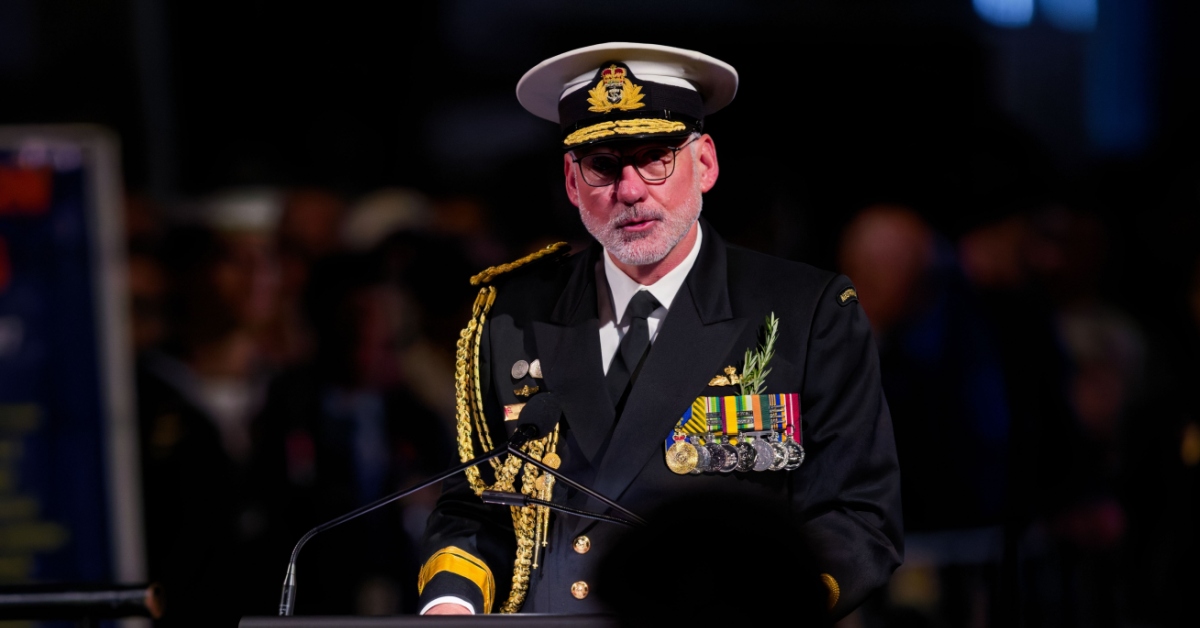
Mr Woronzow said the state government was keen to expand port infrastructure, while Rear Admiral Chris Smith, commander of the Australian fleet, asked how those ports should be protected in an increasingly unstable world.
The admiral’s view was that we need to change our view from living in a world with periods of instability to expecting a world of constant change.
“We are a maritime nation and every Australian, regardless of whether they know it or not, has a maritime story to tell,” Admiral Smith said.
He said Australia needed to better understand its reliance on maritime trade and supply chains, and that greater public awareness would help drive investment in the sector.
The admiral said nurturing that realisation of a maritime nation would make the country realise how dependent it was on the ocean for its supply chains.
Admiral Smith said instability and disruption were becoming persistent features of the global environment.
“There is no comfortable reset point where things go back to how they used to be,” he said.
He warned low-cost technologies were making large-scale disruption easier for both state and non-state actors.
According to the admiral, it was a mistake to assume there would be a return to stability or the status quo, and the maritime industry shouldn’t plan on the basis of stability.
He said the risk was assuming disruption was temporary and waiting for conditions to return to normal.
“However, if instability is no longer the exception but instead the norm, then our assumptions and planning need to change with it,” he said.
Admiral Smith said recent defence policy documents, including the 2020 Defence Strategic Update, the 2023 Defence Strategic Review and the 2024 National Defence Strategy, all pointed in the same direction regarding growing strategic instability.
He said Australia needed to reassess long-held assumptions about the maritime domain.
“The era of uncontested seas is now over,” he said.
Admiral Smith pointed to the various current conflicts in the world.
He said the global maritime system had developed around efficiency and just-in-time logistics, while countries including Australia, the US and the UK had reduced their merchant shipping fleets over recent decades.
He pointed to United Nations Trade and Development figures which show more than 80% of the world trade moves by sea.
“And for Australia, this is well over 90%. As of January 2025, the global merchant fleet comprised around 112,500 vessels. Of this, 41% of the carrying capacity is held by entities in Greece, China, and Japan. The majority of Greek and Japanese-owned shipping is foreign-flagged. Australia, by comparison, owns about 0.1% of the world's shipping fleet.”
The admiral also pointed to the vulnerability of an increasing reliance on a few undersea cables.
“We may be more dependent on the global system than at any point in our history, yet we have not fully confronted what it would take to sustain access to it during deliberate disruption.” He said.
Admiral Smith said the maritime industry formed part of Australia’s national resilience and strategic capability, citing risks including supply chain disruption, workforce constraints, industrial fragility and reliance on external providers.
“We depend on a global maritime system we neither own nor control,” he said.
Admiral Smith also said Australia’s geography provided some protection.
“This provides us an advantage over those with complex and contested borders, though it's important to acknowledge advances in weapon ranges and precision are reducing that advantage.
“Our resource-based energy, minerals and industrial potential remain significant and ripe for development. And perhaps most of all, we operate within a stable political and institutional framework that does not suffer from the swings and shocks we are currently witnessing others experience. “
Admiral Smith said the question is not whether we have advantages, it is how to ensure these advantages continue to work in our favour in the changing system we rely on.
“Though we may not control the global system, it's important to note we are not without influence over how we access, support and sustain our place within it. There is also opportunity, as long as we recognise it early and act deliberately.”