
-
Posted by Simon Brooks
- |
-
15 March, 2026
AS CLIMATE pressure intensifies on maritime shipping, the International Maritime Organization (IMO) is driving sector-wide transformation. To reduce greenhouse gas (GHG) emissions and fossil fuel dependence, the IMO is establishing mandatory marine fuel standards and GHG emissions pricing within its Net-zero Framework, targeting net-zero emissions by or around 2050. Similarly, the International Air Transport Association (IATA) Fly Net Zero initiative has secured commitments from airlines worldwide to achieve net zero carbon by 2050.
In Australia, the Department of Climate Change, Energy, the Environment and Water reports that liquid fuels still account for more than half of final energy demand. While alternative fuels and new vehicle technologies are gaining traction, traditional liquid fuels are likely to remain a critical component of Australia’s energy mix for years to come.
The shipping sector is expected to transition to alternative fuels such as methanol, ammonia, hydrogen and LNG, supported by an increased use of biofuel in the interim. According to the International Energy Agency, global biofuel demand is projected to grow by 38 billion litres by 2028, reaching a total of approximately 200 billion litres.
Even with aggressive GHG reduction targets, the relative ease of biofuel adoption and no globally agreed alternate fuel for shipping on the horizon, the IEA reports that biofuels make up only about 0.5% of the maritime fuel use. The apparent blockers to greater adoption of biofuels are a mix of high costs, lagging infrastructure, regulatory hurdles and the lack of supportive policy. Collectively, these challenges constrain the shipping industry’s capacity to deliver a significant and immediate reduction in GHG emissions.
Critically and perhaps more realistically when compared to the maritime industry, IATA has recognised that Sustainable Aviation Fuel (SAF) represents the only viable low carbon solution for medium to long–haul travel over the next 25+ years.
In regional Queensland, a long way removed from the global maritime shipping industry, an Australian sugar mill is working with several partners are working towards a solution. Established in the late 1800’s, Isis Central Sugar Mill (ICSM) - the last remaining grower-owned sugar mill in Australia, has been working hard on a diversification strategy. With the full support of the Board and shareholders, ICSM is now progressing with plans to establish Isis and the broader region as a bioenergy hub via the production of Low Carbon Liquid Fuels (LCLF) from biomass residues.

Project Swift, led by Australian technology pioneers Licella, is working with ICSM as its proposed site and feedstock partner to develop a regional biorefinery targeting significant volumes of LCLF for hard-to-abate sectors including shipping and aviation.
Leveraging Licella’s world leading Cat-HTR™ hydrothermal liquefaction platform, Project Swift aims to produce 60 million litres of LCLF annually from 150,000 tonnes of biomass residues, including sugarcane bagasse.
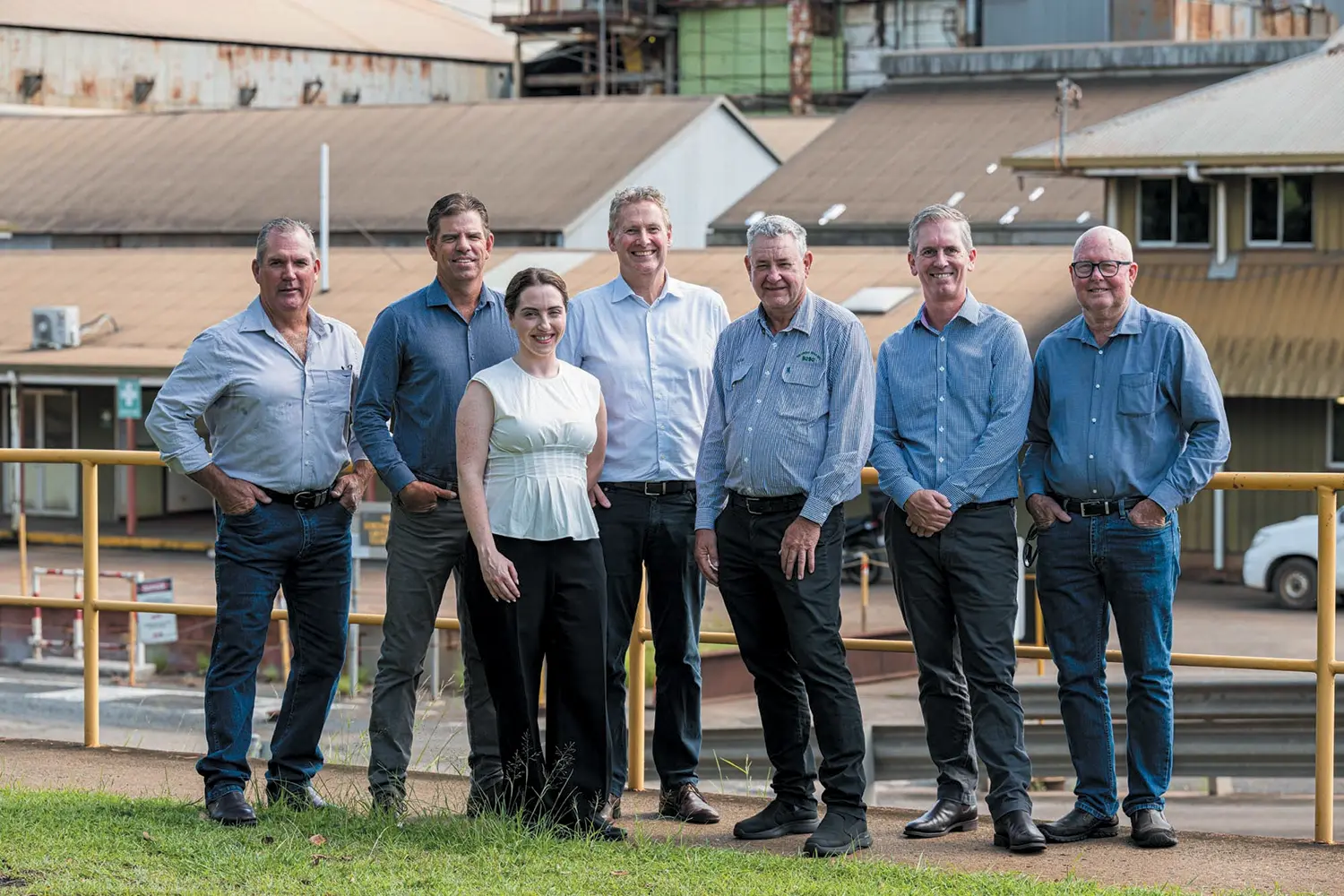
Licella met with Government and industry stakeholders in March 2025 to discuss
Project Swift at the Isis Central Sugar Mill site in Bundaberg. Image: Supplied
In 2025, Licella secured an $8 million grant from the Australian Renewable Energy Agency (ARENA) to advance feasibility studies on sustainable fuel production in the region via the construction of an innovative biorefinery, collocated with ICSM who plan to supply feedstock and energy for the precinct.
The proposed biorefinery would be able to convert a wide range of local biomass feedstocks, including agricultural and forestry residues, into advanced biofuels for these hard to decarbonise sectors. This includes a renewable diesel for the transport industry and importantly, the domestic maritime industry. Furthermore, the process can produce SAF at scale to help meet Australia’s targeted emissions reductions in the sector.
In addition to the benefits the LCLF’s present as a transition fuel, they are likely to play an increasingly important role in supporting Australia’s national fuel security and GHG ambitions. Furthermore, biofuels produced domestically reduce our reliance on imported liquid fuels and fossil fuels as a whole, in sectors which have shown significant challenges with the cost and complexity of carbon abatement.
For ICSM, the project presents an important business diversification strategy and wonderful opportunity to introduce greater automation and optimisation at the mill. To support this, the mill is also conducting studies to examine its own energy usage and efficiency, with the aim to improve steam and overall energy consumption across the mill. The adoption of the recommendations from the study and broader technology and automation uptake, will result in more bagasse being available for downstream partners, like Licella, into higher-value, low carbon biofuel production.
Overall, the project(s) across the regional bioenergy precinct are forecast to generate significant employment opportunities for the region, including more than 300 jobs during the multiyear construction phases and leading to more than 100 sustained roles across planned operations of the biorefinery.
With the level of drive from the mill and its partners, mixed with the strong support from government at all levels, the indicators suggest the transition will be successful. Importantly, through the use of technology, Australia can strengthen its domestic fuel supply chain in addition to meeting compliance with climate change driven reform via a cost effective and practical environmentally friendly fuel option.
This article appeared in the February | March 2026 edition of DCN Magazine