-
Posted by Simon Brooks
- |
-
02 Feb, 2026
Exploring how Oceania's maritime industry is harnessing advanced technology across its waterways and ports
IN MY first ‘Emerging Technology’ article that was published earlier this year, I was forecasting the rise of various technologies in the maritime industry, including simulation, virtual reality, augmented reality, the Internet of Things (IoT)and the concept of an intelligent transport system for the sea. While I was confident that these predictions would resonate with the regional maritime industry, I didn’t foresee the significant technological transformation that would take place across Oceania's waterways in 2025.
AMSA and MASS
In Australia, the Australian Maritime Safety Authority (AMSA) has been busy with key initiatives across E-Navigation and Maritime Autonomous Surface Ships (MASS). Within the E-Navigation domain AMSA, in collaboration with the Australian Hydrographic Office, has been progressing the development of the S-100 standard via a dedicated test bed in the Torres Strait, with plans to start sea trials in 2026.
With MASS, AMSA has been busy contributing to the IMO’s non mandatory MASS code and, closer to home, developing the regulatory framework for the domestic use of autonomous ships.
Ports of australia
Port of Brisbane is currently engaged in two innovative projects: Green Button and iMOVE. The Green Button project enhances the existing NCOS Online system by optimising vessel target speeds within operational transit windows to reduce emissions. Early trials have outperformed the expected 10% reduction in emissions per vessel.
The iMOVE project focuses on short-haul container transfers, with the goal of developing a framework and operational standards that incorporates the simulation of automated container transfers using a digital twin. This project also assesses the operational requirements necessary for supporting automation at a viable scale and considers regulatory, safety, technical and security requirements, making it scalable and able to serve as a model for other ports.
Digital twins and cyber resilience
North Queensland Bulk Ports (NQBP) has had an impressive year in technology. The port authority recently won the Excellence in Surveying and Spatial Information Award for their Port of Mackay Digital Twin Project, developed in partnership with Woolpert. This project uses advanced laser scanning and building information modelling to create an accurate digital twin of key port assets, enabling safer inspections and better decision-making.
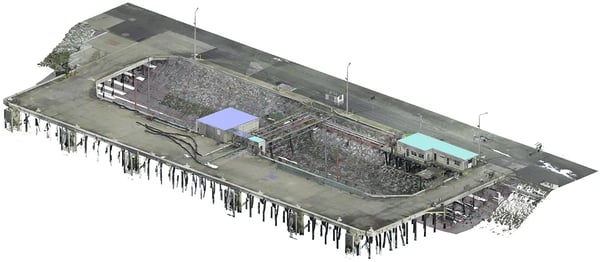
NQBP's Digital Twin imagery.
Additionally, the Port of Mackay trialled the SPIR underwater robot for pile cleaning, improving inspections and maintenance while mapping underwater structures. NQBP has also implemented the Dynamic Under Keel Clearance (DUKC) system at the Port of Mackay, adding to its use at Weipa, Abbot Point and Hay Point... the first port in the world to adopt the DUKC system.
The Port of Townsville is enhancing its cyber resilience by significantly increasing security measures and committing to ISO 27001:2022 compliance and certification renewal. By prioritising security, it aims to protect critical operations, secure customer data and supply chains, and strengthen trust in every transaction, with information security becoming increasingly essential for the maritime industry.
The team at Ports North has recently completed the four-year System Processes Upgrade and Replacement (SPUR) transformation. SPUR was a significant initiative that involved upgrading and replacing multiple internal systems. The new systems now provide cloud storage and comply with modern security requirements. Additionally, they offer a rich, broad and integrated database that enhances decision-making support across the enterprise, enabling further digital transformation for the future.
Renewable energy
The Port Authority of New South Wales (PANSW) is currently working on several innovative projects focused on renewable energy and metocean technology. The focus on cleaner energy includes the installation of Australia’s first shore power facility at White Bay Cruise Terminal. This facility will provide wharf-side infrastructure that allows ships to connect to shore-based renewable electricity, reducing the reliance on engine and generator power while docked in Sydney Harbour.

White Bay Cruise Terminal in Sydney. Image: Destination NSW
Additionally, the PANSW Hydrographic Survey team has developed and implemented a wave surge monitoring system for the outer harbour at Port Kembla. This system measures high-frequency water level changes to enable proactive vessel disembarkation during elevated surge events.
“As we come closer to the end of 2025, I’m proud of the progress our expert teams have made to strengthen operations, enhance experiences of our port users and stakeholders, and keep safety integral to the work we do through a range of technological developments across our ports.
“From progressing work on Australia’s first shore power facility at White Bay Cruise Terminal that will reduce cruise ship emissions, to the work our Hydrographic Survey team have done to improve safety, infrastructure, and environmental risks with a new wave surge monitoring system in Port Kembla, these advancements reflect our commitment to our core business, ensuring the safe and efficient movement of ships through the State’s six commercial ports.”
Port Authority of NSW CEO John McKenna
NSW Ports is utilising technology to replicate the flow of shipping containers in and out of Port Botany. The software models container flows through the port, identifying pinch points and bottlenecks in the system. This analysis helps to understand when and why these issues arise, leading to the development of solutions that improve the efficiency of container handling. The model, which is based on more than 20 million calculations for each year of simulation, has the capacity to provide valuable insights over multiple years. Additionally, it is being used to simulate different scenarios for the future, aligning with the NSW Ports 40-year Master Plan for sustainable growth.
“The modelling software allows us to create discrete behaviours for each individual container that comes into the system through Port Botany.”
“This dynamic model has the capacity to provide valuable insights over multiple years and we are using it to model different scenarios out into the future – in line with our 40-year Master Plan for sustainable growth.”
NSW Ports general manager, operations and environment Jonathan Lafforgue
Optimising digital landscapes
The Port of Newcastle (PoN) is driving digital transformation and building a smarter, more efficient and sustainable operational future. The PoN Digital Strategy and IT Roadmap, which simplifies, modernises and optimises their digital landscape in support of PoN’s diversification, will position the port to securely adopt emerging technologies, strengthen operational performance and enhance compliance and digital security across all areas of operation.
Ports Victoria has been busy with its technology strategy and roadmap which is presently undergoing refinement and review before release in 2026.
Meanwhile, TasPorts announced a multimillion-dollar digital transformation aimed at enhancing efficiency and enabling smarter, more sustainable operations across Tasmania's ports. This upgrade is expected to improve service delivery and provide integrated, real-time data. Scheduled for completion by mid-2026, the transformation is expected to allow Tasmania's ports to meet future trade and logistics demands more effectively.
“Our ports are the gateway to Tasmania’s economy. This transformation will give us a unified view of operations and enable us to improve predictive decision-making, whether that’s allocating berth space more efficiently, better managing maintenance schedules, or planning future asset upgrades.”
“We expect to see tangible improvements in day-to-day operations, and stronger support for our customers and supply chain partners. That’s good for TasPorts, good for industry and good for Tasmania.”
TasPorts CEO Anthony Donald
A strengthened cloud presence
Flinders Ports is undertaking an extensive array of technology upgrades and enhancements that are unmatched in the region. These upgrades include replacement of the terminal operating system, vessel booking system and vessel traffic service systems, digitisation of rostering and contractor management platforms, upgrades to its human resources information system and the maintenance and asset system, deployment of a private 5G network enabling expanded telemetry and IoT integration, adoption of proximity detection and worker safety technology, advanced data, video and AI initiatives, and finally a strengthened cloud presence and increased digital resilience, cybersecurity and data governance. The consolidated benefits of these programs include unified terminal operations, improved marine situational awareness, streamlined scheduling, enhanced visibility of asset performance and energy usage, reduced operational risks, improved decision-making, and optimized asset lifecycle management.
way out west
Southern Ports has been progressing a $31.6 million digital transformation initiative over the past three years to revolutionise port operations. This initiative is driven by the need to upgrade aging systems and a strategy to develop into a digital port. The upgrades include a new port management information system, a new terminal operating system, a certified and award-winning asset management system, a new safety management system, a contractor onboarding system, an IT service management system and a new enterprise resource planning system. These systems are being integrated into a comprehensive enterprise port system designed to create smarter, safer and more efficient port operations.
“For Southern Ports, digital transformation is contagious. By demonstrating that the new systems add value, what's happening now is our workforce are bringing forward new ideas to make their job easier.”
Southern Ports CEO Keith Wilks
Fremantle Ports is at the forefront of advancing initiatives that align with Singapore’s and Australia’s Green and Digital Shipping Corridor. A significant project is the upgrade of Fremantle’s Port Management Information System in partnership with Tidalis, which includes migrating to the latest version of PortControl. This transformative upgrade will unlock access to a diverse and comprehensive array of data. Additionally, the new system is designed for enhanced scalability and integration with other port systems.
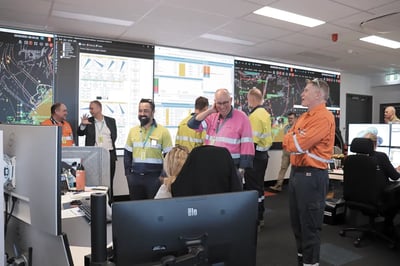
Pilbara Ports has upgraded its VTS centre at Dampier
At Geraldton, Mid-West Ports has been applying new technology to better understand and preserve the marine environment. Partnering with O2 Marine and the Yamatji Sea Rangers Program, Mid West Ports has been hard at work mapping and analysing the region's benthic habitat. Using a combination of data sourced from vessel-based bathymetry and multispectral satellites, the novel approach uses machine learning and AI to provide accurate seagrass mapping, enhancing seagrass preservation activities.
Pilbara Ports made significant progress in upgrading the vessel traffic service (VTS) centre at the Port of Dampier as part of the expansion of marine infrastructure and operational capacity throughout the West Pilbara region. The VTS centre is equipped with advanced sensors, radar and meteorological and oceanographic equipment to manage vessel movements, monitor metocean conditions and ensure navigational safety.
“Our upgraded state-of-the-art facility incorporates cutting-edge marine technology, positioning it as a pivotal resource for the sustainable growth of the region.
“This investment has enhanced infrastructure and operational capabilities throughout West Pilbara, ensuring that all components meet the highest standards of quality and efficiency essential for long-term success.
“And since it’s upgrade, we’ve seen success with more than 5,000 safe vessel visits coordinated across the ports of Ashburton, Dampier and Varanus Island in the 2024-25 financial year.”
CEO Sam McSkimming
Digital transformation across the ditch
Maritime New Zealand is spearheading the Maritime Digital Transformation Project, the largest upgrade to the country’s maritime navigation systems in over 30 years. With a budget of NZD $28.6 million, this initiative is a collaboration between Toitū Te Whenua Land Information New Zealand and Maritime NZ. It aims to introduce advanced digital navigation tools based on the global S-100 standard, enhancing safety, efficiency, and environmental outcomes while improving navigation precision, reducing fuel consumption, and increasing port access across New Zealand and the wider Pacific region.
"The investment enables safer and faster access to New Zealand's ports, keeping trade flowing smoothly and reliably and provides confidence in shipping. This is key as more than 99 percent of our imports and exports move by sea.
"Land Information New Zealand (LINZ) and Maritime New Zealand are working together to create high-tech digital navigation tools based on the global S-100 standard. These tools will make navigation more precise, helping ships save fuel and cut costs while operating in our waters.
“The initiative will transform how mariners access and use data such as electronic charts, water levels, ocean surface currents and navigational warnings.”
New Zealand Land Information Minister Chris Penk
Building on Maritime NZ’s data and information initiatives, PortConnect, the New Zealand port community system is focused on utilizing shared data across the country's ports to enhance the accuracy of shipping arrival times across the country, ultimately optimizing port planning and scheduling.
Napier Port is running the Napier Port Transformation program which is focussed on the transition from reach stackers for both vertical and horizontal container movement to battery-electric trucks and trailers, capable of operating autonomously, for horizontal container movement. Commencing operations in 2026, this new technology presents major productivity and efficiency gains, as well as significant safety improvements in container transit and reduced operating costs through lower maintenance expenses and less wear and tear on port pavement.
In Wellington, CentrePort and Māori-owned spectrum and digital infrastructure specialist Tū Ātea have deployed New Zealand’s first commercial private 5G network. The network, comprising several 5G high-power radio transceivers and antennas deployed on CentrePort’s existing infrastructure, replaces critical wireless dependencies, enhances operational resilience, and sets a new standard for national freight and logistics hubs, providing CentrePort with comprehensive high-performance connectivity.
“Our port is a dynamic environment where reliable and fast communication is vital for the safety of our staff and the overall efficiency of the port.”
CentrePort CEO Anthony Delaney
After extensive engagement with clients and stakeholders, particularly those in the trucking sector, the Port of Auckland has implemented the eGate system. eGate, available via a smartphone app, utilizes geofencing for inbound trucking to guide drivers on their freight pickups. A green flag is issued to drivers when all administrative tasks are complete, while a red flag directs trucks to wait until necessary administration is finished. Benefits include enhanced visibility, reduced queuing, improved efficiency, and simpler freight management processes.
The Port of Tauranga is actively working to reduce emissions through new technology and is preparing to trial the country’s first ever all-electric container straddle carrier at New Zealand’s busiest port, targeting a reduction of 43% on current combined Scope 1 and 2 emissions. The trial which is set to go live in 2027 will evaluate operational impacts, charging times, driver amenability and training requirements, reliability, safety and maintenance requirements, with trial results to be shared with other NZ ports.
“Diesel use in straddles is our largest source of carbon emissions, contributing around 54% of our Scope 1 emissions. Until now, we have only had the option of hybrid straddles as a lower emission alternative,” he said.
“The support of EECA makes it feasible for us to test the rapidly-developing electric straddle technology in a New Zealand port context.”
“We hope the trial will give us confidence in operational efficacy, emissions reduction and technology reliability. It de-risks the implementation of new technology currently untested in New Zealand.”
“Providing port assets and infrastructure consistent with a low emissions supply chain contributes to keeping New Zealand exports competitive internationally.”
Port of Tauranga CEO Leonard Sampson
At Port Nelson it’s been a busy year of updates and consolidation, readying the organisation for future investment decisions on technology uptake. Development over the year has included the continued push of applications to the cloud, pursuit of mobility and access, enhanced security, data system upgrades, and connectivity. On the connectivity and data themes, Port Nelson have recently established Azure integration services which will provide internal and external stakeholders better access to shared data, enhancing decision-making across the port.
This year has marked significant technological progress in Oceania's waterways and ports. As we look to 2026, the region is extremely well placed to build on the transformative achievements of 2025, continuing to collaborate and harness technology for a safer, productive, efficient and sustainable future. The best is yet to come!