-
Posted by Lindsay Reed
- |
-
28 Apr, 2026
THE TASMANIAN Freight & Logistics Forum, held last week in Hobart, brought together delegates from across the state’s supply chain, with cost pressures a consistent theme across the presentations and panel discussions. Fuel supply was unsurprisingly, a key topic, however many of the speakers on the day indicated the main concern was less around availability and more around the cost of fuel and its impact across the freight network.
Rising input costs — from fuel through to terminal access charges and broader landside expenses — were repeatedly identified as the most immediate challenge facing shippers, operators and port stakeholders.
The issue of cost extended through discussions around liner trades, with Mark Parfuss from COSCO detailing how the both the Suez Canal disruption and the closure of the Strait of Hormuz have impacted cost. He also highlighted how disruption in one port or channel quickly cascades through the global network, citing how ports such as Port of Singapore and Port of Khor Fakkan are reaching capacity due to diverted traffic, leading to further delays.
“One disruption… causes pressure on different ports for different reasons.” He said.
Mr Parfuss also pointed out that a surge in redirected cargo was overwhelming previously reliable hubs, noting that volumes building up in Singapore are now sitting for “one to two weeks,” with flow-on effects across surrounding trades.
On the local market, Mark Parfuss discussed COSCO’s weekly service out of Port of Bell Bay, and the potential to expand this into a coastal loop - Bell Bay to Sydney, Fremantle and Brisbane. He noted that while the option is there, its viability ultimately comes down to consistent volumes and pricing, with industry needing to commit to weekly numbers to make the service viable.
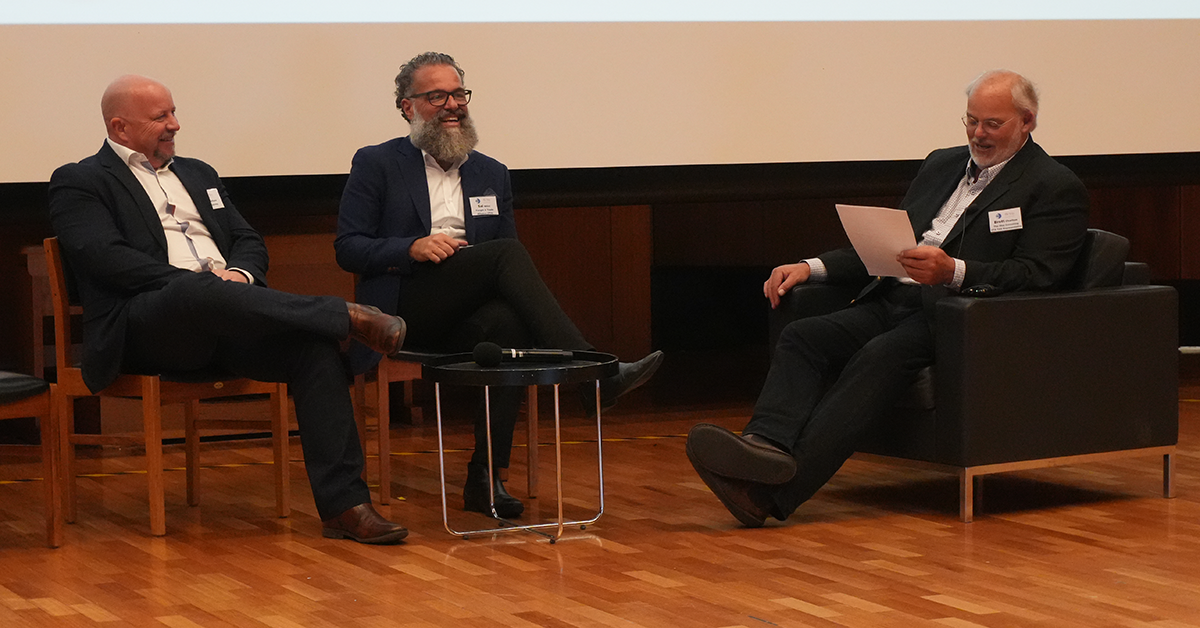
Chairing the panel sessions, Freight & Trade Alliance and Australian Peak Shippers Association Tasmanian representative Brett Charlton said cost remained the dominant issue across the supply chain, influencing both day-to-day operations and longer-term planning.
Speaking during the ports and rail panel, Port of Melbourne chief finance and strategy officer Leigh Petchel highlighted the significance of Tasmanian trade to the port.“
Tasmanian trade is really important to the Port of Melbourne,” Mr Petchel said, noting it is the port’s second largest trading partner after China.
He said Tasmanian freight accounts for about 16% of exports and 5% of imports through the port.
Mr Petchel outlined the need for long-term capacity planning, warning that without investment, the port is expected to face constraints for international container vessels by the late 2030s.
That includes the proposed development of a new international container terminal at Webb Dock North, alongside upgrades at Victoria Dock to support Bass Strait trade.
“It’s really important that we plan for long-term capacity so that we don’t hit constraint and congestion in the future,” he said.
Mr Petchel also addressed industry concerns - raised by both delegates and speakers at the forum - around the introduction of the Ports Victoria navigation and port services (NAPS) charge, noting it sits outside the Port of Melbourne’s regulated pricing framework.
He said while the port’s own charges are subject to oversight by the Essential Services Commission and formal consultation, the structure and basis of the Ports Victoria charge is not yet clearly defined.
TasPorts group executive major projects, assets and technical services Michel de Vos pointed to a significant pipeline of investment across the state’s port network.


Mr de Vos said the average age of TasPorts’ maritime assets is close to 50 years, which leads to the need for upgrades and remediation works across key ports including Hobart, Devonport, Burnie and Bell Bay.
“We’re dealing with a fairly aged asset base,” he said.
Projects include wharf upgrades in Hobart, terminal works in Devonport and remediation at Burnie, alongside planning for emerging trades such as offshore wind.
TasRail general manager projects Josh Marshall said rail is also responding to changing freight demand, with around 120 services now operating across the state.
Mr Marshall said customer interest in rail has increased, driven in part by fuel costs and emissions considerations.
“For every tonne we move, we produce around a quarter of the carbon versus road,” he said.
However, he noted that geography and supply chain structure continue to shape the extent of modal shift.
The forum again highlighted that while Tasmania’s freight network remains resilient, cost pressures across fuel, ports and transport are continuing to weigh on the sector.
The Tasmanian Freight & Logistics Forum is hosted annually by Freight & Trade Alliance, the Australian Peak Shippers Association and The Ship Consulting.
This year’s event was also held in memory of Paul Rantzau from OOCL and a long-standing member of the Tasmanian Logistics Committee, who passed away earlier this year.
Further insights and discussion points from the Tasmanian Freight & Logistics forum will be included within DCN's Tasmania feature, coming up in the June/July edition of DCN magazine.