
-
Posted by Paul Zalai
- |
-
22 June, 2026
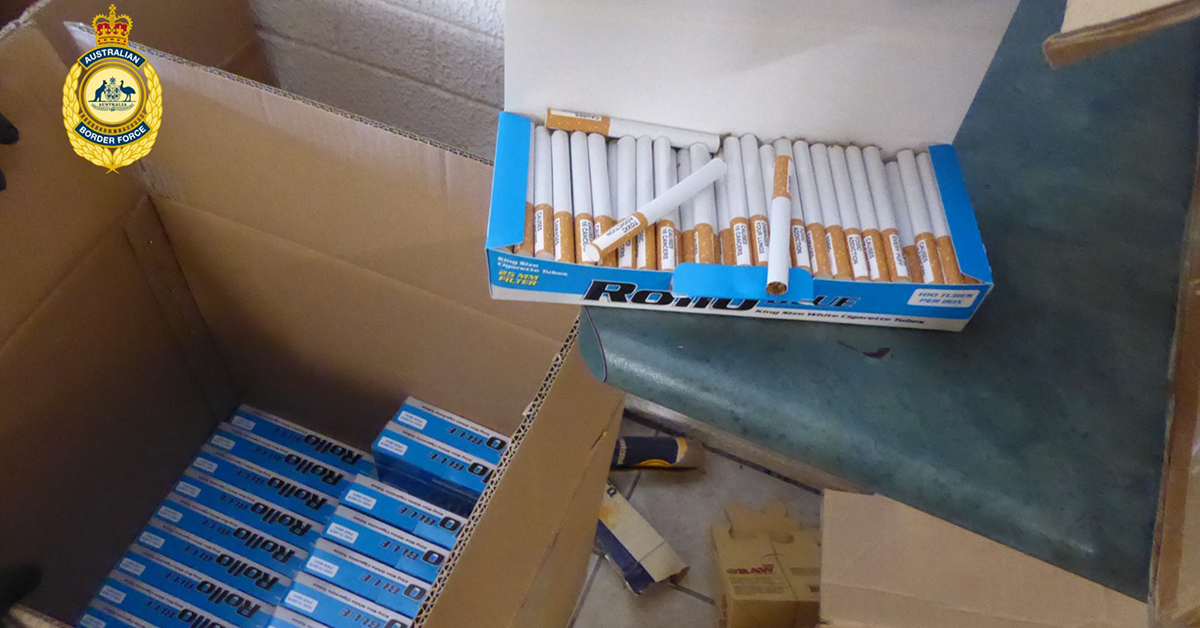
THE ILLEGAL tobacco trade in Australia has become a significant national issue. Reports indicate that billions of illicit cigarettes and tonnes of illegal tobacco enter the country each year, fuelling a black market impacting the federal budget by $9.3 billion.
This has created a substantial underground economy and poses a major challenge for both law enforcement agencies and industry. Authorities have expressed growing frustration and despair at the scale of the crisis, with successive government policies relating to tobacco taxation and vaping contributing to an environment susceptible to criminal exploitation.
The market has shifted underground and into the hands of organised crime groups, with links to fire-bombings, extortion attempts and other targeted acts of violence.
While this detail is widely promoted in mainstream media, what is far less understood and rarely acknowledged, is the growing cost being imposed on legitimate importers because of systemic weaknesses in current border processes. As highlighted in Freight & Trade Alliance (FTA) evidence provided to Senate committees, an untold story behind the illegal tobacco trade is not just about organised crime or lost government revenue. It is also about the unintended consequences being borne by compliant businesses — the importers, customs brokers and logistics providers who find themselves caught in the crossfire of criminal activity and enforcement responses.

While criminal networks continue to evolve, exploiting gaps in our import frameworks, compliant businesses are increasingly absorbing the financial and operational consequences. The most visible and damaging manifestation of this is the rise of late tagged containers.
A “late tag” occurs when a container has been selected by the Australian Border Force (ABF) for x-ray and potential further examination after vessel arrival. By that point, the commercial clock is already running — and it does not stop. Stevedores typically refuse storage relief because the container was technically available prior to the hold. Shipping lines continue to apply detention charges irrespective of the cause of delay. Importers are given little visibility on the likely duration of the intervention, while logistics providers are effectively paralysed, unable to act without clear authority.
The outcome is predictable and deeply inequitable. Legitimate importers are routinely facing tens of thousands of dollars in additional costs for delays they did not cause and cannot control. What was once an exception is now becoming a systemic feature of the supply chain.
Compounding this issue is the increasing misuse of legitimate importer identities. Criminal organisations are exploiting stolen ABNs and business credentials to lodge import declarations, embedding illicit tobacco consignments within otherwise compliant supply chains. When a container is intercepted, it is the legitimate business listed on the documentation that receives the call — and the bill.
This is not simply a compliance inconvenience. It is a direct transfer of risk from criminal actors to legitimate industry participants.
The current duty and GST payment framework is also part of the problem. While historically efficient, the use of intermediary payment mechanisms has become a vulnerability in a system now exposed to organised criminal exploitation. Illicit operators can mask their activities behind legitimate financial flows, using stolen identities and customs broker facilitated payment channels to avoid detection.
Recent insights reinforce this concern. The latest ABF Good Compliance Update includes a case example demonstrating how financial pathways and identity controls are being exploited.
A simple, targeted reform would be to require importers to pay duty and GST directly to the ABF by EFT.
Under this model, importers would provide their banking details directly, ensuring that payments are debited from the legitimate source rather than via intermediaries. This would significantly reduce the risk of identity misuse, provide real time visibility of transactions, and enable earlier detection of suspicious activity. It would also disrupt piggybacking practices, where illicit consignments are attached to legitimate supply chains.
This is not a criticism of enforcement agencies. ABF executive and officers are doing their best to combat the surge in illegal tobacco activity, but are doing so with limited resources, outdated technology, systems and processes that are no longer fit for the scale and sophistication of modern organised crime.
The problem is that current system settings are creating serious and unfair consequences for legitimate trade including:
• identity vulnerabilities are being exploited by criminal networks;
• late-tag interventions are imposing disproportionate costs on compliant importers;
• financial pathways are being used to disguise illicit activity; and
• legitimate importers are being left to absorb costs they did not cause and cannot control.
This is not a sustainable position.
Australia’s response to illicit tobacco should not be judged solely by seizures or enforcement outcomes. Success should also be measured by whether the system targets criminal behaviour while protecting legitimate trade.
Until that balance is achieved, the untold story of illegal tobacco will continue to be measured not only in lost revenue and crime statistics, but in the real and unfair costs imposed on legitimate trade across Australia.