
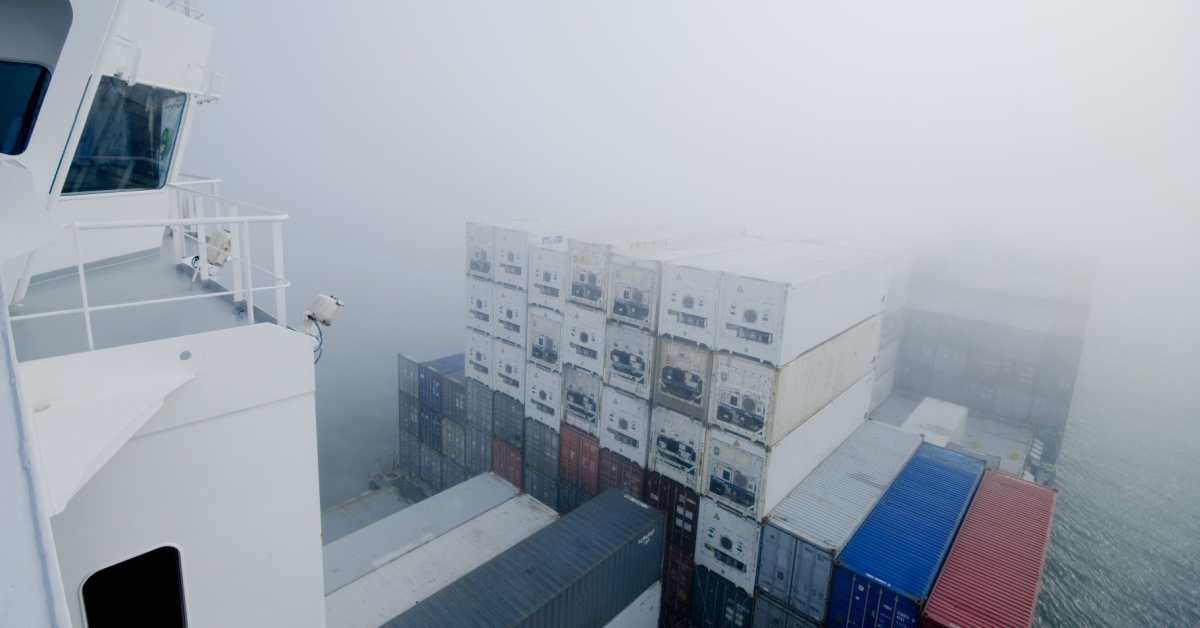
NAVIGATING 2025: The fog is lifting
-
Posted by Peter Creeden
- |
-
11 Aug, 2025
AUGUST brought clarity amid ongoing volatility. The fog of speculation that defined the first half year is lifting. We now have clarity and visibility over the direction of trade policy, network capacity and freight markets. As tariffs moved from speculation to reality with new duties on more than a dozen countries and expiration of pauses, global supply chains face increased complexity. Uncertainty has become structural, requiring businesses to shift from waiting to long-term planning.
The 2025 calendar year has clear that ‘resilience’ as a passive buffer is no longer enough. Whether it is tariffs, port delays, or fuel prices, the market is now shaped by systemic instability, not exceptional shocks. It is now crucial to focus on ‘readiness’. That means investing in the tools that offer visibility and better process understanding, building a stronger partnership network to provide flexibility along with more certainty.
The U.S has now reactivated and expanded its tariff regime, with new duties of 10–50% coming into effect from 7 August, with the average impact being about 16%. The policy includes a ‘grandfather’ clause for cargo already on the water, but its long-term effects are only beginning to show.
Importers are delaying decisions, contract shippers are renegotiating, and small parcel players are scrambling as the de minimis threshold disappears at the end of August. The inflationary impact has been muted so far, but only because costs are being absorbed at the margins. That won’t last. As noted by an article in The Economist entitled, ‘Who’s feeling the pain of Trump’s tariffs?’, tariffs should start to bite deeper into the fourth quarter, with the pain shifting downstream to consumers, inventory planners and exporters in resource-dependent economies like Australia, New Zealand, Brazil, and Indonesia.
In Oceania, it is encouraging to see a renewed focus on strategic repositioning across regional service networks. MSC’s announcement of its standalone Eagle Service, set to launch in February 2026, comes at a strategic time, aligning with New Zealand's peak reefer export season. Positioned between Maersk’s faster OC1 service and CMA CGM’s (Europe & East Coast US) PAD service, the Eagle Service will offer considerably more weekly capacity on the Australia/New Zealand-US East Coast route than needed. This increase in capacity will exert welcomed downward pressure on freight rates, but it remains to be seen how sustainable this will be in the long run.
It is also encouraging to see ANL strengthening its service network between Asia and Papua New Guinea with the launch of APR2. This not only improves connectivity for Northbound trade but also provides a valuable opportunity to boost Southbound volumes, supporting greater capacity between PNG and key Australian markets like Brisbane, Gladstone, and Townsville. This offers much-needed scale to shippers in and out of PNG.
Reliability isn’t improving for Australia
In July, no major Australian port exceeded 40% on-time arrivals, with Sydney (39%), Brisbane (38%), Melbourne (35%) and Fremantle falling to 17%. In comparison, New Zealand’s Tauranga (71%) and Auckland (59%) performed better, but Lyttelton faced some difficulties. Ports in the South Pacific showed similar fragmentation. Extra schedule buffers in PNG schedules improved ports like Port Moresby (88%) and LAE (75%), demonstrating that better outcomes are possible.
Electronic bills of lading
One area where momentum is both overdue and critical is the digitalisation of trade documents. The global container shipping industry has committed to 100% adoption of electronic bills of lading (eBLs) by 2030, but the gap between ambition and reality remains wide. After climbing from just 3% adoption in 2023 to 7% in 2024, reaching 50% by 2028 will require a rapid and coordinated push, especially in regions like Oceania.
Most forwarders in Australia and New Zealand are still ill-equipped for the digital trade transition. Many depend on manual methods or static PDF workflows with limited digital integration. This needs to change. Early adopters of electronic bills of lading (eBLs) will enjoy faster access to working capital, lower compliance risks, and a greatly enhanced customer experience. Those who delay risk longer cash cycles, more errors and growing inefficiencies. However, the benefits of eBLs go beyond regulatory compliance. They represent a real opportunity for transformation: unlocking speed, transparency, and security in international trade while opening the door to new financial instruments and innovative trade finance solutions.
The eBLs are not only a future regulatory requirement but also a competitive advantage. It is therefore encouraging to see recent collaborations, such as the agreement between WiseTech Global and the Global Shipping Business Network (GSBN). I have been impressed with GSBN’s solid work in this area, and it is gratifying to see them promoting eBLs adoption through deeper integration with the leading digital freight platform.
Overall, this past month has brought some clarity. It is no longer about predicting what is next. It’s about building systems, teams, and partnerships to adapt in real time. The winners of this decade won’t be the fastest or the cheapest—they’ll be the most prepared, the most agile, and the most integrated.
The fog is clearing, revealing the wider horizon. Navigating the future isn't guesswork; it requires action. Successful companies lead with purpose and act decisively, not waiting for ideal conditions.