
OPINION: Stepping up
-
Posted by Tom Jensen
- |
-
22 Dec, 2025
With the Australian Peak Shippers Association being appointed Vice Chair of the Asian Shippers’ Alliance, Australia steps into a bigger arena
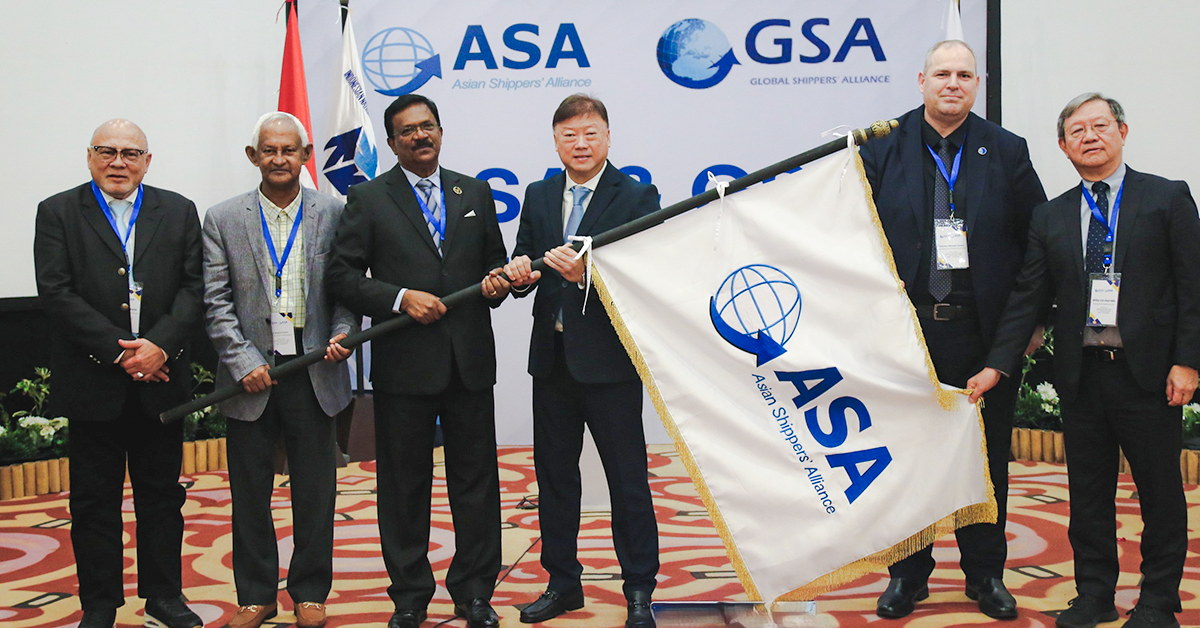
AUSTRALIA has just taken a major step onto the regional stage. At the Asian Shippers’ Alliance (ASA) and Global Shippers’ Alliance (GSA) Annual Meeting held in Bali in early November, the Australian Peak Shippers Association (APSA) was formally appointed Vice Chair of the ASA for 2025–2027. It’s a significant recognition of Australia’s leadership — and it couldn’t come at a more important time for exporters who stand to benefit most from stronger regional representation and by extension importers, freight forwarders and logistics providers facing mounting pressures across the supply chain.
The appointment gives APSA a direct leadership role within the ASA, which in turn is a core bloc of the GSA alongside Europe and the United States. For a nation deeply exposed to global freight volatility, this position gives Australian shippers far greater influence over the reform agenda shaping international shipping.
Common Problems, Shared Frustrations
The Bali meeting brought together shipper councils from across Asia, Europe and the US. Despite differences in geography and market scale, the concerns around the table were strikingly similar.
Delegates representing major manufacturing economies, emerging markets and key transhipment gateways all reported the same pattern:
- relentless increases in landside and supply chain costs
- declining service reliability
- inappropriate or unfit containers
- congestion at depots and terminals
- unpredictable carrier schedules and blank sailings
- inconsistent or outdated regulation
- compounding compliance burdens
Australia’s long-running struggles with unregulated Terminal Access Charges (TACs), Empty Container Park (ECP) Notification Fees and Weight Amendment (Pondus) Fees were noted with interest by other delegations. While these specific charges are not universal across the region, the underlying issue is the same everywhere: rising supply-chain costs without any safeguards such as Minimum Service Levels or regulatory controls on the size and frequency of price increases.
Whether it’s port congestion, inconsistent depot standards, poor container quality, or volatile carrier schedules, shippers across Asia, Europe and the US reported the same outcome — higher costs, declining reliability and little accountability.
This shared pain set the foundation for a firm, united call for change.
Minimum Service Levels: A Global Priority
A core outcome from the Bali discussions and a key feature of the ASA/GSA Joint Statement, was a renewed push for a global Declaration of Minimum Service Levels (MSL).
Shippers across the region are increasingly frustrated by:
- unreliable vessel schedules
- blank sailings without recourse
- equipment shortages
- containers unfit for packing
- depot inefficiencies
- unexplained or poorly justified surcharges
The proposed MSL framework aims to introduce transparency and accountability into an industry that, for too long, has been able to pass on costs without meeting basic service expectations. It’s a reform agenda that aligns closely with APSA’s domestic advocacy for oversight of TACs and related landside costs.
With APSA now holding a Vice Chair role, Australia is in a strong position to help shape how the MSL concept evolves and how it could eventually be adopted across key global trade lanes.
Geopolitics and Sustainability: The Incoming Wave
While operational issues dominated much of the discussion, the Bali meeting also turned its focus to the larger structural forces reshaping global trade.
The first is U.S. trade policy volatility.
New tariffs, reciprocal measures, the elimination of de minimis concessions and restrictions on critical technologies have injected uncertainty into freight markets across Asia–Pacific. The view from the ASA/GSA membership was clear: this volatility is now a major driver of freight-rate instability and market unpredictability.
The second is the rapid escalation of European sustainability regulation.
Frameworks such as the Carbon Border Adjustment Mechanism (CBAM), Corporate Sustainability Due Diligence Directive (CSDDD), Corporate Sustainability Reporting Directive (CSRD) and the EU Deforestation Regulation are creating enormous compliance requirements. Meeting these obligations will require strong data accuracy, emissions transparency and supply-chain traceability — challenges that many small and medium exporters across Asia and Australia may not yet be equipped to meet.
Both issues reinforced the need for closer coordination between shipper councils and shared advocacy at the international level.
Why APSA’s New Role Matters
With the Thai National Shippers’ Council assuming the ASA Chair and APSA stepping into the Vice Chair role, Australia now has a dedicated and influential voice shaping regional and global reform priorities. The appointment strengthens APSA’s ability to align its advocacy — including calls for regulated landside charges, greater transparency and improved service standards — with broader Asia–Pacific and global efforts.
As supply chains brace for continued volatility, cost escalation and expanding regulatory expectations, APSA’s leadership role ensures Australian shippers won’t just adapt to global rules — they’ll help shape them.
Note: Since 1 January 2017, Freight & Trade Alliance (FTA) has served as the Secretariat for the Australian Peak Shippers Association (APSA), supporting the APSA Board and representing Australia’s designated peak shipper body in all domestic and international forums.