
Nautical Institute QLD celebrates World Maritime Day 2025
-
Posted by Simon Brooks
- |
-
15 Oct, 2025
THE IMO’s theme of Our Ocean, Our Obligation, Our Opportunity provided a fantastic spark for the Nautical Institute Queensland Branch’s recent World Maritime Day session.
The NI organised a star-studded speaker list and enthralling agenda held at Queensland’s very own Smartship.
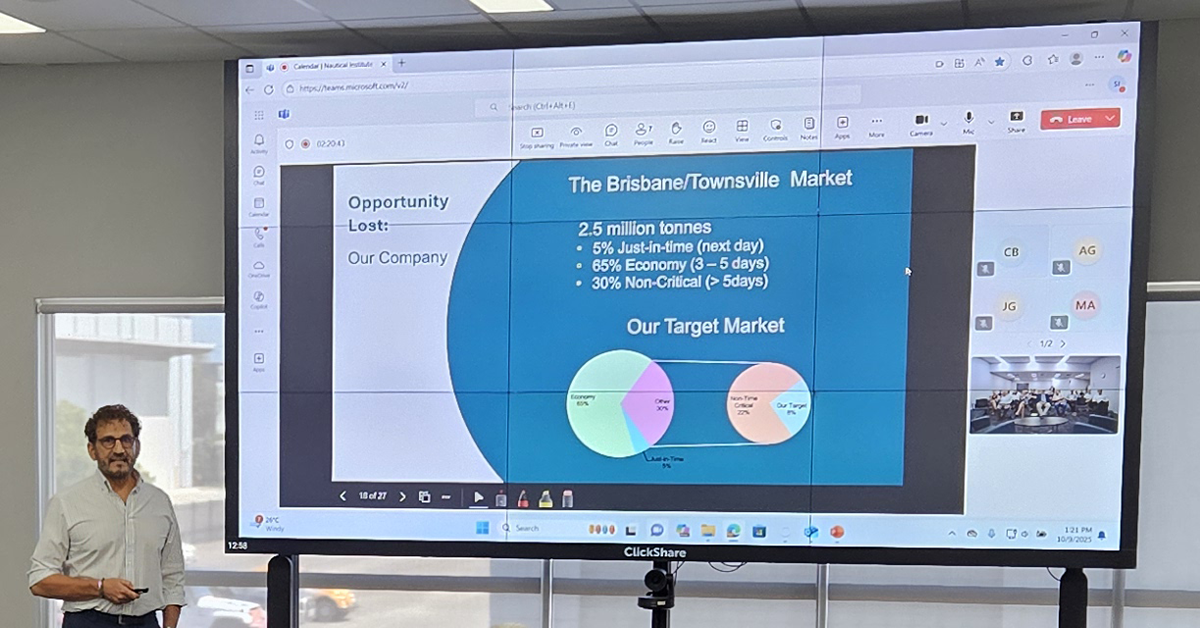
The guest speakers included Steve Pelecanos (Hermes Maritime Shipping & Logistics), Stuart Ballantyne (SeaTransport), Angela Gillham (MIAL) and John Lloyd (Nautical Institute chief executive) with the speakers collectively covering the topics of coastal shipping, nuclear micro modular reactors and sovereign maritime capability.
The presentations aptly touched on history, successes and challenges, deriving key lessons with an emphasis on those lessons we need to heed to bring about future change.
This insight enabled some fantastic discussion into how we can unlock the potential of the oceans, meet global obligations and take advantage of opportunities.
Among the most impactful themes were efficient energy, including the need for a real and informed discussion on nuclear energy, sovereign capability, and coastal shipping.
These themes remain relevant to ongoing challenges like supply chain security, decarbonisation targets (and cost), alternate fuels and maritime skills and training.
Unsurprisingly, many of the solutions require far more change than possible within each of the pursuits and programs.
The success of each program is closely tied to bipartisan support, industrial harmony and national policy that properly integrates road, rail and shipping supply chains.
Such policy must recognise the real advantages and disadvantages including real costs for each mode and therefore offer equitable incentives and disincentives.
Those present were representative of a strong cross-section of the maritime industry and, with almost one voice, called for less bureaucracy, greater assurance for industry and pragmatic solutions to our national skills and training shortfalls.