-
Posted by Marco Blanco
- |
-
24 Apr, 2026
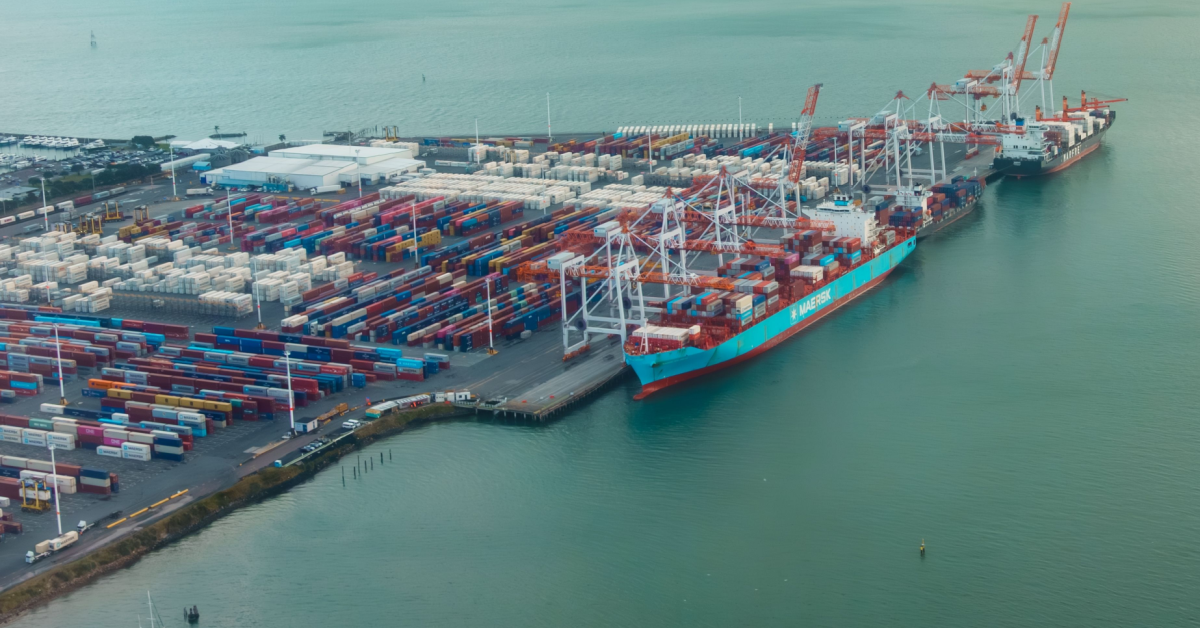
THE 2026 New Zealand Maritime Pilots’ Association (NZMPA) Conference in Tauranga opened in a way that immediately set it apart.
Before any presentations or technical discussions began, delegates were welcomed with a traditional pōwhiri, a Māori ceremonial welcome grounded in respect, connection and shared purpose. It was more than a formality. It set the tone for a conference that would consistently return to one central idea: safety begins with people.
That message was reinforced by NZMPA president Captain Paul James, who formally opened proceedings by framing the conference theme of Positive Organisational Culture. His message was clear. While the industry has made significant advances in systems, procedures and technology, the next step forward lies in understanding how organisations function under pressure. Not what is written, but what is done.
A shift in thinking
Across a wide-ranging program, spanning accident investigation, aviation, pilotage practice, digital systems and regulation, a consistent message emerged. That is, safety is not delivered by compliance alone. It is shaped by culture, enabled by systems, and realised through people.
This shift, from compliance to culture, was not presented as a theoretical concept but explored through practical examples, operational insights and cross-industry learning, each reinforcing a deeper understanding of how safety is created in real-world conditions.
Given the breadth and quality of the program, it is impossible to do justice to every presentation. What follows is a selection of highlights from industry-leading contributors that capture the key themes and direction of travel emerging from the conference.
Understanding safety through investigation
Two of the most influential contributions came from David Clarke, chief commissioner of the New Zealand Transport Accident Investigation Commission (TAIC), and Angus Mitchell, chief commissioner of the Australian Transport Safety Bureau (ATSB).
David Clarke reinforced that modern accident investigation is not about assigning blame, but about understanding the system. Incidents rarely arise from a single failure. Instead, they emerge from interactions between people, equipment, environment and organisational pressures.
This systems-based approach shifts the focus from individual error to conditions and context, how work is actually done, and how risk develops over time.

Angus Mitchell extended this thinking by addressing a more difficult question: how do we measure safety culture?
His distinction was simple but powerful:
- Safety management systems define what should happen.
- Culture determines what actually happens.
He emphasised that culture is shaped by leadership, what organisations measure, prioritise and reward. Where there is a mismatch between stated values and operational reality, organisations naturally drift toward the boundaries of acceptable performance.
This concept of drift became a recurring theme throughout the conference, reinforcing the idea that safety is dynamic, not static.
Beyond just culture
Building on this foundation, Captain Antonio Di Lieto challenged one of the industry’s most established ideas: Just Culture.
In his presentation, Beyond Just Culture, he argued that while Just Culture is necessary, it is no longer sufficient.
Instead, organisations must actively create environments where safe behaviour emerges naturally, rather than relying solely on rules or post-event accountability.
A positive organisational culture, he explained, is one where people feel:
- Included
- Trusted
- Empowered
In such environments, people do not simply comply with procedures. They actively contribute to safety and adapt intelligently to changing conditions.
Central to this is the recognition that people operate within a “discretionary space”, navigating trade-offs between safety, efficiency and workload in real time.
Rather than attempting to eliminate this variability, organisations must understand it, support it, and learn from it.
The conclusion was clear; culture cannot be engineered directly, but it can be influenced through leadership, trust and everyday interactions.
Learning systems: Lessons from aviation
This systems perspective was reinforced through aviation insights from Alan Bradbury, whose presentation The DNA of Safe Aircraft Maintenance highlighted how aviation has evolved toward proactive safety management.
Rather than reacting to incidents, modern aviation organisations focus on:
- Identifying risks early
- Monitoring performance continuously
- Embedding learning into everyday operations
- Integrating data and technology.
These capabilities are structured through safety management systems, but their effectiveness depends on engagement and culture.
The lesson for maritime operations was clear: Systems provide the structure, but culture determines whether they work.
Psychological safety: From theory to practice
The concept of culture became most tangible in discussions around psychological safety, where theory met operational reality.
Allan Baker, aviation psychologist, provided the foundation, demonstrating that while communication may exist in teams, meaningful challenge often does not necessarily follow.
His key insight was that people will not challenge authority, plans or decisions unless they feel safe to do so. Without trust, concerns are filtered, softened or withheld entirely. In safety-critical environments, this is where risk accumulates.
Building on this on behalf of Safe Harbours Australia, I explored how psychological safety applies directly to pilotage practice.
From a practitioner perspective, the difference is clear. Pilots create high-trust bridge teams when they:
- Frame the work clearly
- Invite input and dissent
- Demonstrate openness
- Respond positively to challenges.
In these environments, challenge becomes normalised, situational awareness improves, and teams become more adaptive and resilient. Where psychological safety is absent, the opposite occurs; silence and degraded performance.
The master–pilot exchange: Setting the tone
This shift is most visible in the master–pilot exchange (MPX). Traditionally viewed as a procedural step, I reframed the MPX as a critical cultural moment of team building.
Done well, it:
- Frames the work to build a shared mental model.
- Creates permission to challenge.
- Establishes expectations for positive communication and response.
The first ten minutes of an operation don’t merely establish a plan, they also establish human conditions for performance.
Closing the loop: Learning from operations
Captain John Barker of Auckland Pilots extended this thinking via his presentations on operational learning and shared situational awareness.
In Closing the Loop, he identified a key gap in pilotage: the lack of structured feedback between planning, execution and review.
Pilotage relies heavily on experience, but much of that learning is informal and biased toward successful outcomes.
Captain Barker highlighted the risk of survivorship bias, where organisations learn only from what worked, rather than understanding what nearly failed.
His solution was to formalise review:
- Analyse real transits using data
- Identify deviations and patterns
- Integrate findings into training and planning
This shifts pilotage toward evidence-based learning, rather than anecdotal experience.
In his second presentation, Barker demonstrated how technology can enhance the shared mental model between pilots and tug operators, improving coordination and reducing uncertainty across the pilotage ecosystem. Together, these contributions reinforced a key message: Learning must be designed into the system. It doesn’t happen by accident.
From judgement to data
This transition toward structured learning and decision-making was further demonstrated by Florian Monetti and David Bishop at the Port of Tauranga.
Their work shows how digital tools are transforming berthing operations from experience-based judgement to data-driven decision support.
Using digital twins, forecast modelling and mooring analysis, operators can:
- Design and test plans before arrival.
- Identify risks early
- Monitor changing conditions.
- Make informed Go/No-Go decisions.
This enables forecast-driven operations, shifting risk management upstream.
Importantly, these tools enhance pilot expertise by providing objective evidence, particularly in marginal conditions.
Learning before failure
Captain Jimmy Koh, representing Singapore Maritime Pilots, reinforced the importance of learning from near misses.
Their system integrates:
- Near-miss reporting.
- Data analysis.
- AIS-based modelling.
- Automated risk detection.
This enables organisations to identify hazards early and improve systems before incidents occur. However, this depends on a no-blame culture, supported by leadership and feedback. Without that foundation, the data simply does not exist.
Managing complexity and human performance
The challenge of increasing operational complexity was reinforced during the Maritime New Zealand regulatory update, where bridge alert management (BAM) was identified as a growing concern.
This was further developed through the lens of Captain Paul James, whose focus on cognitive ergonomics highlighted the real-world impact of this complexity on pilots and bridge teams. Modern systems generate increasing volumes of data and alerts. While intended to improve safety, these can overwhelm operators if not carefully managed.
The key message was clear: As systems become more complex, the human element becomes more, not less important. Effective safety requires designing systems that support:
- Attention and workload management.
- Clear communication.
- Team coordination.
A clear direction of travel
Captain Paul James and the NZMPA should be congratulated for delivering a conference that genuinely moves the needle forward for pilotage safety. By placing positive organisational culture at the centre of the conversation, the event clearly signalled a shift in focus from what organisations require to what people actually do.
The inclusion of perspectives from industry leaders, alongside the valued contributions of industry sponsors, created a rich and balanced discussion, bridging theory, investigation and operational reality.
Across the program, a consistent direction of travel emerged: from compliance to culture, from judgement to data-supported decisions, from reactive investigation to proactive learning, and from individual performance to system resilience.
At its core, the conference reinforced a simple but powerful truth. Safety is created in practice through the continuous interaction between people, systems and environment.
I look forward to the next NZMPA conference in 2028.