OPINION: Seafarer welfare must be central to global shipping
-
Posted by Sue Dight
- |
-
22 Aug, 2025
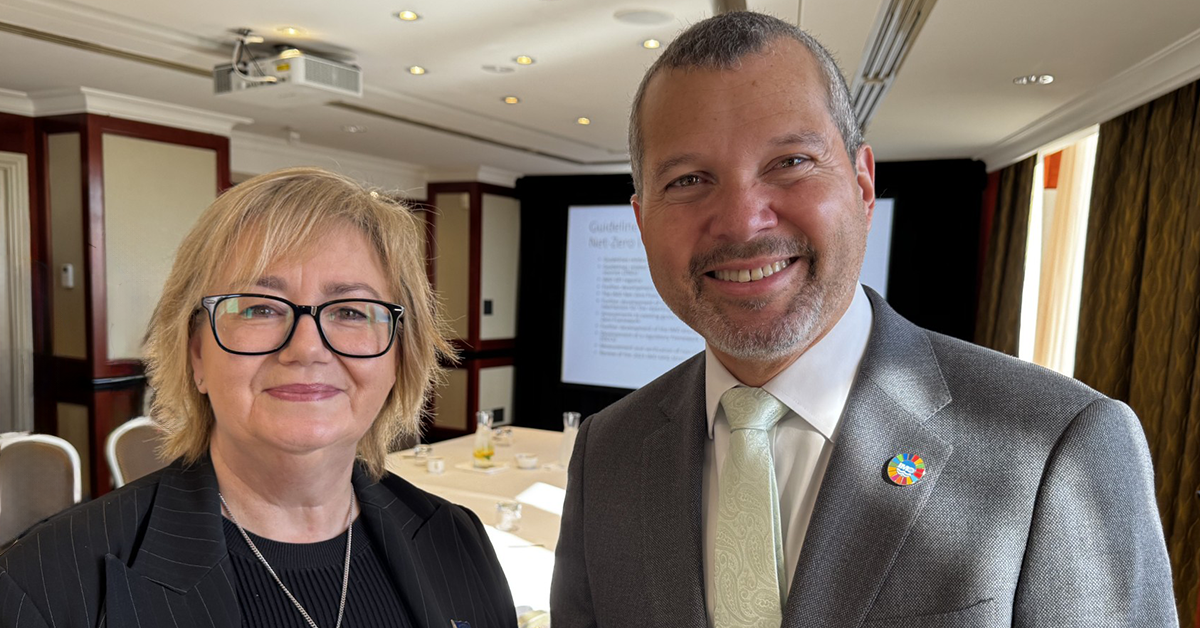
EARLIER this month in Sydney, I had the privilege of meeting Mr Arsenio Dominguez, Secretary-General of the International Maritime Organization, during his Pacific tour. It was a rare opportunity to engage with the leader of the IMO on the issues that matter most to seafarers — and he left no doubt about where he stands.
His message was clear: seafarers are not peripheral to global trade. They are its foundation. Without their skills, sacrifice and resilience, ships do not sail and supply chains falter. Mr Dominguez spoke passionately about welfare not as an optional extra but as a core element of safe and sustainable shipping.
Lessons from crisis
Our conversation returned often to the Covid-19 crew change crisis, when more than 400,000 seafarers worldwide were stranded on vessels. Crews worked months beyond their contracts, fatigue escalated, and shore leave disappeared. The world discovered that when seafarers’ welfare is neglected, the system itself is at risk.
For Mission to Seafarers (MtS), that period was a test of purpose. Across Australia our chaplains and volunteers delivered care packages, arranged virtual counselling and advocated for stranded crews. Hearing the Secretary-General reflect on those times affirmed that our work was part of a global effort to protect the people who move world trade.
But Mr Dominguez was also emphatic: welfare must not be treated as a crisis-response measure. It must be embedded into everyday shipping operations.
A shared responsibility
The Secretary-General underscored that welfare responsibility is collective — resting with flag states, port states, shipowners, unions, welfare organisations and regulators. That principle mirrors the ethos of Mission to Seafarers. For more than 160 years, MtS has served crews worldwide, adapting to change but remaining focused on seafarers’ dignity and wellbeing.
In Australia, this shared responsibility plays out daily across our ports. Bulk carriers load coal in Newcastle and iron ore in Port Hedland; tankers discharge in Melbourne; container ships call at Sydney, Brisbane and Fremantle. Each arrival brings crews who may not set foot beyond the wharf gate. Welfare provision ensures they are not invisible.
At MtS, we provide practical assistance: medical support, transport, Wi-Fi, pastoral care and a safe space ashore. But this can only be delivered in partnership with ports, shipping lines and regulators such as AMSA. Welfare must be seen as essential port infrastructure, not an afterthought.
From convention to practice
The Maritime Labour Convention (MLC, 2006) enshrines seafarers’ rights to rest, repatriation and welfare facilities. Mr Dominguez reminded us it is not only a legal instrument but a moral compass. Yet rights on paper must translate into practice. For a seafarer, that might mean a functioning Wi-Fi connection, a welfare centre, or simply someone to advocate on their behalf.
Australia’s opportunity
As an island nation reliant on maritime trade, Australia is uniquely placed to lead on welfare. Around 99 per cent of our imports and exports move by sea. Every tonne of ore, grain or manufactured goods depends on the labour of crews who often remain unseen.
Our centres in Sydney, Melbourne, Brisbane, Fremantle, Port Pirie and elsewhere exist to ensure they are not forgotten. Yet resources are stretched. As the Secretary-General reminded us, investment in welfare is not charity — it is resilience. Supported crews are safer, healthier and more productive. Neglected crews increase risks for all.
Connectivity is a pressing example. For today’s seafarers, contact with family is as vital as food and rest. MtS has invested in providing internet access, but expanding this requires industry-wide support. Mr Dominguez identified connectivity as fundamental; the Australian shipping community must respond.
Linking welfare and sustainability
What struck me most was the Secretary-General’s view that welfare is integral to the IMO’s sustainability agenda. Decarbonisation, digitalisation and safety reforms dominate maritime discussions. Yet none of these succeed without healthy, motivated people at the centre.
Too often, welfare is treated as a social add-on. In reality, it underpins operational excellence. Ports, shipping companies and governments must recognise that welfare investment strengthens safety, resilience and reputation.
A call to action
For Mission to Seafarers Australia, Mr Dominguez’s visit reinforced our resolve. We will continue to provide frontline welfare and advocate for crews. But we cannot do it alone.
My message to industry and policymakers is simple: integrate welfare into your operations. Support the centres and volunteers who welcome crews. Include welfare in port planning. Ensure that those arriving in our waters encounter a system designed with their dignity in mind.
The Secretary-General has made his position clear: welfare is fundamental. It is now up to all of us — industry, regulators and welfare providers — to translate that into action.
Seafarers keep the world moving. Their welfare is not peripheral; it is essential. If we can unite behind that principle, the future of shipping will be not only sustainable but humane.