
Perth conference grapples with maritime staffing
-
Posted by Allen Newton
- |
-
14 May, 2026
AS THE maritime industry in Australia struggles for personnel, MIAL’s Blueprint for a Maritime Nation conference in Perth this week wrestled with solutions and challenges.
The difficulty in recruiting staff for various sectors of the maritime community was raised by a number of speakers with several suggesting more flexible working arrangements to allow workers to move from one sector to another rather than being locked into a career in one part of the industry.
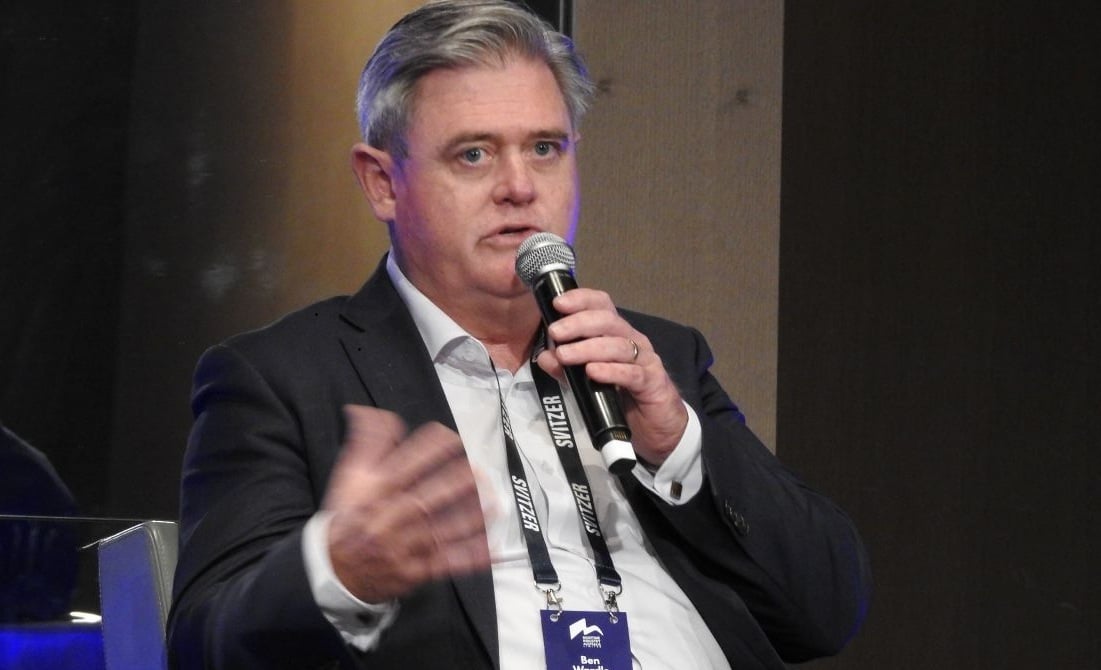
Moderator Emily Pointon from CSL introduced a panel featuring Rear Admiral Chris Smith, commander of the Australian Fleet; Francis Norman, CEO of Offshore Decommissioning Australia; Austal Shipping executive general manager, Ben Wardle; and commander Chris Holzheimer from Australian Border Force.
In her introduction Ms Pointon talked about the diversity of Australia’s maritime industry, from production and manufacturing, passenger transport to defence and all the elements that support those sectors, from tugs, pilots and harbour masters to terminals, stevedoring, salvage, chartering and cargo.
As CSL expands its fleet, it also needs to expand its workforce.
Navy’s Admiral Smith said because they added vessels to the fleet they also needed significantly more personnel.
Suggestions from panellists included better recruiting of students, more transparent and sharing of talent according to industry demand.
Commander Chris Holzheimer from Australian Border Force said there were gaps in the way the 20 agencies involved in Australia’s security worked and there was a need for them to work more closely together. To drive that cooperation needed somebody with overall control,
He also bemoaned the lack of an Australian coast guard. Mr Holzheimer argued it was urgent the maritime domain which is so important to the country was protected and asked who was responsible for protecting Australian ports.
Mr Holzheimer believed a whole of government approach was needed to develop a maritime strategy.
Panellists agreed staffing lay at the heart of many issues facing the maritime industry.
Ms Pointon said CSL was looking to bring new vessels into Australia and would need an additional 100 seafarers to crew them,
Rear Admiral Smith said the Royal Australian Navy was also building is fleet which required the support of ship builders and sustainment providers. The Australian Army was also building up to 26 landing craft which would require crews.
Staffing challenges also face the decommissioning industry, Francis Norman, CEO of Centre for Offshore Decomissioning Australia said their biggest challenge was finding the personnel able to carry out decommissioning work locally.
Austal executive general manager Ben Wardle said for every person they employed there were two or three others providing support services. He was expecting to double Austal’s 1500 workforce in coming years although the shipbuilder was currently going through a transition from commercial to military shipbuilding and as a consequence had temporarily reduced staff numbers dramatically.
Recruitment drives for designers had exhausted the available talent in Western Australia and had prompted Austal to create design centres in Cairns, Brisbane and Victoria.
Mr Holzheimer said Border Force needed to urgently add 100 seafarers to the 650 crew it already employed.
Admiral Smith said the Navy was looking to increase personnel from 15,000 to 20,000 and needed to align itself more productively with shipbuilder Austal and with Border Force.
Each of the panellists agreed their individual elements of the maritime industry were siloed and all agreed it would be difficult to change, often because of the specialist skills involved.
Mr Norman said the decommissioning industry sought to avoid siloing but in reality it was. The industry was desperate for maritime engineers – and almost none were trained in Australia.
“There is something broken in our system and we really struggle to get that message out there,” Mr Norman said.
Mr Holzheimer said the government needed to be convinced to invest more in training.
Admiral Smith said many of the roles they were looking for were highly specialised, ranging from sailors on sailing ships to personnel on nuclear submarines, and that there was a need to train them.
While he agreed there was a need for more industry training, he said it was impossible to apply general industry training to something like a nuclear submarine.
There is something broken in our system and we really struggle to get that message out there
Francis Norman, CEO of Centre for Offshore Decomissioning Australia
Mr Norman said a more transparent way of sharing personnel could help move specialist staff from one industry to another according to needs.
Austal’s Ben Wardle was anxious about involving too much bureaucracy fearing it could halt production.
Mr Holzheimer said there were several logistical issues and quoted an example of working on Christmas Island. Flying staff in, finding accommodation and even organising food supplies added to staffing issues.
In terms of attracting more people into the industry, he said there was a need to get people thinking about a maritime career.
“Not a lot of young people think about becoming a captain on a ship,” he said.
The much-talked-about strategic fleet was also raised in one of the panels.
MIAL CEO Angela Gillham said the proposed 12-vessel strategic fleet to service Australian ports would be insufficient to meet the need.
Australian flagged and crewed ships will require seafarers to be appropriately paid to Australian standards, unlike many international seafarers visiting local ports. Ms Gillham said the cost variation between local and international crew should be covered by the government.
Woodside head of employees and industrial relations Dave Sproule agreed Australian flagged vessels needed to be able to compete on an equal footing. He suggested a way of doing this could be through tax concessions.
Maritime Union of Australia national secretary Jake Field said he had already had a conversation with Prime Minister Anthony Albanese who told Jake he was committed to the Australian fleet and would take responsibility for making it happen.
Mr Albanese reportedly said he would convene a meeting of interested parties a fortnight after the national budget.
Mr Sproule said Woodside was keen to develop its operations in the Browse and to do that will need more shipping capacity.
And training was again raised in a panel discussion about skills and workforce.
Talking about training, moderator Teresa Lloyd, chair of the Australian Maritime Board ,said in the past the industry had made promises it couldn’t fulfill. In particular, that meant being unable to offer young mariners the time at sea required to allow them to climb the ranks.
Aircraft pilot and trainer Sue-Anne Munkton from Sky Careers Australia said by the age of eight, children were already ruling out careers so the industry needed to take early action to attract youngsters.
Svitzer’s senior people and business partner, Nick Rodgers, said it was important to look at new ways of attracting youngsters and suggested the AMC develop a training program for maritime engineers.
Southern Ports CEO Keith Wilks said even within his own organisation, there were anomalies.
His biggest recruitment issue was finding electricians, but after finding young electricians and training them, after four years they were expected to move on to other industry areas to broaden their experience for two years before returning to Southern Ports which Mr Wilks thought was a waste.