
-
Posted by Allen Newton
- |
-
14 Jul, 2026
Australia’s metropolitan ports are often in focus for the role they play in maritime trade, much of the future growth for maritime supply chains lies in our regional ports. DCN takes a closer look at how those regular ports are performing and their plans for a diversified future.
FOR decades, Australia’s regional ports were defined by a single commodity. Iron ore in the Pilbara, grain in the Wheatbelt, woodchips in Eden, gypsum in Thevenard, coal in Newcastle’s hinterland, bauxite in Weipa, zinc and lead in the Gulf. These ports were built for one purpose, engineered around one supply chain and economically tied to one industry.
But the past five years have brought a profound shift. Regional ports — once the quiet workhorses of Australia’s bulk export economy — are diversifying at a pace not seen since containerisation reshaped the capital city gateways.
Energy transition, the rise of critical minerals, the growth of renewable energy infrastructure, the expansion of agricultural exports and the need for more resilient supply chains are all driving the growth of regional ports.
Across the country, regional ports are no longer simply “iron ore ports” or “grain ports” or “bauxite ports.” They are becoming multitrade logistics hubs, handling everything from windfarm components to fertiliser, from mineral concentrates to project cargo, from alumina to containerised agriculture.
Ports Australia’s CEO Mike Gallacher points out that many regional ports are built around a resource, but resources are finite and our ports are continuing to look for new opportunities to grow.
“Ports haven’t always been defined by a single commodity — both the ports and the resources have long been there,” Mr Gallacher says.
“What’s changed is the commercial reality of exports. As certain commodities have become more lucrative and in higher global demand, ports have naturally evolved to support those trade opportunities. Looking ahead, ports and their tenants will continue to align with market demand and that demand will ultimately shape their future. Who knows what the future holds?”
Australia’s freight task is predicted to grow, according to Mr Gallacher, so ports will need to grow with it and, as the global economy transitions to net zero, regional ports will be essential in enabling new export industries and ensuring Australia remains globally competitive.
As certain commodities have become more lucrative and in higher global demand, ports have naturally evolved to support those trade opportunities
Mike Gallacher, Ports Australia
He says regional ports are central to Australia’s supply chain resilience, ensuring essential goods reach communities, even during disruptions caused by extreme weather or global instability.
To do that he says many of our regional ports are not only keeping up with infrastructure and technology to maintain this resilience, but are also leading the way in the areas of technology, safety and sustainability.
“Most ports, regardless of whether they are import or export focused, are vertically integrated. Ports are commercial enterprises that will avoid over-engineering and therefore building in cost drivers where they can avoid it. It’s about moving goods in the most efficient and commercially sustainable way possible.”
Regional ports play a huge role in Australia’s economic prosperity, facilitating the vast majority of our major exports and supporting hundreds of thousands of jobs across the country. These regional ports are critical to unlocking economic growth, connecting communities to global markets and underpinning Australia’s $650 billion maritime trade.
“Ports Australia has been a long-term advocate for the blue highway. Our ocean supply routes are open for business; we just need to commercially be in a position to take advantage. The viability of coastal shipping comes down to what is the most efficient, cost-effective way to move freight. Regional ports have a role to play regardless.”
That blue highway is further strengthened with the recent approval of expanded First Port of Entry status for Western Australia’s northern ports of Wyndham, Ashburton and Dampier, enabling direct international shipping and reducing supply chain costs for remote industries.
Wyndham’s vessel traffic is projected to double by 2033 and direct imports and exports for East Kimberley and Pilbara producers in agriculture, critical minerals and green fuels are predicted to boom.
Infrastructure momentum is also tipped to build on the Commonwealth’s $115 million commitment to Dampier common user upgrades.
Also in the north, at Kimberley Ports, the Derby Barge landing works are currently being assessed and the project is funded for commencement in the 2026/27 budget onwards.
At Pilbara Ports progress is also being made on the Zone 5 Channel Bypass in the Port of Port Hedland, with industry funding now agreed and the project set to proceed this year.
A spokesperson for Pilbara Ports said the channel bypass had been developed in close consultation with major port users and will provide a new navigational channel to the east of the existing shipping lane as a contingency should a grounding incident occur in the main channel at Port Hedland.
Dredging is expected to start in September 2026 and will take approximately six to eight weeks to complete.
“This milestone highlights strong collaboration across industry and reinforces Pilbara Ports' commitment to enhancing the port’s resilience and efficiency over time,” the spokesperson said.

CONCRETE FUTURE FOR MACKAY
North Queensland Bulk Ports (NQBP) is shoring up its future with the construction of the multi-million dollar Port of Mackay Container Depot.
A major milestone in its construction has been reached with the first concrete pour for the site’s hardstand, something NQBP CEO Brendan Webb said will strengthen supply chain resilience, improve turnaround times and lower logistics costs at the 1.3 hectare facility for Central Queensland industries including mining, agriculture and manufacturing.
Mr Webb said the hardstand pour was a major construction milestone.
Mr Webb said the first pour is an important milestone as the container depot begins to take shape.
“Once complete, local businesses and producers will have the opportunity to send and receive goods closer to where they operate, saving time, reducing costs and boosting local jobs,” Mr Webb said.
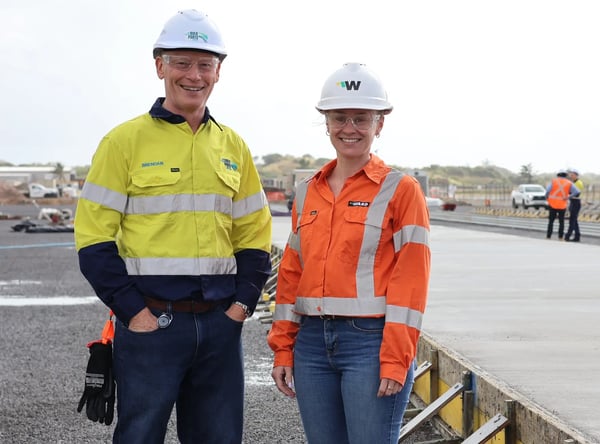
NQBP CEO Brendan Webb and Ward Civil Senior Project Engineer Michele Guild. Image: NQBP
“Designed for heavy-duty operations, the facility will be reach-stacker ready, include refrigerated container capability and support efficient empty container management, while allowing for future growth.
“With its strategic location, multi-cargo capability and well-established regional links, the Port of Mackay plays a crucial role in connecting Queensland to the world.”
Ward Civil & Environmental Engineering was awarded the construction contract, with works beginning earlier this year. Ward Civil Senior Project Engineer Michele Guild said the project was progressing well with early works now complete including the demolition of the existing concrete slab, earthworks, drainage and foundation preparation completed ahead of hardstand construction.
“Over the next six weeks crews will work six days a week to construct the foundations of the Port of Mackay Container Depot,” Ms Guild said.
“The works involve 39 concrete pours in total, with each pour requiring approximately 125 cubic metres of concrete, which is the equivalent of roughly around 21 truckloads per day.
“We’re using a high fibre concrete mix with minimal steel reinforcement, which allows for faster and simpler construction. Additional benefits include improved durability, longer service life and lower maintenance.”
The project is expected to be completed late 2026.
Western Australia’S SOUTHERN PORTS are LIKE CHALK AND CHEESE
ADVERTISEMENT
Diversification is a point well made through Southern Ports, which operates three very different ports in Western Australia’s south west.
Southern Ports CEO Keith Wilks says the ports of Albany, Bunbury and Esperance focus on four strategic pillars – trade, performance, value and connection, focusing on delivering long-term outcomes for regional industries and communities.
Mr Wilks says all four pillars keep the ethos of diversity at front of mind because the role of regional ports, particularly those that are publicly owned, is to work with customers to ensure strong results for those regions.
“Perhaps more so than in metropolitan areas, regional ports need to be prepared to embrace new emerging industries because bringing those opportunities to fruition can hinge on gaining access to market through a regional port,” Mr Wilks said.
“It is one thing for a region to be able to do something well or to have access to certain resources, it is a whole other thing to get to market at a competitive price.”
He said Southern Ports is delivering a multi-year record capital investment program to maintain and uplift new technologies, roads, sheds, berths and more — backed by an award-winning asset management system that is ensuring investment is made into the right assets at the right time.
It was open to customers wanting to try something new and to do that Mr Wilks said the ports needed to be thinking at least five or 10 years ahead which needed proper investment.
It is one thing for a region to be able to do something well or to have access to certain resources, it is a whole other thing to get to market at a competitive price,
Keith Wilks, Southern Ports
“Because our three ports are so different from one another, they are each set up in a way that best cater for customers in that region — but what they all offer is berths, high quality operations and assets and storage with inbuilt flexibility.
“We’ve started working with grain exporters in new ways, we’ve made more onsite storage available to importers and our extended laydown capacity in Bunbury now allows for a range of break bulk and project cargo opportunities to pass through the port.”
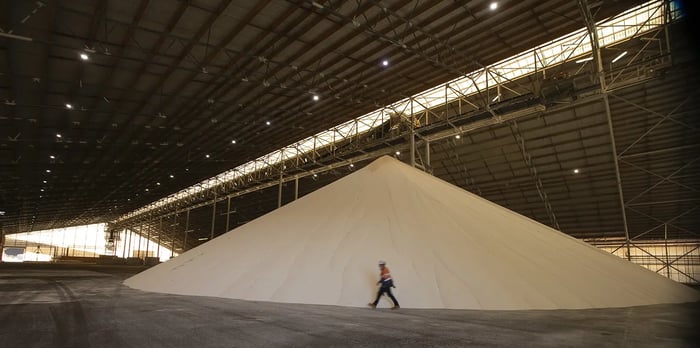
Shed upgrades are creating improved storage for customers at Southern Ports. Image: Southern Ports
The work of recent years to strengthen trade diversification is already paying dividends for Southern Ports, which now operates some of the most diverse ports in Western Australia, handling more than 40 commodities for 58 customers across its three ports last year.
Mr Wilks says this diversification also reduces the inherent risk that comes with single commodity reliance and responds to the need for bulk ports to diversify into emerging commodities and apply targeted investment that supports operational efficiency, future export opportunities and more flexible port uses.
In May 2026, WA’s State Budget included a $4.8m investment into the development of the Bunbury Port Optimisation Plan which will underpin the port’s expansion into its expansive 470ha of landholding adjacent to the bustling Inner Harbour.
That funding for the development of a detailed business case to ensure the long term future of the port will help the South West and the Port of Bunbury to stand in the front line of WA’s next economic shift in advanced manufacturing and the energy transition, according to Mr Wilks.
The long-term plan for the Port of Bunbury also addresses Infrastructure Australia’s priorities for ports, including the development of maritime precincts, enabling energy transition and targeted investment in common user infrastructure that supports economic diversification.
Elsewhere, planning for a new general purpose berth at the Port of Albany continues to gain momentum — even as the port celebrates its bicentenary. Almost $11 million was allocated to the project in the previous WA State Budget.
“Constructing the new berth is still some years away, but we hope to end up with an asset that will last decades while being flexible enough to handle different commodities as well as cruise vessels,” Mr Wilks says.
WINDFARMS A KEY TO TRANSFORMATION
Nothing illustrates the transformation of regional ports more vividly than the rise of windfarm components. These are not just another breakbulk cargo. They are symbols of a national energy transition — and they are landing overwhelmingly in regional ports.
Geraldton in Western Australia has emerged as one of Australia’s most important entry points for renewable energy infrastructure. Its proximity to the Mid West’s proposed hydrogen hubs, transmission upgrades and largescale wind developments has made it a natural staging ground for tower sections, blades and nacelles.
The port’s extensive laydown areas, upgraded hardstand and Oversize Over-Mass (OSOM) -friendly road network have positioned it as a long-term renewable energy logistics hub.
Construction on the Geraldton Port Road Access Upgrades started in May, with the contract to Civcon Civil and Project Management, marking a significant milestone in the delivery of the Geraldton Port Maximisation Project (PMaxP). Work is expected to be completed by June 2027.
Mid West Ports CEO, Damian Tully said the start of these key road infrastructure works marked an important step forward for the project.
"This is a major milestone in the delivery of the Geraldton Port Maximisation Project; these upgrades will improve safety and efficiency across the port precinct while ensuring we can meet growing demand from export industries.” Mr Tully said.
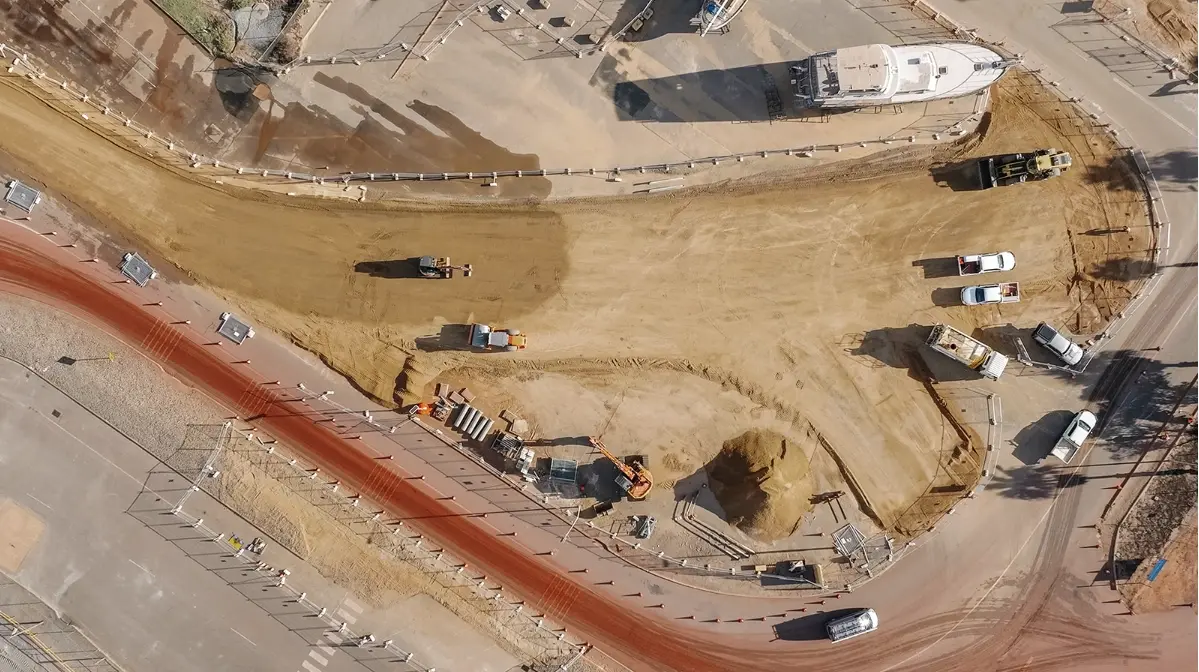
Construction under way on the Port of Geraldton access road. Image: Mid West Ports
A key feature of the upgrades is the ability to transport oversized freight, including wind turbine components up to 95 metres, (105 metres total length including the transport vehicle). This will support emerging renewable energy industries, regional economic diversification and the state’s decarbonisation objectives.
“The upgraded port road infrastructure will strengthen supply chains while opening the door to new industries and export facilities,” he said.
The PMaxP is funded by a $350 million contribution from the state government and is focused on upgrading existing infrastructure to improve efficiency and capability at the port, ensuring it can continue to support growing trade volumes across key commodities including grain, iron ore and minerals.
Geraldton’s evolution is emblematic of a broader shift: ports that once relied on grain and mineral sands are now handling the hardware of the future energy system.
Although larger than many regional ports, both Kembla and Newcastle sit outside the capital city container system and have become central to the renewable energy buildout. Their deepwater channels, heavylift capability and vast industrial land banks have made them the backbone of NSW’s windfarm logistics.
For Newcastle, the shift is especially symbolic. A port once synonymous with coal is now a leading gateway for renewable energy components.
Port of Newcastle remains the world’s largest coal export port, historically moving ~150–165 million tonnes per year. But the strategic story in 2025–26 is diversification, driven by: declining long-term coal demand forecasts; NSW government policy settings; the port’s own commercial strategy and constraints imposed by the ACCC-related deed -restricting container development, which is still a political/legal issue.
Articles in this feature
But large windfarm components departing Newcastle for the Uungula Wind Farm are a sign of the port’s growing role in project cargo and renewable energy supply chains as the port positions itself as the East Coast’s renewable energy gateway.
The Commonwealth has committed funding to Newcastle’s Clean Energy Precinct, which includes hydrogen production, export-ready infrastructure, new berths and laydown areas and a future-facing energy transition industrial cluster, making it one of the most significant energy transition port projects in Australia.
In Western Australia, Southern Ports’ Esperance and Bunbury facilities have handled components for regional wind farms and gridscale energy projects.
Windfarm components are not just a new trade — they are a catalyst. They require large laydown areas, specialised lifting equipment, coordinated scheduling, OSOM-capable road networks and multi-agency planning.
PROJECT CARGO CRITICAL
Townsville has become a critical node for project cargo supporting mining, energy and defence. Its multiuser berths, heavylift capability and proximity to North Queensland’s industrial corridor have made it a preferred gateway for equipment bound for the North West Minerals Province and emerging critical minerals projects.
Darwin’s role in defence, energy and regional development has driven a surge in project cargo. The port’s ability to handle large modules, prefabricated structures and heavy machinery is central to the NT’s infrastructure pipeline.
The ports of Geraldton, Bunbury and Port Adelaide are increasingly handling project cargo for mining expansions, renewable energy developments and industrial upgrades.
Project cargo is high margin, high profile and strategically important. It strengthens relationships with mining companies, energy developers and government agencies. It also drives investment in berth strengthening, heavylift cranes, digital planning tools, secure storage and multimodal connections.
FERTILISER, KEEPING AGRICULTURE MOVING
Fertiliser has become a much-talked-about commodity in the wake of the disruption in the Strait of Hormuz and concerns from Australian farmers that the 85% of all fertiliser coming into Australia is imported. With urea, ammonia and some phosphates and sulphur coming mainly from the Middle East, attention is focused on the now under-construction urea plant in Western Australia’s north.
Perdaman’s $6 billion Ceres Urea Plant located in the Burrup Strategic Industrial Area will use the Port of Dampier as its export gateway, with new federally backed port infrastructure set to underpin one of the largest new bulk trades to emerge in the Pilbara in more than a decade.
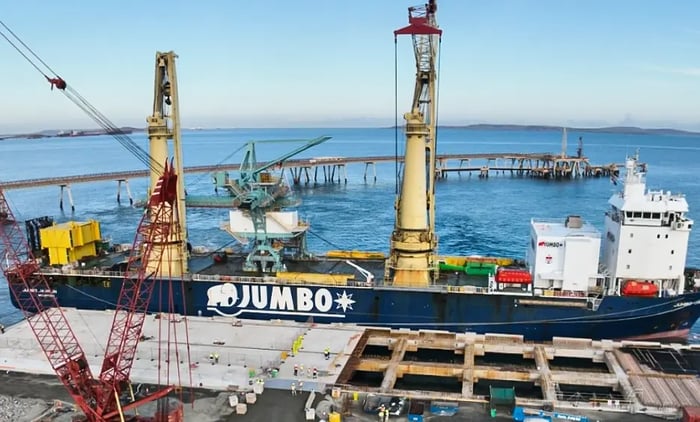
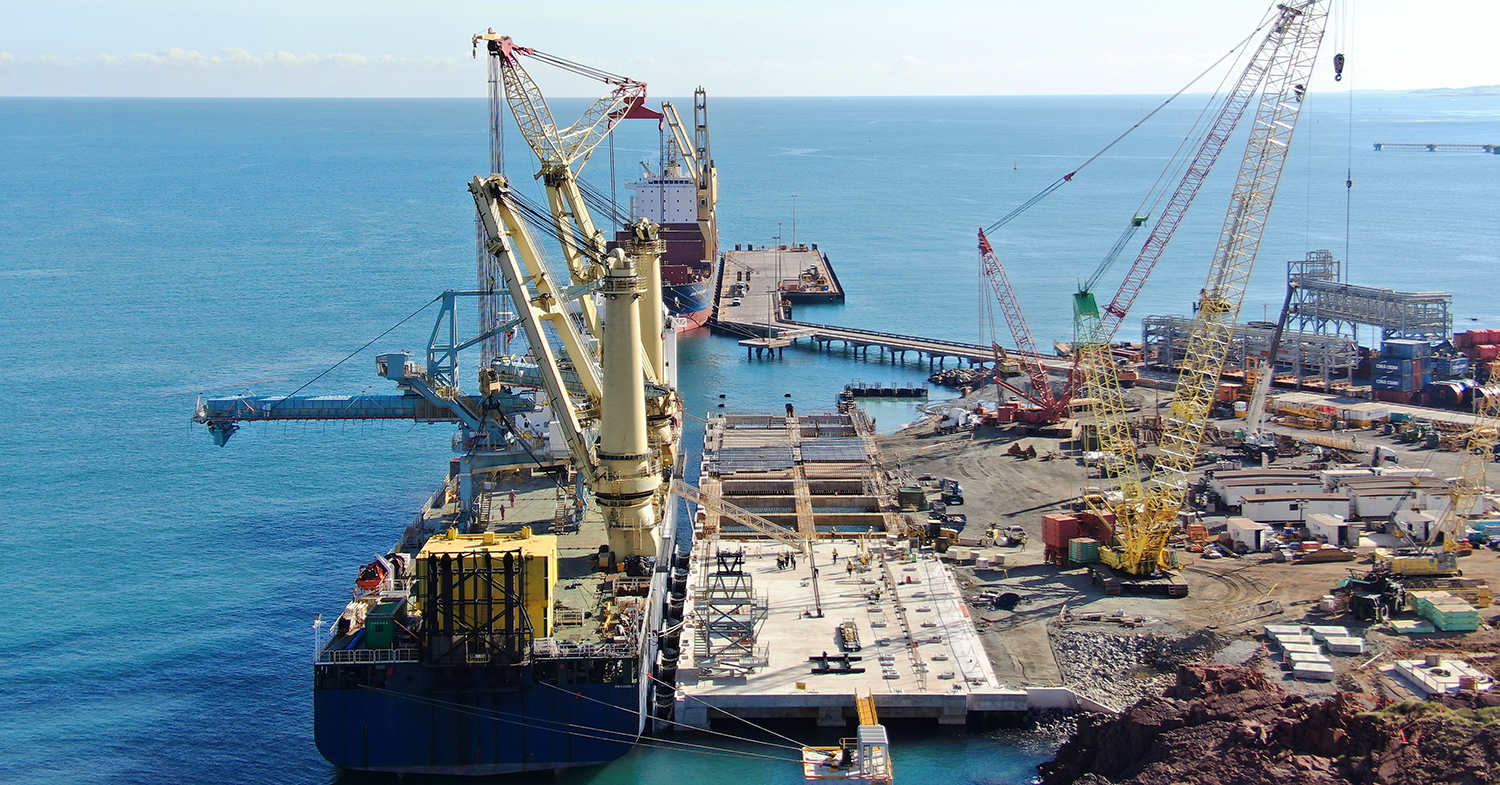
The arrival of Perdaman’s shiploader at Dampier Cargo Wharf, April 2026. Image: Pilbara Ports
The project will produce around 2–2.3 million tonnes of urea annually, with product to be transported via a new multiuser wharf and associated export facilities at Dampier. The infrastructure is being delivered by Pilbara Ports with support from the Northern Australia Infrastructure Facility, which has committed $160 million to the development.
The new wharf will service Perdaman as its foundation customer but is designed as a multi-industry asset, capable of handling general cargo, project cargo and future trades alongside urea. For Dampier — traditionally dominated by iron ore, LNG and salt — the project represents a significant step towards trade diversification.
Pilbara Ports has described the wharf as a “once in a generation” investment that will expand Dampier’s capability beyond its established bulk profile. The project also aligns with broader state and federal objectives to grow value-added manufacturing and downstream processing in the Pilbara.
Construction of the urea plant and associated port infrastructure is progressing, with first exports targeted once commissioning is complete.
For Dampier, the new trade stream marks a rare structural shift: a major new bulk commodity entering a port long defined by iron ore and LNG.
The arrival of Perdaman’s shiploader for the Dampier Cargo Wharf Projects represents a significant milestone in one of the most important infrastructure builds in the port’s history.
Measuring more than 40 metres long and 26 metres tall, the shiploader has been strategically positioned at the Dampier Bulk Handling Facility to load urea pellets.
The scale and complexity of the shiploader will enhance export capacity and support the long-term growth of industry in the Pilbara.
Its delivery signals tangible progress on site and highlights the collaboration between project partners working to strengthen the region’s global trade capabilities.
For the Pilbara more broadly, it signals the emergence of a more diversified industrial base, supported by new port capacity designed to serve multiple sectors.
Fertiliser is also one of the most strategically important trades for regional Australia. Ports such as Geraldton, Bunbury, Port Adelaide, Geelong, Townsville and Mackay handle large volumes of imported fertiliser that feed the nation’s grain, horticulture and grazing industries.
Fertiliser imports are essential to the productivity of WA’s agricultural sector. Geraldton and Bunbury in particular have become critical gateways for fertiliser distribution across the Mid West and South West.
In South Australia's Port Adelaide and in Victoria, Geelong and Portland ports support broadacre farming across the southern states, with fertiliser imports closely tied to planting cycles.

ALUMINA ANCHORING REGIONAL ECONOMIES
Alumina remains a cornerstone of several regional ports, particularly Bunbury, Gladstone, Kwinana and Gove. While not as headline grabbing as iron ore or LNG, alumina is a high volume, high value export that provides stable revenue and underpins regional employment.
Bunbury’s dedicated alumina berth and conveyor systems make it one of the most efficient alumina export ports in Australia.
Gladstone’s refineries and export terminals form the backbone of Queensland’s alumina industry. The port’s scale and reliability make it a critical national asset.
It provides the financial stability regional ports need to invest in new trades.
AGRICULTURE, THE BACKBONE OF REGIONAL PORT IDENTItY
Agriculture remains the defining trade for many regional ports. Wheat, barley, canola, lupins, pulses and containerised agriproducts move through a network of regional gateways that form the backbone of Australia’s food export economy.
In WA Geraldton, Kwinana, Albany and Esperance ports handle millions of tonnes of grain annually. Their efficiency is a major competitive advantage for Australian exporters.
And in South Australia Port Lincoln, Port Giles, Wallaroo and Thevenard, the state’s grain ports are central to its agricultural economy, with Viterra’s network providing world class storage and export capability.
On the east coast, Newcastle, Port Kembla, Geelong and Portland ports handle both bulk and containerised grain, supporting diverse agricultural regions.
CRITICAL MINERALS ON THE RISE
Mineral concentrates — including copper, zinc, lead, nickel and emerging critical minerals — are becoming increasingly important to regional ports.
Townsville is a major export point for copper concentrate and is well-positioned to support the growth of battery materials processing.
Mid West Ports’ Geraldton and Southern Ports’ Esperance handle the mineral concentrates from WA’s inland mining regions, supported by specialised storage and environmental controls.
In Darwin, zinc and lead from the Gulf are handled as concentrate from the McArthur River Mine via the Bing Bong facility, making it a key node in the NT’s mining supply chain.
At Groote Eylandt in the Gulf of Carpentaria, one of Australia’s least diversified regional ports — a private, manganese-only export terminal highlights the contrast with ports now broadening their trade mix.
The island is home to South32’s GEMCO operation, one of the world’s biggest manganese mines and operates the port at Alyangula, purpose-built for moving 5–6 million tonnes of manganese ore a year from mine to ship. It has no general cargo function, no container capability and no multiuser footprint.
The port’s vulnerability was exposed when Tropical Cyclone Megan caused severe structural damage in 2024, shutting down exports for nearly a year.
South32 rebuilt the 60-year-old wharf and shipments resumed in May 2025 — but the event underscored the risks of single commodity dependence in remote locations.
This article appeared in the June | July 2026 edition of DCN Magazine