-
Posted by Allen Newton
- |
-
23 Jun, 2026
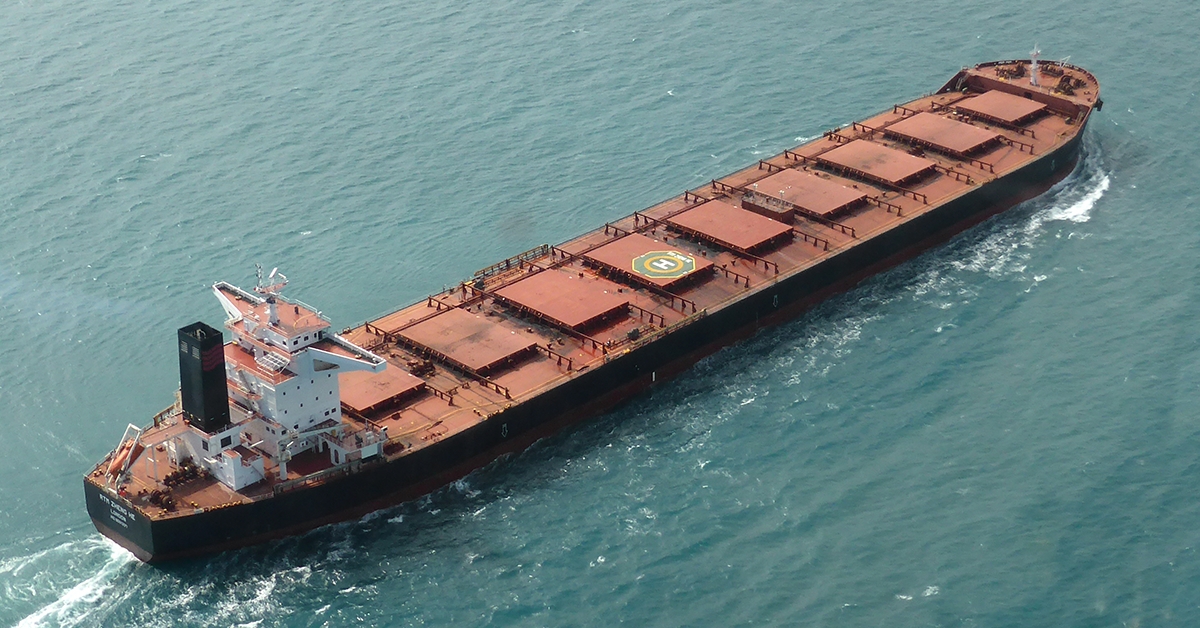
RIO TINTO is edging closer to a major reduction of its owned fleet after selling another two Newcastlemax bulk carriers to commodities trader Mercuria, according to trade press reports.
The move comes as fellow Australian miner Fortescue advances in the opposite direction, signing a milestone agreement for up to 12 ammonia‑capable bulkers with Belgian owner CMB.Tech.
TradeWinds reported on 22 June that Rio Tinto Shipping had completed the sale of two additional 2010‑era Newcastlemaxes at prices “slightly lower” than sister ships sold in April.
The latest disposals follow four earlier sales between April and early June, taking the total number of divested vessels to six out of eight in the series.
The eight‑ship class, ordered in 2010 and delivered between 2012 and 2013, has long formed the backbone of Rio Tinto’s owned iron‑ore fleet.
Additional reporting from World Ports Organization News earlier this month suggested the company was working toward a 50% reduction in its owned fleet, with all eight Newcastlemaxes understood to be on the market. That outlet identified RTM Dampier, RTM Drake, RTM Columbus and RTM Tasman as the remaining vessels being circulated to buyers.
The first two sales in the current wave — RTM Cartier and RTM Zheng He — were linked to a US$90‑million en‑bloc deal in April, according to PortNews.
Rio Tinto has not publicly announced the disposals and has not lodged any related disclosures with the ASX. The company typically does not treat individual vessel sales as material events requiring market notification. A spokesperson for Rio Tinto did not respond to DCN’s request for comment.
The sell‑down marks a significant shift in the miner’s approach to fleet ownership. If the remaining two Newcastlemaxes are sold, Rio Tinto’s owned fleet would fall to nine vessels — seven supramaxes and two panamaxes — with the company increasingly relying on chartered tonnage for Pilbara–Asia iron‑ore trades.
The divestment contrasts sharply with Fortescue’s latest move in the shipping and decarbonisation space. On the same day as the Rio Tinto sales were reported, TradeWinds also revealed that Fortescue and CMB.Tech had signed what the companies described as a “milestone” agreement for the charter of up to 12 ammonia‑capable bulk carriers.
Three of the vessels will be fitted with dual‑fuel ammonia engines, with the partners calling the deal “just the beginning” of a broader push to advance ammonia as a marine fuel. The agreement was framed as a “significant step towards decarbonising global shipping”.
The contrast between the two miners is stark:
Rio Tinto is releasing capital from an ageing fleet and shifting toward chartered tonnage.
Fortescue is doubling down on next‑generation, alternative‑fuel capability as part of its broader green‑energy strategy.
Market analysts say the two developments highlight diverging approaches to fleet strategy among major Australian exporters, with Rio Tinto prioritising capital discipline and flexibility, while Fortescue positions itself at the forefront of zero‑carbon shipping technologies.