-
Posted by Andrew Hudson
- |
-
01 Sep, 2026
THERE is a long history of government intervention in the international supply chain undertaken for a variety of reasons, whether related to the conduct of war, recovery of various duties, as controls for public safety or intended to protect national interest. Smuggling is as old as the very first trade regulations and taxes.
Various types of “smuggling” trace back to medieval times probably starting with illicit exports of English wool to France subject to high rates of customs duties on exports used to fund English conflicts. Reportedly, the illicit export of wool was originally known as “owling” as it was conducted solely at night.
Another traditional story relates to illicit imports of French lace and whiskey and other goods the subject of import duties. Such goods were “smuggled” into England in ways intended to avoid border officials in place to recover duties. Such “smuggling” often has been romanticised as films with goods arriving at beaches in England late at night and moved under candlelight to “secret” premises before being made available for sale.
Over time “smuggling” and evasion of different government controls at the border has changed as public interest has changed.
The “slave trade” has evolved into “people smuggling” and controls at the border have changed depending on the products the subject of government interests. Those in the supply chain who facilitate these actions are known variously as “bad actors” and “trusted insiders” and are within both the private sector and government employees.
Government intervention on tobacco
In more recent times, the goods the subject to more controls or more duties have expanded to new classes of goods previously uncontrolled such as asbestos, engineered stone and, of course types of alcohol and tobacco.
Import prohibition and increase in duties
For many years, the import of tobacco (as with alcohol) was subject to high levels of duties and was allowed to be held “in bond” with the duty only paid once the goods were released into “home consumption”. The rates began to increase significantly as the Federal government came to the view that there needed to be more significant controls on tobacco and more programs to deter the use of tobacco, including obliging importers to remove their usual labelling and dictating the use of plain packaging. Importers instigated international litigation against “plain packaging” of tobacco claiming breach of their intellectual property rights, which litigation was unsuccessful.
The next step by the federal government was to impose a comprehensive import ban against importers of all forms of tobacco requiring permits to be secured for import and the payment of duties at the time of import of the goods. That form of control has most recently been seen in new prohibitions on nicotine pouches. That prohibition was described in the Australian Border Force’s ACN 2026–29. This states, in part, that:
From 24 July 2026, there is no longer a lawful pathway for consumers to buy or import nicotine pouches in Australia. Nicotine pouches are small, tobacco-free sachets that can contain nicotine, often in high concentrations. They may also contain other chemicals such as sweeteners, flavours and undeclared substances.
The Therapeutic Goods Legislation Amendment (Fees and Other Measures) Regulations 2026 removes previous exemptions for the importation of nicotine pouches under the Personal Importation Scheme (including the exemption for travellers), the Authorised Prescriber Scheme and the Special Access Scheme.
This means that:
-
Consumers can no longer import nicotine pouches under the Personal Importation Scheme, even with a prescription from a medical practitioner.
-
Travellers cannot bring nicotine pouches into Australia as the traveller’s exemption no longer applies to nicotine pouches.
-
Medical practitioners and pharmacies cannot supply them.
Companies that want to sell a nicotine pouch product in Australia must first register it on the Australian Register of Therapeutic Goods as a prescription-only medicine, which requires demonstration that the product is safe and effective and meets Australia’s regulatory standards.
It remains illegal for retailers, including online sellers, to advertise or sell nicotine pouches in Australia.

Government control agencies
Federal government agencies such as the Australian Border Force (ABF) and the Australian Federal Police (AFP) have established various bodies to work on the illegal imports of tobacco including the Illicit Tobacco Taskforce and the more recent Illicit Tobacco National Disruption Group. Those are multi – agency bodies lead by government agencies.
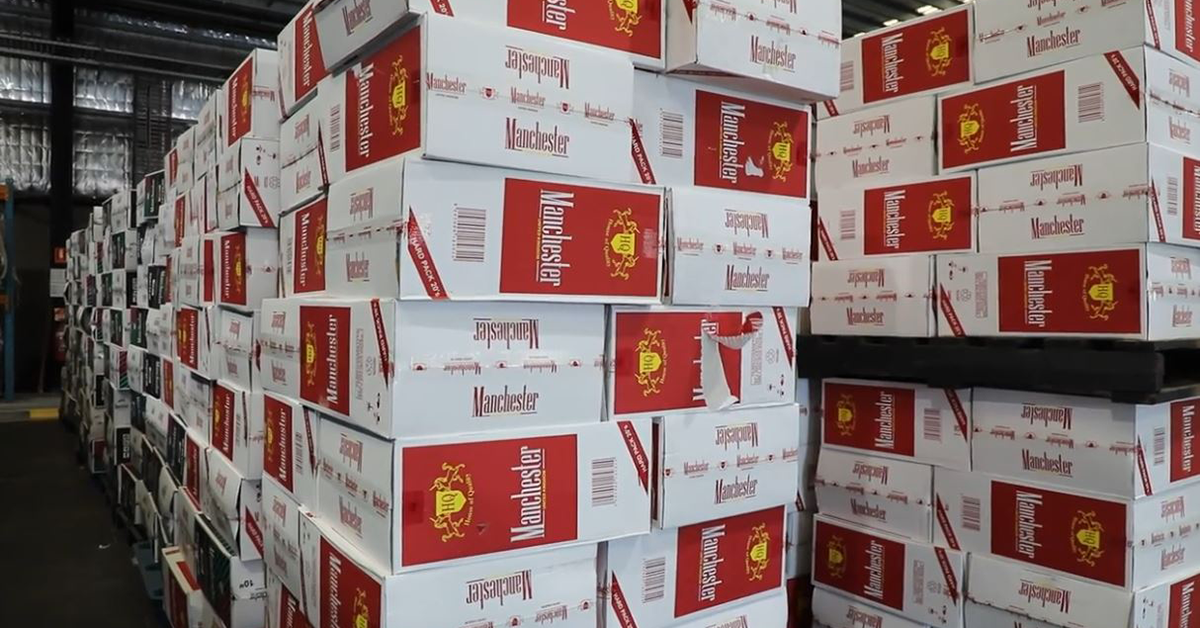
There is no doubt that there has been some success in seizing illegal tobacco products at different times, often by government agencies with the support of legitimate service providers including freight forwarders (FF) and licensed customs brokers (LCB).
Recent examples can be seen here. However, it remains the case that the massive drop in Government revenue from tobacco imports and presence of illicit tobacco in many retail stores selling inexpensive tobacco provide evidence that the measures in place will not deter those involved in illicit imports and sale of tobacco. The appetite for such imports can be seen from the levels of criminal controlled bodies involved in the sale of tobacco products in suburban shopping venues.
Unsurprisingly, the federal government has also focussed closely on those FF and LCB and others involved in the movement of illicit tobacco through the supply chain. This is seen by recent significant amendments to legislation and conditions for LCBs and those operating premises licenced by the ABF. While those parties are subject to close regulation by the ABF, FFs are not subject to similar licencing and regulatory restrictions yet, they can often be the parties’ providing instructions to LCBs and operators of licensed premises. It seems uneven that FFs are less controlled.
Focus of expectations of the ABF on LCBs and operators of licensed premises
As stated above, LCBs and operators of premises licensed by the ABF are subject to significant regulation and legislative obligations. This includes suspension of cancellation of licences after referral to investigation by the National Customs Brokers Licensing Advisory Committee (NCBLAC). NCBLAC is a separate statutory body established under the Customs Act 1901 (Act) comprising an independent chair, a representative of the ABF licensing branch and an “industry representative” being a LCB with significant expertise. Certain issues are referred by the ABF to NCBLAC which provides a report and recommendation to the ABF, although the ABF does have rights to independently act against a party in limited substances (such as insolvency).
Expectations of the ABF
The ABF has significant engagement with the private sector including attendance at industry CPD Forums, extensive publications on the ABF website including specific expectations set out in ABF Notices ACN 2014/52 (which provided early definitions of piggybacking) and ACN 2026/18 which was recently published in August 2026 to provide additional guidance from the ABF. The ABF also provides compulsory CPD education videos on the ABF website. That material does provide guidance on the expectations by the ABF on LCBs, and steps expected to be taken to minimise the risk of piggybacking and other illicit activity.
What should be the done by those in the supply chain?
However, all that material and the actions of the ABF in response to NCBLAC investigations does not provide a comprehensive list of obligations and expectations. In part, there is an expectation that licensed parties should act on circumstances which appear to be dubious and report such circumstances and not facilitate dubious imports. Certain vital information can be derived from current experience and resources in many ways including the following:
- LCB should be dealing with importers and recipients directly not solely relying on FF or other parties for information. This is consistent with securing “Authorities to Act” being an obligation on an LCB imposed by the Act.
- Attending all compulsory CPD obligations imposed by the ABF and CPD forums provided by industry associations
- Independently verifying parties with whom they are dealing whether FFs or other private sector participants
- Using available open technology resources to verify parties and their goods
- Looking to the private sector here and overseas as to technology which is available to assist in verifying parties to transactions and the goods the subject of such transaction. This would assist in dealing with more sophisticated illegal activity such as “deep fakes” or other misleading information. AI is already deeply embedded in the supply chain
- Reviewing business practices for proper verification of proposed contractors and employees are “fit and proper” whether they are in Australia or operate overseas
- Regular review of publications of the ABF or other agencies
- Seeking external assistance from industry experts as review existing practices and ensure that they are compliant with regulatory, legal and agency expectations
- Report dubious parties to the ABF and be prepared not to act for those who are dubious
- Some form of regulation of FFs.
Even with all the resources which are available, I remain of the view that few, if any, members of the private sector are deliberately engaged with illicit trade or do so recklessly. Licensed parties continue to be subjected to higher levels of compliance and review by regulators. It can lead to a sense of imbalance of power between government and private sector and an associated lack of clarity and trust. The nature of the relationship by the private sector and government agencies is overdue for independent review.