
-
Posted by Dale Crisp
- |
-
05 Nov, 2026
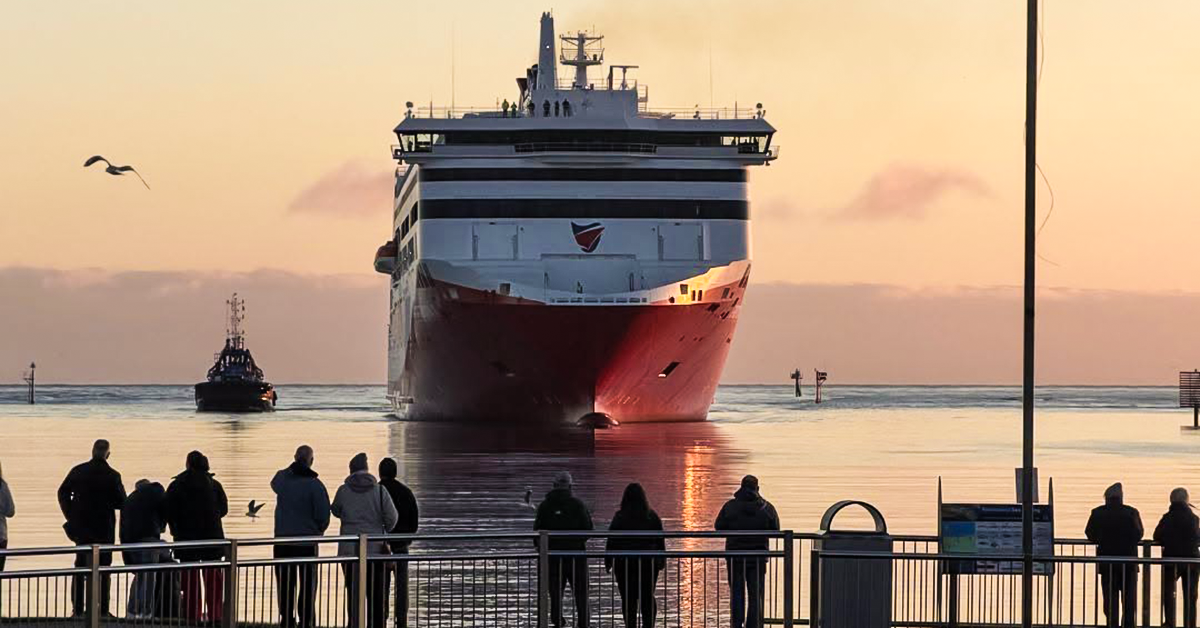
A REPORTED fault in the vessel’s navigation or steering systems delayed the arrival of Spirit of Tasmania IV in Geelong this morning [5 November] just as the Australian Transport Safety Bureau (ATSB) looks into similar issues with its sister ship Spirit V during an earlier trial voyage.
Observers on social media noticed Spirit IV apparently idle in Port Phillip. The vessel was awaiting a tug from Geelong to escort it to its berth and berthed at about 1030 hours.
In a statement, TT-Line chief executive Chris Carbone said: "The master of Spirit of Tasmania identified a fault as the vessel was preparing to transit through Port Phillip Heads on Thursday morning."
"Tug support was deemed appropriate. The tug had to travel to the ship from Geelong, hence the delay," he said.
The company said it was "investigating the matter and had engaged technicians to diagnose the issue".
"We apologise for the inconvenience to our passengers," Mr Carbone said.
A TT-Line spokesperson said the Australian Maritime Safety Authority would be advised, as was standard practice.
An ATSB spokesman said the Bureau was gathering further information about the circumstances of the reported steering issues with Spirit of Tasmania IV: “Depending on the nature of the incident, the ATSB may then determine the incident does not warrant investigation, or alternatively it may consider it as part of the ATSB’s existing investigation into steering issues involving Spirit of Tasmania V on 24 October. The Spirit of Tasmania V incident involving occurred off Point Henry in Port Phillip.

At 1956 hours on 24 October, Spirit of Tasmania V departed its terminal in Geelong under the conduct of a harbour pilot. It was bound for Devonport with 94 crew and 20 passengers on board and was carrying a cargo of freight vehicles. The voyage formed part of the ship’s operational testing program ahead of its full introduction to service a week later. The ship carried cargo but no fare-paying passengers.
At about 2030 hours, the ship was being controlled using its autopilot when it reached the junction between the Hopetoun Channel and Wilson Spit Channel to the northeast of Point Henry. The required starboard turn was initiated, but the autopilot responded slowly, causing a wider-than-expected turn, the ATSB says.
After the settings were adjusted, the ship’s rate of turn increased and the autopilot was subsequently unable to arrest the turn. Steering control was then switched to manual and port rudder applied to stop the turn.
Subsequent attempts to control the ship’s heading led to increasing oscillations from port to starboard, briefly taking the ship outside the charted shipping channel’s southern and northern limits.
The ship was then brought to a stop in the Wilson Spit Passing Channel, south of the shipping channel’s limit, to allow control to be regained before the outbound voyage resumed.
As part of the investigation, ATSB investigators attended the ship to collect evidence, which included examining the ship's equipment, interviewing the personnel involved, examining records and documentation and accessing recorded data.
A final report will be published at the conclusion of the investigation. Should a critical safety message be identified at any time during the investigation, the ATSB will immediately notify the operators of the ship and other relevant parties so that appropriate and timely safety action can be taken.