
-
Posted by Max Berry
- |
-
25 November, 2025
A MELBOURNE company has successfully demonstrated the technology enabling a battery electric tender (BET) for diesel locomotives.
The technology promises rail operators a faster transition to clean energy under a hybrid system than the decade-long alternative of retiring current diesel fleets and replacing each unit with a fully electric locomotive.
Backed by rail operator Aurizon and the federal government’s ARENA clean energy fund, ALTA Battery Technology (ABT) this week announced several key technical advances to make its battery electric tender system a viable decarbonisation option for rail operators.
The technical advances enable the company to move from concept to construction phase.
Key to the BET system is a 2.3 MWh modular lithium battery paired with five bidirectional 500 kW DC/DC, enabling controlled and efficient power exchange between the battery system and the locomotive’s electric traction motors.
The distributed converter configuration supports traction drive, regenerative braking, idle charging from the diesel engine and ground charging from external charging points, ABT managing director Roy Zou explained.
“The multi-converter architecture is what sets this system apart,” Mr Zou said. “By distributing power across five converters operating in parallel, we achieve even power distribution and battery balancing that significantly reduces degradation.”
“Each battery pack maintains optimal performance and the system can scale as requirements grow.”
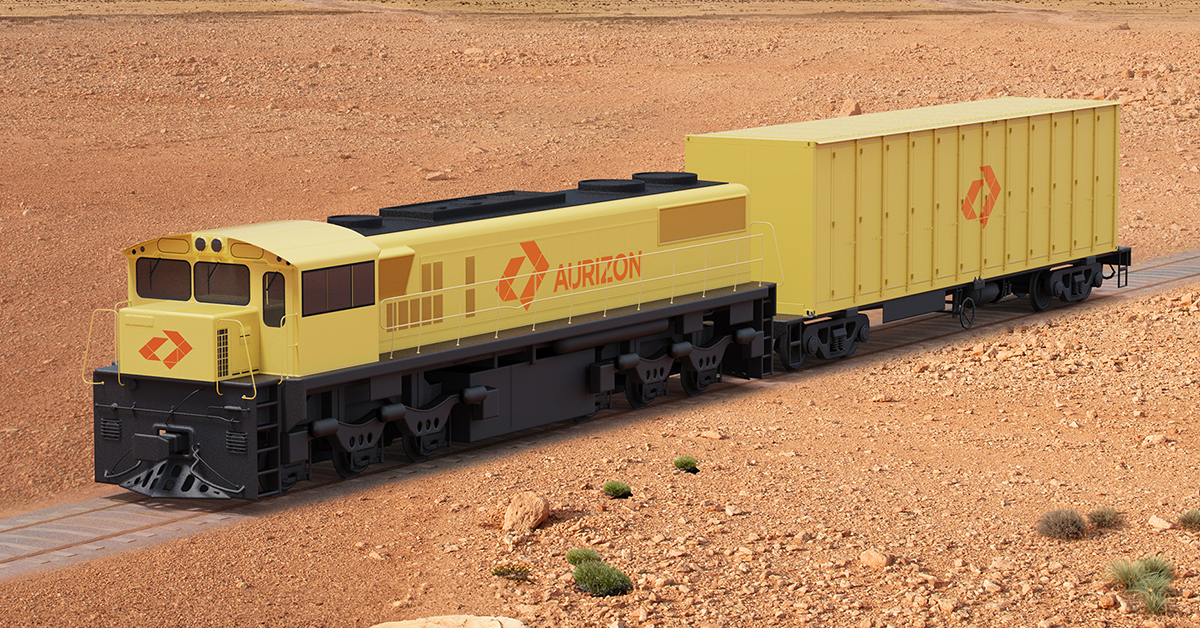
The planned BET is a 48-foot (14.6metre) containerised unit mounted on a wagon hauled behind a diesel locomotive, much like the coal tenders that trailed behind steam engines as their fuel source.
A diesel-BET combination can extend a diesel-only trip range by 400 km, either by using charging infrastructure at each end or by hybrid operation, using diesel outbound and battery-electric on the return journey.

Mr Zou said the train driver experience was relatively simple.
“As the diesel engine ramps up and down, we fill the missing portion with battery power, creating a completely seamless experience,” he said.
“The driver operates the same controls they’re familiar with, with no operational disruption. They’re simply driving a more efficient, lower-emission locomotive.”
Alta’s battery electric tenders are equally compatible with fully electric locomotives enabling rail operators to transfer the power plant wagons to the new locos when they become commercially viable, extending the lifespan of the BET investment.
A spokesperson for ABT added that the company would begin construction of a prototype BET wagon in 2026.
ABT’s battery electric tender advance follows soon after miner BHP announced the arrival in Australia of the first “purpose-built fully battery-powered heavy-haul” locomotives, which are to be tested on BHP’s iron ore rail routes from its Pilbara mines to Port Hedland.
Built by rail engineering company Wabtec to withstand the extreme heat of the Pilbara, BHP’s battery electric locomotives (BELs) feature a 7 MWh battery with regenerative braking technology, designed to capture and recycle energy during downhill braking.
Once safely commissioned, the units will undergo trials to test their performance in real-world conditions.
The trial is a key part of BHP’s drive to reduce greenhouse emissions, according to BHP WA Iron Ore Asset president Tim Day.
“It marks the beginning of an important trial to understand how this technology can help us reduce diesel use,” Mr Day said.
“Lower associated operational greenhouse gas emissions and improve efficiency across our rail network.”