-
Posted by Allen Newton
- |
-
27 May, 2026
BHP halted work on a major iron‑ore beneficiation plant in the Pilbara last year, despite internal modelling showing the project could cut global steelmaking emissions by 1.7 million tonnes annually.
The decision — first reported by the ABC’s Four Corners program and Guardian Australia — is supported by multiple independent analyses indicating the miner has slowed or deferred several decarbonisation initiatives across its WA iron‑ore operations.
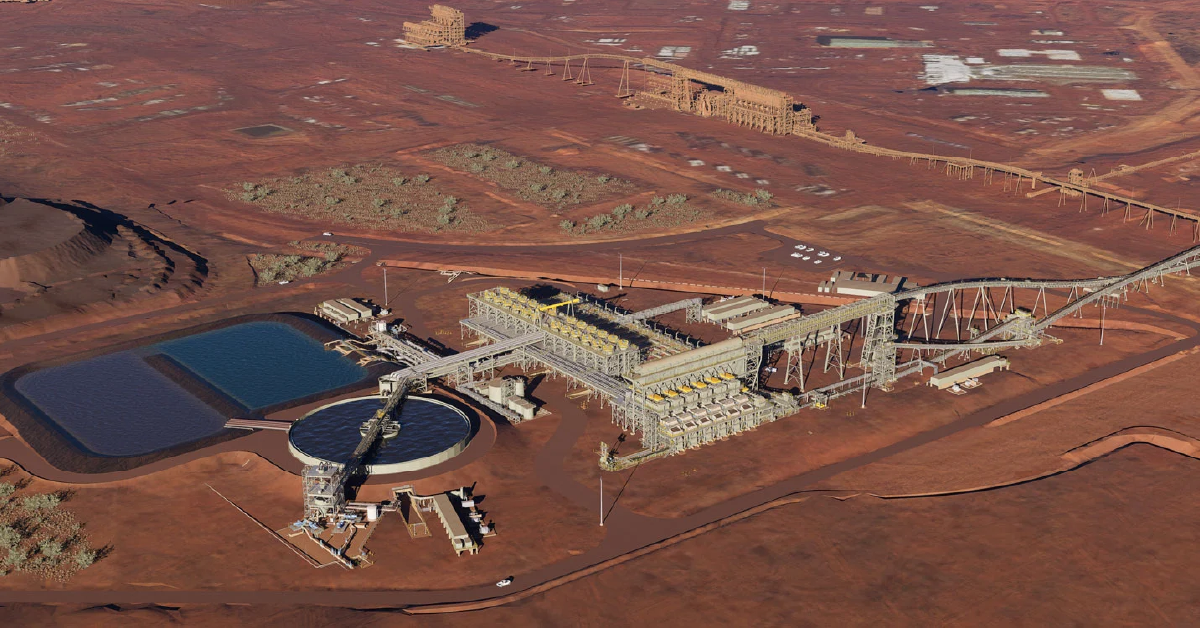
Internal documents obtained by the ABC show BHP had completed about 80% of the design for a proposed beneficiation plant at Jimblebar, a project valued at up to US$1.2 billion. The plant would have upgraded ore quality for export, reducing the amount of coal required by overseas steel mills and improving the competitiveness of Pilbara product.
According to the leaked material, BHP viewed the project as an “excellent social value opportunity” and a strategically important step in helping customers — particularly in China — decarbonise steel production. The company estimated the plant could deliver 1.7 million tonnes a year in downstream emissions reductions, equivalent to cutting 75% of BHP’s Pilbara operational emissions.
The project was halted in May 2025, however, after being deemed “not well placed to compete” for internal capital against projects that would increase iron‑ore output. An internal memo cited “marginal economics” as the key reason for the decision.
While BHP has not issued a public statement detailing why the project was stopped, several authoritative outlets have reported similar information.
Bloomberg reported BHP had abandoned plans for a lower‑emissions processing facility in WA, citing internal documents that pointed to capital prioritisation pressures.
Guardian Australia/Chin@Strategy likewise reported BHP had “quietly dumped” the Jimblebar plant, confirming the 1.7‑million‑tonne emissions‑reduction figure and describing the project as well advanced before being shelved.
MINING.com/Geomechanics.io reported BHP had paused or deferred up to US$1.7 billion in Pilbara decarbonisation projects, including beneficiation and renewable‑energy initiatives, due to “cash prioritisation requirements”.
Together, these reports corroborate the ABC’s central findings: that the Jimblebar plant existed, was significantly progressed, and was halted due to internal capital‑allocation decisions rather than technical or regulatory barriers.
Beneficiation has long been viewed as a potential pathway for Pilbara producers to maintain market share as major steelmaking nations — particularly China — move toward lower‑emissions feedstocks.
Analysts quoted by the ABC noted that higher‑grade ore could help shield Australian exporters from future carbon‑border adjustments or penalties on lower‑quality product.
The decision to halt the Jimblebar plant comes as BHP continues to pursue its 2030 emissions‑reduction target, though most of its recent progress has come from operations in Chile rather than WA. Internal documents cited by the ABC suggest BHP expects only a 1% reduction in Pilbara emissions by 2030.
BHP declined to comment in detail on the Jimblebar decision when approached by the ABC.