-
Posted by Allen Newton
- |
-
12 Sep, 2025
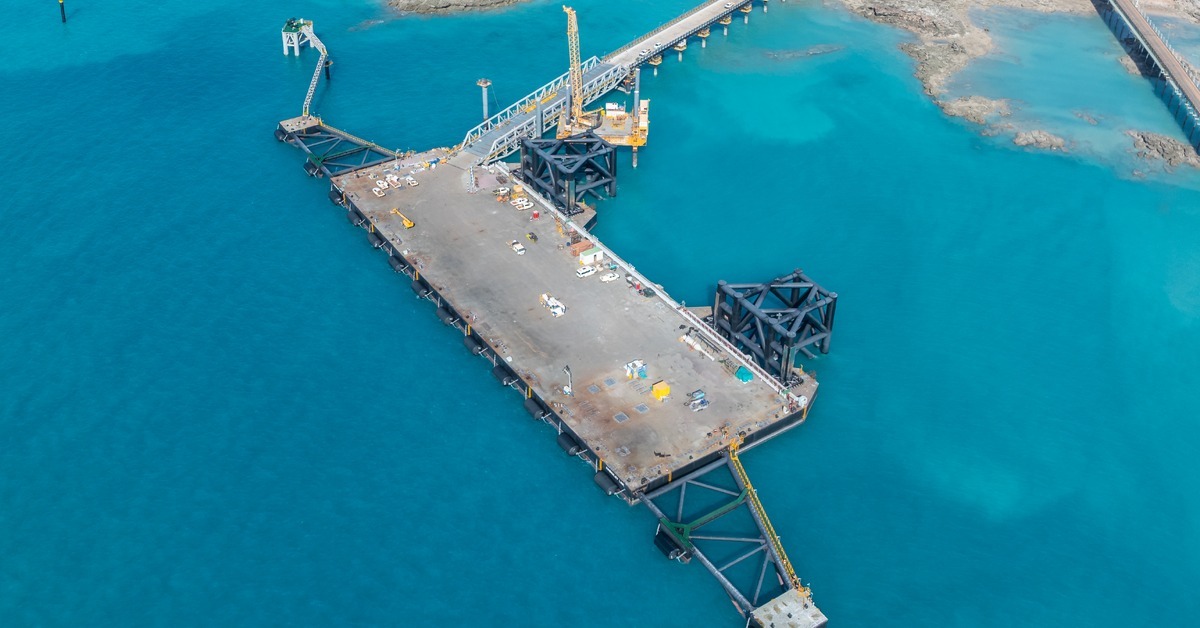
IT’S BEEN an eight-year challenge to get the Broome floating wharf up and running, but KMSB founder and managing director, Andrew Natta, is already turning his attention to the possible purchase of the Port of Darwin.
Speaking to Daily Cargo News yesterday (11 September), before today’s official opening of the new facility, Mr Natta confirmed his interest in taking on the embattled Darwin Port.
He said the Port was in his blood.
“We're an all-Australian company and we love doing what we do. If we think that we can go into a location and invest and either help it re-emerge or facilitate trade and open up new pathways, well we definitely are interested and we're most definitely interested,” Mr Natta said.
“We understand that's a complicated road, but we could potentially complement it like we've done in other ports.”
But before any talk of buying the lease from Chinese-owned company Landbridge, which both Liberal and Labor parties have pledged to return to Australian control, Mr Natta said the achievement of getting the Broome facility operational hadn’t really sunk in.
“I was reminiscing today, it was 2017 and I was actually in Sydney Airport and another person and I were discussing it, and I sent the first email in regards to whether or not there potentially would be an opportunity or consideration to consider a new piece of infrastructure that could facilitate and really remove that tidal influence with vessels birthing and departing.
“It's been a fun road, an interesting road. Even when I think back, because we've almost, at times, forgotten about COVID, and the influence that it had in that period where we were organising ourselves to bring this to reality.”
Mr Natta said the first thing he had to do was to make sure the project was actually possible and to come up with a different piece of infrastructure that would be acceptable to the Kimberley Port Authority and the state.
“Initially it was spending time with all those stakeholders and the Broome community and making sure that there was a need and there was an opportunity and it was possible.
“It was then making sure we were able to get all the environmental approvals and the community approvals and to make sure we could find a location that we could do what we wanted to do and at the same time have as light a touch as possible with our infrastructure, given the rich history in this location.
“So once we worked that out and we worked very closely with Yawuru and we did lots of site investigations to make sure that we weren't going to impact any sites.”
Approvals were won and an agreement with the Kimberley Port Authority and the state of Western Australia was struck.
Then COVID hit and Mr Natta said much of the work that been intended to go overseas had a changed engineering perspective encouraging the company to explore alternative methods of construction.
“Like the floating pontoon, the one that's there today, there's 11,500 tonnes of steel in just the floating pontoon. We looked at building a floating concrete pontoon that was going to weigh 31,000 tonnes because we thought, maybe we can build that in Australia. But that's a lot of concrete. And trying to find a location that you can launch something like that, or even in modular sense, it just proved very difficult.
“And so then I went through the process of looking at a hybrid system of concrete and steel, and we met similar issues with that. Then we had no choice but to build in all steel.”
The Broome community has thrown itself behind the project.
“Wherever you get a well-functioning port, they're economic enablers. And I think the Broome community for a long time has felt dislocated. It's 2,400 kilometers from Perth. So if you grow a pumpkin and you want to get it out, you have to drive it to Perth. That's a long way for a truck to go.
“The existing port has done an amazing job, but this complements it and then it reopens the door to all vessels, which change in size and width and other things. Well now, we've removed that barrier. And so we can export from this location whatever we need to whether it's compressed hay bales or whatever product the Kimberley community can produce, it has the opportunity to export it or if it needs those consumer items that are required to facilitate whatever they need to make their living, well now they can come in.”
The interview with Andrew Natta features in this week's edition of the The DCN Weekly Podcast