-
Posted by Allen Newton
- |
-
24 Nov, 2026
Australia can lead shipping decarbonisation through its ports, iron ore trade and alternative fuels, says Global Maritime Forum’s Jesse Fahnestock, but coordinated industry action and targeted government support are needed to turn that potential into commercial progress.
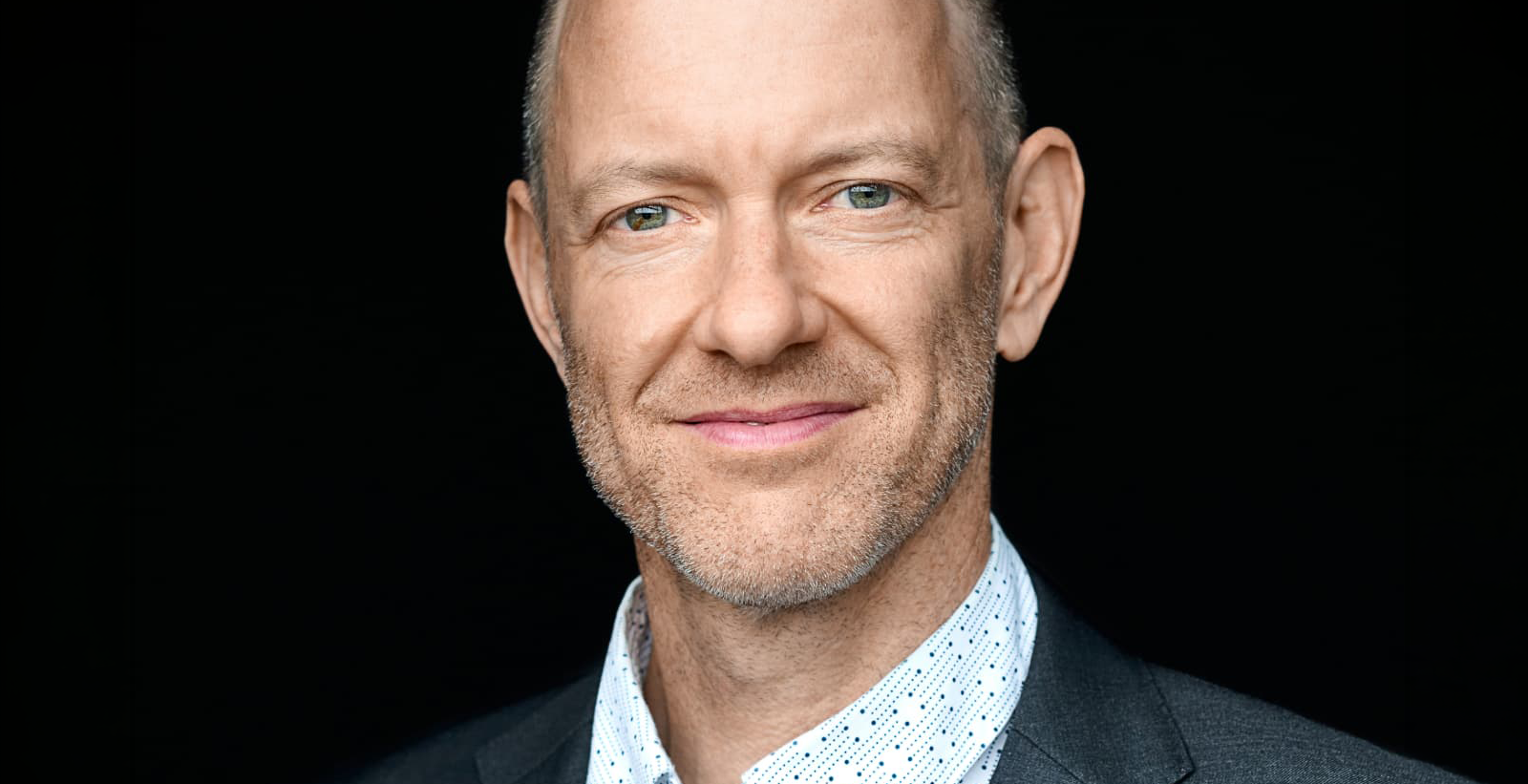
Global Maritime Forum decarbonisation director Jesse Fahnestock believes Australia is standing at a strategic crossroads in maritime climate action.
In a wide-ranging conversation with DCN, he outlined why Australia’s ports, miners and policymakers are uniquely placed to shape the next decade of global shipping decarbonisation — and why the window to act is narrowing.
Mr Fahnestock, who works remotely from Sweden while GMF’s headquarters remain in Copenhagen, has spent the past five years working closely with Australian stakeholders.
His team’s focus on the iron ore trade naturally drew them to the Pilbara, where he said some of the most serious and sophisticated decarbonisation thinking in the global bulk sector is now taking place.
“We saw that there’s really some unique strategic advantages that Australia has for acting on shipping,” he said. “Australia is a natural leader, and there’s more to be done to play that leading role.”
Mr Fahnestock welcomed the release of Australia’s Maritime Emissions Reduction National Action Plan, describing it as “a long time coming” but also “a really good sign”.
He praised the level of industry engagement behind the plan, noting that meaningful decarbonisation requires deep understanding of what is technically possible and commercially realistic.
Articles in this feature
He also highlighted Australia’s diplomatic role at the IMO, where the country served as lead author on the circular supporting the net zero framework adopted this northern summer.
“That’s a very good sign, very positive,” he said. “Leadership on the global politics is the first priority.”
But he is clear that political ambition alone will not deliver the transition.
Among Australian ports, Mr Fahnestock said Pilbara Ports Authority stands out.
“They have a great perspective. They see their role in this as an enabler,” he said.
GMF has worked closely with Pilbara Ports for half a decade, aligning efforts around alternative fuels and operational optimisation. The port’s earlier LNG work provided a foundation for its current focus on ammonia and other e-fuels.
Pilbara Ports has already conducted an ammonia bunkering simulation, with further trials expected later this year. Fahnestock said these practical demonstrations are essential to building confidence in new fuels and understanding safety requirements.
Other ports are also making progress. He pointed to Port of Newcastle’s vessel speed management program, originally developed in response to a safety incident but now widely cited as an emissions reduction model.

He also noted emerging green corridor discussions involving container trades between Australia, New Zealand and Japan. Still, he stresses that ports alone cannot deliver the transition.
“Given the trade we’re looking at, the port can do a lot, but there’s really a lot that is with the charters, with the mining companies,” he said. “Without the miners, it’s not going to happen.”
GMF has been one of the strongest global advocates for green shipping corridors, and Mr Fahnestock is candid about their current status.
“Making progress? Yes. But that might be a low bar,” he said.
Most corridors remain in the feasibility study phase. Many of those studies, he notes, will conclude that certain routes are not viable — and that is an acceptable outcome.
What matters is that some corridors reach commercial scale, enabling new fuels to be available in meaningful volumes by around 2030.
GMF’s internal modelling suggests that only a handful of corridors globally are on track for full commercialisation of methanol or ammonia by the end of the decade. Among them, Fahnestock says, the Australia–Asia iron ore corridor is “furthest ahead amongst the big routes where large vessels are trafficking”.
If Australia can activate this corridor, he argues, it will generate spillover benefits across the region and accelerate fuel availability for other trades.
Mr Fahnestock is pragmatic about the fuel landscape.
He sees ammonia as the long-term candidate for deep sea shipping, describing it as “thermodynamically interesting” and capable of delivering near 100% emissions reductions when produced from renewable electricity. But he warns that ammonia requires a complete transformation of the value chain and extremely robust safety systems.
Methanol, meanwhile, is the most commercially mature option today. Engine technology exists, carriers are ordering vessels and bunkering pilots are underway. Synthetic methanol using captured CO2 is “highly feasible”, he says, though dependent on regulation and early market support.
Governments proactively subsidising new technologies to get them to market is the one policy gap we’ve been trying to ring the bell for
Jesse Fahnestock, GMF
He expects biofuels, LNG and hydrogen-derived fuels to play roles in the transition, with different trades adopting different fuels for at least 15 years.
“You might eventually get a single winner,” he said. “But what matters is that you have a portfolio of options available.”
Wind-assisted propulsion also has potential, though he notes its “idiosyncratic” nature makes investment decisions difficult. As fuel prices rise under future compliance regimes, he expects wind to become more attractive.
Mr Fahnestock is clear about the biggest gap in global and national policy: stimulating the first wave of investment.
“Governments proactively subsidising new technologies to get them to market is the one policy gap we’ve been trying to ring the bell for,” he said.
He points to Norway’s early support for LNG as a model, and argues that Australia could do the same for hydrogen-based e-fuels.
Crucially, he said this does not require new funding pools. Many countries already have substantial supply-side support for hydrogen and ammonia production. Redirecting some of that support to offtake agreements — helping customers commit to buying the fuels — could unlock stalled investment decisions.
“Suppliers can’t get their investments finalised if they don’t have a customer at volume,” he said.
Mr Fahnestock’s message to Australia’s maritime sector is that the opportunity is real, but it is time-limited.
“There’s a less appealing scenario where this transition happens and Australia hasn’t captured all of its potential strategic advantages,” he warned.
He points to China’s rapid progress in climate technologies as a cautionary example.
“If you want to be part of this in the future, action now is the only opportunity.”
Australia’s industrial stakeholders — particularly in Western Australia — already understand this, he said. The challenge is ensuring political and regulatory systems can think beyond short term cost concerns and recognise the long-term industrial upside.
This article appeared in the October | November 2026 edition of DCN Magazine