
-
Posted by Daily Cargo News
- |
-
10 Nov, 2026
A NEW study released at last week’s International Association of Ports and Harbors World Ports Conference found only 5% of respondents said a port community system (PCS) was fully implemented at their port.
The State of Port Digital Readiness & Stakeholder Adoption of Port Community Systems report from Kalé Logistics found half of respondents identified customs as the primary barrier to adoption, while 35% cited other government agencies.
"Ports are facing greater supply chain disruption, congestion, labour volatility and compliance demands, but technology alone cannot solve these pressures while information remains fragmented between organisations and regulatory systems," Vineet Malhotra, Kalé co-founder and director, said.
"The next phase of port digitalisation requires policy, people and technology to move together, with authorities enabling trusted data exchange and ensuring developing markets are not left behind."
PCS connect public and private organisations across a port through a shared digital environment, allowing data to be securely exchanged and reused to reduce paperwork, congestion, delays and duplicated processes, while improving cargo visibility and coordination.
The research, combining stakeholder surveys from port authorities, shippers, freight forwarders, customs brokers and government officials, highlights the need for regulatory reform, improved digital skills and greater collaboration across port communities, Kalé said.
It finds 79% of respondents report that their port does not have a fully operational PCS, while 22% highlighted digital skills gaps as a barrier to adoption. Uptake remains particularly weak in low-income countries.
Customs authorities and freight forwarders also record the lowest willingness to adopt PCS, at 33%, despite their central role in cargo clearance and trade facilitation.
Kalé says wider adoption can give port communities the real-time information and coordination needed to manage disruption, improve cargo flows and build more resilient trade corridors.

Meanwhile, the International Association of Ports and Harbors (IAPH) says it is leading port industry efforts to ensure the International Ship and Port Facility Security (ISPS) Code remains fit for purpose, two decades after its introduction.
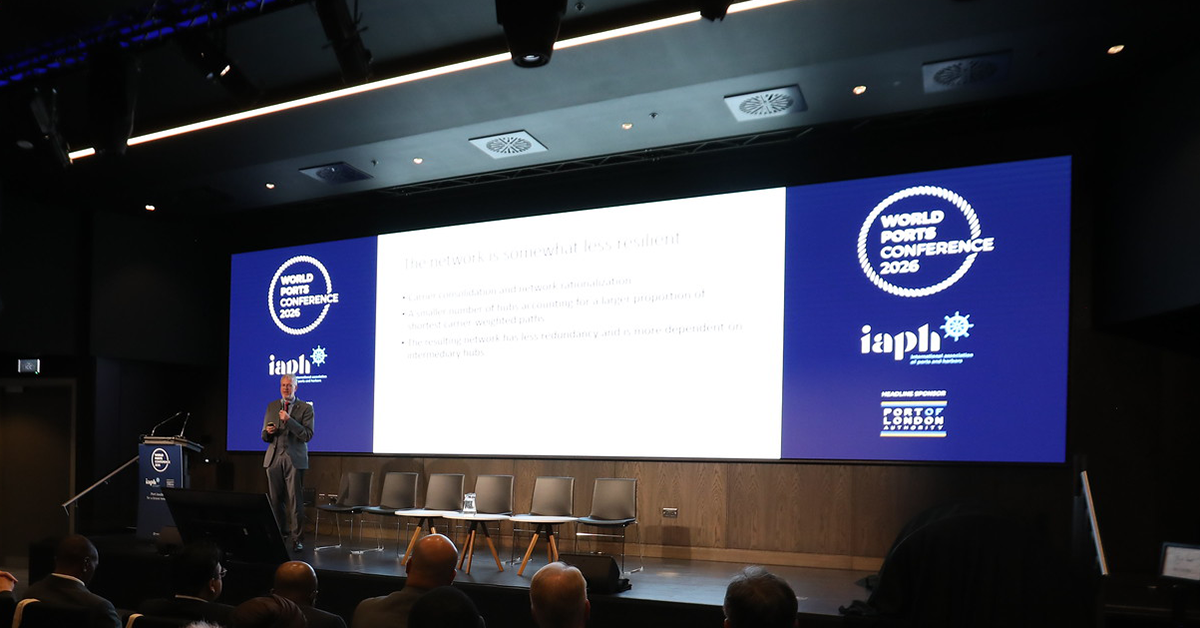
These efforts encompass a global survey of views on the ISPS Code in the port sector, detailed submissions to the IMO based on the subsequent findings and high-level discussions at last week’s international conference, attended by more than 700 delegates from 70 countries.
IAPH believes there is a case for updated guidance that reflects modern port operations and strengthens cooperation among key stakeholders.
In response to an International Maritime Organization invitation, IAPH established a dedicated working group under its Risk & Resilience Committee, focusing on the issue of whether the ISPS Code and/or supporting guidance should be revisited.
IAPH then undertook an industry-wide survey (August–September 2026) to gauge opinion on the possible future amendment, replacement and/or development of the ISPS Code.
The findings "provide evidence of the need to review and update the existing maritime security framework," the Association said.
Although there was considerable variation in respondents' individual assessments, when asked to assess the effectiveness of the current ISPS framework, the industry representative average showed a collective view of below 50% effectiveness.
Identification of the most significant weaknesses or gaps in the current ISPS framework showed a particularly strong concentration around technology and the changing nature of port operations.
The cybersecurity and digitalisation category was identified by 83% of respondents, making it by a substantial margin the most frequently selected weakness. Emerging technologies and automation were identified by 57%.
"IAPH considers that the findings reinforce the case for updated, practical and forward-looking guidance that reflects the interconnected nature of modern port operations and strengthens cooperation between governments, competent authorities and private-sector stakeholders."