From inclusion to involvement: A sea change in maritime culture
-
Posted by Matt Shirley
- |
-
03 Nov, 2025
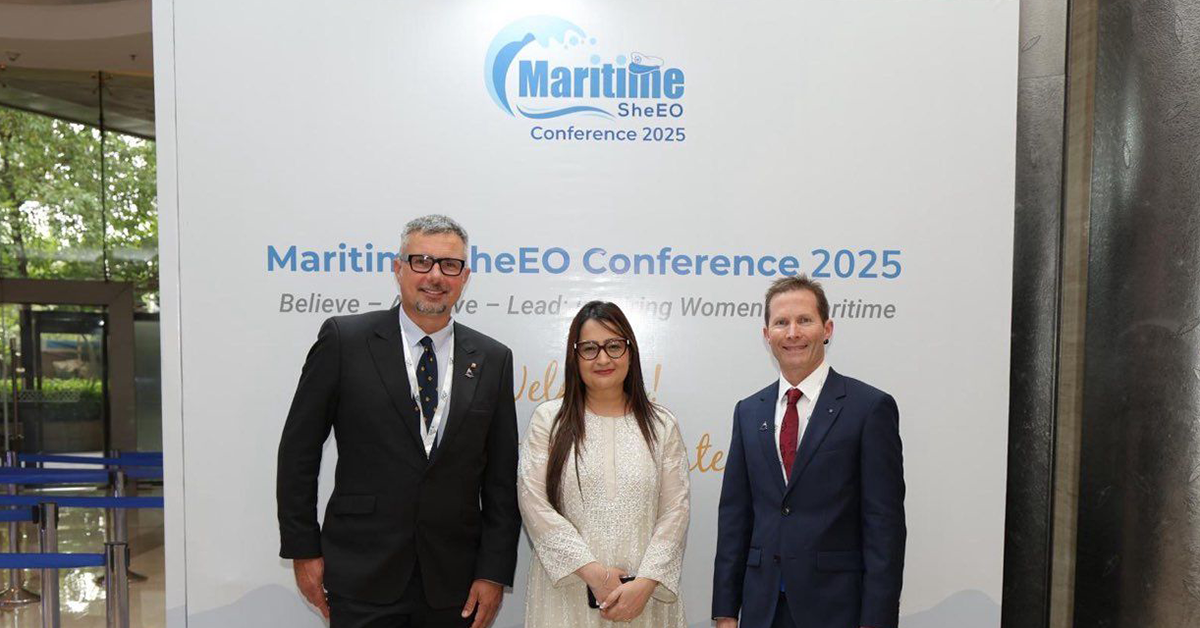
THE ONLY word I can think of to describe the feeling of walking into a conference on the other side of the world and seeing a sea of crisply uniformed cadets with bright smiles, is ‘infectious’.
Their presence on the opening day of this year’s Maritime SheEO Conference in Mumbai felt emblematic of an industry that just might be starting to realise something important — that change is coming. In every conversation, question and exchange, the cadets’ confidence and passion for the industry they’re setting sail into made one thing clear: they’re the future of our industry. And it is a future that needs to be heard, included and involved, because the maritime world they’re stepping into might just have to adapt to theirs.
In just a few short years, the Maritime SheEO movement and conference has grown from a one-day, 200-delegate event into a three-day global gathering of more than 500 participants from across the world and forms a significant and integral part of India’s World Maritime Week. And it is a growth that I think mirrors something larger and more meaningful; a rising tide of awareness and action across shipping itself.
Founded by the serenely calm, and yet quietly determined Sanjam Sahi Gupta, Maritime SheEO has become more than a conference and a cause. It has become a movement. A space where shipowners, regulators, seafarers, educators, innovators, leaders and dignitaries can come together with the shared aim of building a more inclusive, resilient, and sustainable maritime industry.
Throughout the conference, one phrase echoed again and again — from Thomas Kazakos, Secretary-General of the International Chamber of Shipping; from Jose Matheickal, Director of the IMO’s Technical Cooperation and Implementation Division; and almost every other speaker who took the stage:
“The shipping industry is powered by people.”
It is a statement that seems obvious, but to actively realise what it means carries, I think, an enormous weight. In spite of the rapid changes and advances in technology, ships, systems, and supply chains still depend on human beings. The challenge, as both Thomas and Jose reminded us, isn’t just in attracting new people to the industry, it’s in keeping them here by creating cultures that care, listen and give them a reason to stay.
They each spoke passionately about the need to invest not only in technology and decarbonisation, but also in trust, wellbeing and the human connection. Because the future of maritime sustainability isn’t only green, it’s human.
In my own session, “From Inclusion to Involvement”, I explored the idea that diversity isn’t a challenge we need to face, but an answer to the challenges we’re facing.
Inclusion’s a great start, but still only a start. Real progress and change will happen when that inclusion becomes involvement—when people aren’t just present, but are involved in actively shaping, questioning, and contributing. Because that’s what’ll build the high-trust, resilient, safe and innovative teams we need to keep the world moving.
What made Maritime SheEO 2025 remarkable wasn’t only its scale, but the way every conversation from gender equality to generational change came back to the same simple truth that people are the heart of shipping.
Diversity is no longer limited to gender; it includes nationality, ethnicity, sexuality, and perhaps most importantly, generation. And the shift underway isn’t only cosmetic, it’s cultural. The qualities that foster inclusion — trust, respect and empathy are the same ones that underpin safety, efficiency, sustainability and operational excellence. And nowhere is that more important than at sea.
Onboard ships, where isolation magnifies stress and culture defines your daily life (because there’s no escape) psychological safety isn’t just a luxury, it’s a necessity. Changing the way we treat each other on board, the way we listen (to learn), and the way we lead (and are led), is as vital to safety as any new regulation or piece of technology.
It was an absolute privilege and honour to have been invited to present and to meet so many like-minded people from every side of the maritime world.
My sincerest and most heartfelt congratulations and thanks to Sanjam Sahi Gupta and the entire Maritime SheEO team, along with every presenter, sponsor, dignitary, and delegate who helped make the event a success. It was an extraordinary celebration of progress and reminder that we need to keep pushing for change.
But most importantly, I’d like to thank the cadets I had to chance to meet for their questions, passion and belief in what this industry can still become. They reminded all of those there that the future of shipping’s already here and that it’s up to us to ensure the industry they inherit is one that listens, includes, and involves them.
And making a choice today to change things every day, not just once a year at a conference, is the way we’ll keep a sustainable maritime moving forward, together.