
-
Posted by Margot De Villiers
- |
-
9 March, 2026
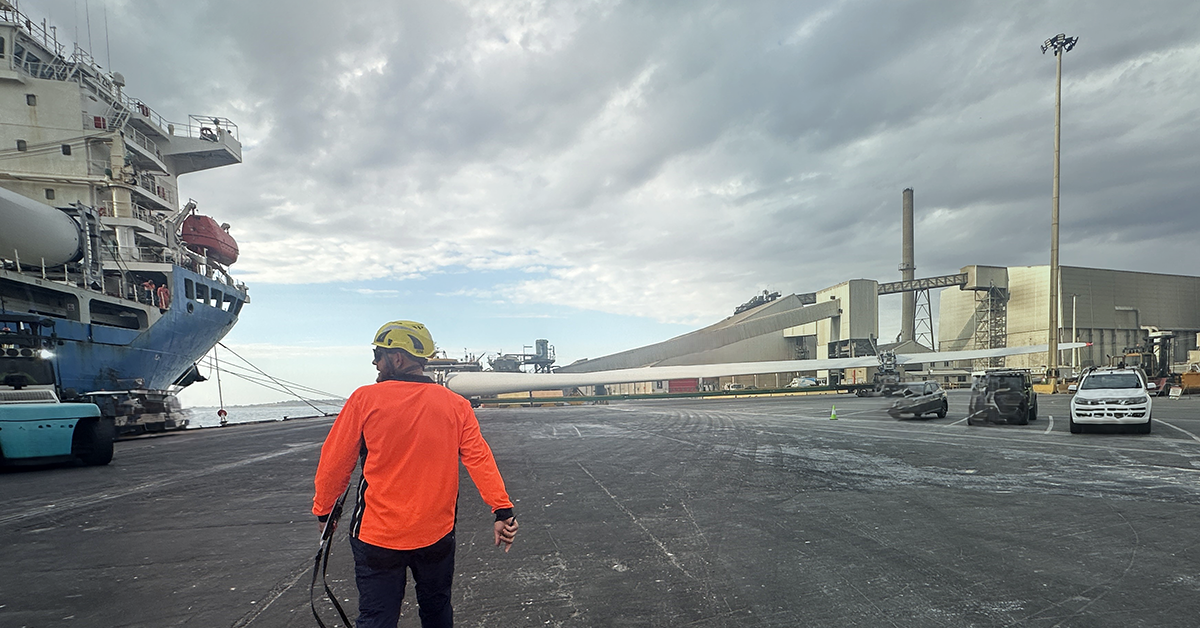
The marine surveying profession continues to evolve through workforce diversification, technological advancement and expanding specialisation
GLOBAL trade depends upon the safe, efficient movement of goods across oceans, air and land. Yet behind every successful voyage sits a discipline that is often unseen, undervalued and misunderstood — marine surveying. Acting as a critical backbone of maritime commerce, marine surveyors provide independent, factual assurance that vessels, cargo and infrastructure meet stringent safety, regulatory and operational standards. Through skilled inspection, measurement and analysis, they help protect assets, manage risk and uphold trust across the maritime ecosystem.
Marine surveying is not easily explained in a single sentence. It encompasses a broad and diverse range of responsibilities, from inspecting hull integrity and verifying cargo condition to investigating incidents and assessing environmental risks. These services safeguard shipowners, insurers, regulators and cargo interests alike, while supporting the reliability of global supply chains that depend on secure, timely delivery. Without accurate and impartial surveys, the risk of accidents, delays and financial loss would increase significantly.
In today’s increasingly interconnected and technically complex economy, marine surveyors are required to adapt continuously. Climate change, evolving regulatory frameworks and rapid technological advancement — such as remote inspection tools, data analytics and artificial intelligence — are reshaping how surveying services are delivered. By embracing innovation while maintaining technical rigour and professional integrity, marine surveyors continue to deliver critical value. While much of their work occurs behind the scenes, its impact is felt across every port, shipping lane and logistics network worldwide.
The scope and importance of marine surveying
Marine surveying plays a vital role across a range of industries, including insurance, maritime operations, logistics, engineering and infrastructure. The discipline spans a wide scope of services, such as:
- hold inspections
- loading and discharge surveys
- draft surveys
- cargo superintendence
- maritime warranty surveys
- marine incident investigations
- audits and compliance inspections
- pleasure craft inspections and valuations.
As global trade continues to expand and maritime operations grow more complex, the role of marine surveyors has become increasingly important. Their work underpins decision-making, supports risk mitigation strategies and contributes directly to the safe and efficient movement of goods.
By embracing innovation while maintaining technical rigour and professional integrity, marine surveyors continue to deliver critical value
In the insurance sector, marine surveyors assess risk exposure across vessels, cargo and transit operations. They investigate losses, quantify damage and provide objective reporting that informs claims outcomes, premium calculations and important decisions. Importantly, the scope of marine surveying extends beyond ocean transport to include road, rail and air freight, reflecting the integrated nature of modern supply chains.
In more traditional operational roles, marine surveyors conduct pre-loading hold inspections to confirm that vessels are fit to receive cargo and free from conditions that could lead to contamination or damage. Loading and discharge surveys document cargo condition, oversee handling and stowage arrangements and help resolve disputes by providing clear, contemporaneous evidence. Draft surveys remain a critical tool for determining cargo weight, supporting transparency between shipowners, charterers, cargo interests and port authorities.
Incident investigation is another core pillar of marine surveying. When maritime accidents or failures occur, surveyors combine technical expertise with analytical and reporting skills to establish cause, assess damage and identify contributing factors. These findings not only support claims resolution and legal processes but also contribute to improved safety practices and loss prevention across the industry. In parallel, audit and compliance services help ensure vessels and operators meet national and international regulatory requirements.
Articles in this feature
Beyond commercial shipping, marine surveyors also play an essential role in the recreational boating sector. Inspections and valuations of pleasure craft provide reassurance to private owners, support insurance placement and protect asset value in resale scenarios.
These examples represent only a portion of the profession’s breadth. Marine surveyors also contribute expertise in insurance loss adjusting, marine engineering and naval architecture, applying specialised knowledge to complex technical challenges across the maritime landscape.
Evolution of marine surveying workforce
Marine surveyors were traditionally drawn largely from seafaring backgrounds, often master mariners or senior officers with extensive operational experience at sea. While this pathway remains valuable, the profession has evolved significantly. Increasing regulatory complexity, advances in technology and heightened risk awareness have driven a shift towards a more diverse, onshore-based and formally educated workforce.
Today’s marine surveyors may specialise in areas such as cargo operations, compliance auditing, offshore energy, marine infrastructure or forensic investigation. Educational institutions and professional bodies have responded by developing targeted training programs covering maritime law, ship management, risk assessment, safety systems and advanced surveying techniques. This evolution has broadened the talent pool, enabling those without traditional seafaring careers, but with strong analytical, technical or engineering skills, to enter the profession.

Despite these advancements, the marine surveying profession faces an ageing workforce challenge. Many experienced surveyors are approaching retirement age and in some cases the physical demands of fieldwork are no longer sustainable. Without proactive succession planning, the industry risks a significant loss of institutional knowledge — often referred to as a ‘skill drain’.
Addressing this challenge requires deliberate collaboration across industry stakeholders. Knowledge transfer through structured mentorship, work-shadowing and apprenticeship-style programs is essential. Support from larger organisations, industry bodies and regional skills development initiatives can help fund and formalise these pathways, ensuring critical expertise is passed to the next generation.
Training, compliance and the need for collaboration
Education and training remain among the most significant barriers to entry for aspiring marine surveyors. While theoretical learning is widely available — often through online or international institutions — practical, supervised experience is essential to achieving professional competency.
Smaller surveying businesses often struggle to absorb the financial and operational burden of traineeships, while larger organisations must balance training investment against commercial pressures. Regulatory requirements further complicate the process, as many authorities mandate a specific number of supervised assignments completed alongside certified surveyors before formal recognition is granted. In a competitive market, this can present practical and commercial challenges.
At the same time, marine surveyors must continually update their knowledge to remain compliant with evolving legislation, standards and industry best practice. Ongoing professional development is critical but adds further pressure to already demanding workloads.
These challenges reinforce the need for industry-wide collaboration. Educational institutions, professional bodies, regulators and employers must work together to create clear, accessible pathways into the profession. Raising awareness of marine surveying as a viable and rewarding career — through engagement with schools, universities and adjacent industries such as engineering and logistics — will be a key to attracting new talent.
Diversity, inclusion and work-life balance
Like much of the maritime sector, marine surveying has historically experienced low levels of diversity, particularly gender diversity. Encouraging greater participation from women and other underrepresented groups is not only a matter of equity but also of performance. Diverse teams bring broader perspectives, enhanced problem-solving capability and greater adaptability in a rapidly changing environment.
Work-life balance presents another ongoing challenge. Marine surveying rarely operates within standard business hours. Inspections, incidents and cargo operations often occur around the clock, creating unpredictable schedules that can impact personal and family life. While this reality will not disappear, greater flexibility, team-based delivery models and the intelligent use of technology may help create more sustainable working arrangements — vital in attracting and retaining younger professionals.
The digital tide — technology transforming marine surveying
Marine surveying is undergoing a profound digital transformation. Once dominated by manual inspections, hard-copy references and paper-based reporting, the profession is increasingly supported by advanced technology that enhances safety, accuracy and efficiency.
Unmanned aerial vehicles (UAVs), autonomous underwater vehicles (AUVs), remotely operated vehicles (ROVs) and robotics now enable high-resolution inspections of vessels, offshore structures and subsea infrastructure without the need for high-risk physical access. Equipped with imaging systems and advanced sensors, these tools allow surveyors to capture detailed data more safely and efficiently.
Real-time monitoring systems embedded in vessels and cargo provide continuous insight into structural integrity, vibration and environmental conditions. Combined with predictive analytics, this data supports proactive maintenance strategies and reduces the risk of costly failures on downtime.
Artificial intelligence and data analytics are further transforming raw survey data into actionable insight. Automated image recognition, trend analysis and cloud-based reporting platforms allow surveyors to collaborate in real-time and deliver timely, consistent outcomes across global operations. Emerging applications of augmented and virtual reality also enable remote support and virtual walkthroughs during complex inspections.
While the pace of digital change can appear confronting, it ultimately supports a safer, smarter and more resilient marine surveying profession — one that is well equipped to meet the demands of an increasingly complex maritime world.
Looking ahead
Marine surveying remains a vital pillar of the maritime industry, supporting safety, efficiency and confidence across global trade. Its impact spans insurance, logistics, engineering and infrastructure, with surveyors playing a critical role in managing risk and protecting value.
The profession continues to evolve through workforce diversification, technological advancement and expanding specialisation. However, challenges related to education pathways, workforce ageing, diversity and work–life balance must be addressed to ensure long-term sustainability.
By fostering collaboration, investing in training and embracing innovation, the marine surveying industry can attract the next generation of professionals and continue to deliver trusted expertise in an ever-changing global environment. In doing so, marine surveyors will remain not just observers of maritime activity, but essential contributors to its safe and successful future.
This article appeared in the February | March 2026 edition of DCN Magazine