
-
Posted by David Sexton
- |
-
09 Sep, 2026
RAPID expansion of on-farm grain storage has further altered grain freight patterns and rail demand, a new report reveals.
The 2026 State of the Australian Grain Industry Report was published by GrainGrowers, an industry-focused advocacy group.
The report noted “a sector that remains strong despite a challenging operating environment”.
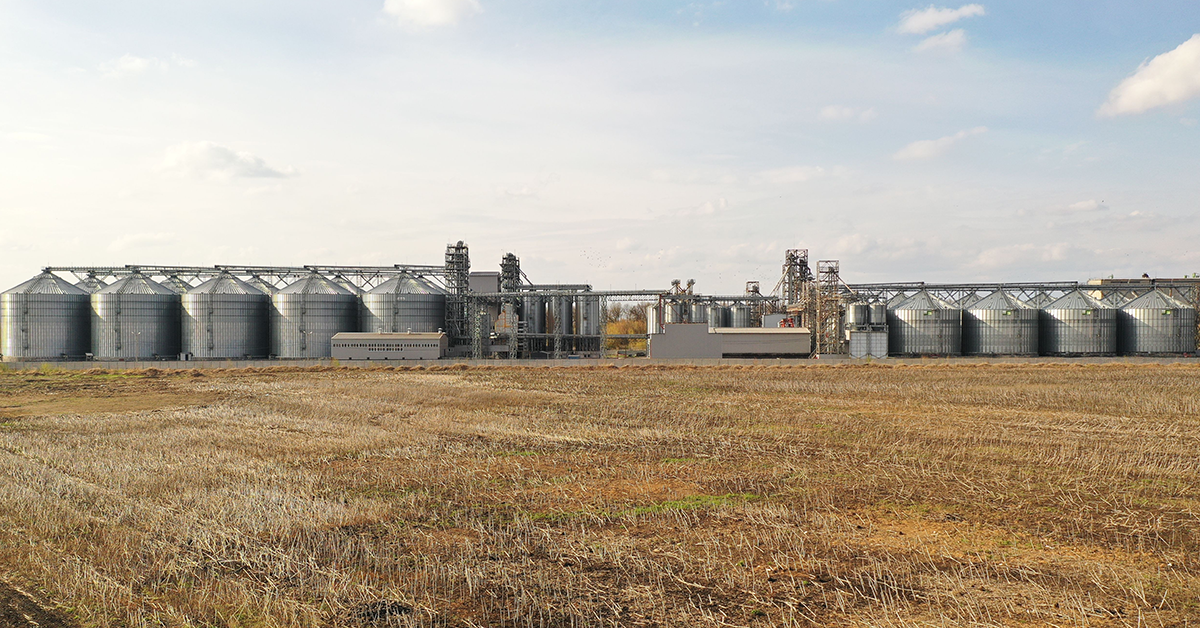
“The rapid expansion of on-farm grain storage has further altered grain freight patterns and rail demand. Once a marginal practice, on-farm storage is now a core component of many farm business and marketing strategies,” it stated.
“Instead of delivering grain to a receival site at harvest, on-farm storage lets growers manage harvest logistics, delay delivery, and respond to price signals.”
According to the report, the average amount of grain able to be stored on-farm grew from about 2850 tonnes in 2021 to almost 3200 tonnes in 2025.
“The growth of on-farm storage has increased reliance on road freight, as grain is more often moved directly from farms to domestic customers or ports at flexible times rather than being delivered immediately to rail-served bulk receival sites at harvest,” it stated.
“While this has improved grower flexibility and supply chain responsiveness, it has further reduced the aggregation advantages that traditionally underpinned rail freight in some regions.”
The report stated that growers were at the centre of success, demonstrating resilience in the face of strong headwinds.
Positive seasonal conditions
Recent production was said to have benefitted from positive seasonal conditions after dry years in the late 2010s; the five-year average grain production to 2025-26 was 64 million tonnes, compared with 44 million tonnes for the five years to 2020-21.
“The past six years has seen Australia’s five largest grain production seasons, supporting a long-term trend of grain production increasing at a much faster rate than the annual area planted,” the report stated.

“This highlights the significant productivity gains achieved by Australian grain growers while remaining competitive and feeding a growing global population.”
The consequence of productivity gains was the need for grain freight and transport systems to handle larger crop volumes.
According to the report, Australia’s grain freight supply chain was characterised by long, complex and multi-directional freight journeys across multiple modes of transport.
“While there has been improvement in ship-loading capacity and some new rail investments in recent years, grain freight costs and efficiencies are a significant barrier to increased grain industry productivity and profitability,” the report stated.
“Successive record or near-record crops in recent years have increased the volume of grain needing to move from paddock to port, placing growing pressure on regional roads, rail networks, storage systems and export terminals.”
This task was said to be important given Australia’s counter-cyclical position in global grain markets, the majority of Australia’s grain being harvested between December and February, around six months after the Northern Hemisphere harvest.
This timing creates “a critical export window” from December to May.
“Ensuring grain can move efficiently during this period is essential to capturing this competitive advantage. However, the supply chain is operating in an increasingly complex environment that is putting pressure on costs and efficiencies,” the authors stated.
“Extreme weather events have damaged critical freight infrastructure and disrupted key transport routes across grain-growing regions. Global conflicts have disrupted major shipping corridors, increasing freight costs and uncertainty in international shipping markets.”
Maritime logistics
Meanwhile, a well-functioning maritime logistics system was said to be critical given Australia’s grain industry relied upon the nation’s ports and shipping networks to transport their products to overseas markets.
It was noted that containerised grain export is becoming increasingly prevalent via Australia’s five container ports.
Victoria and New South Wales are typically Australia’s largest source of containerised grain exports, with Queensland’s containerised exports being described as “highly variable, dependent on domestic production and global trading conditions”.