
-
Posted by Chi Kin Yong
- |
-
20 Nov, 2026
AS CARRIERS move into terminals, logistics and inland transport, does ownership or coordination decide how freight performs?
Shipping lines are extending beyond ocean freight into terminals, forwarding, inland transport and warehousing.
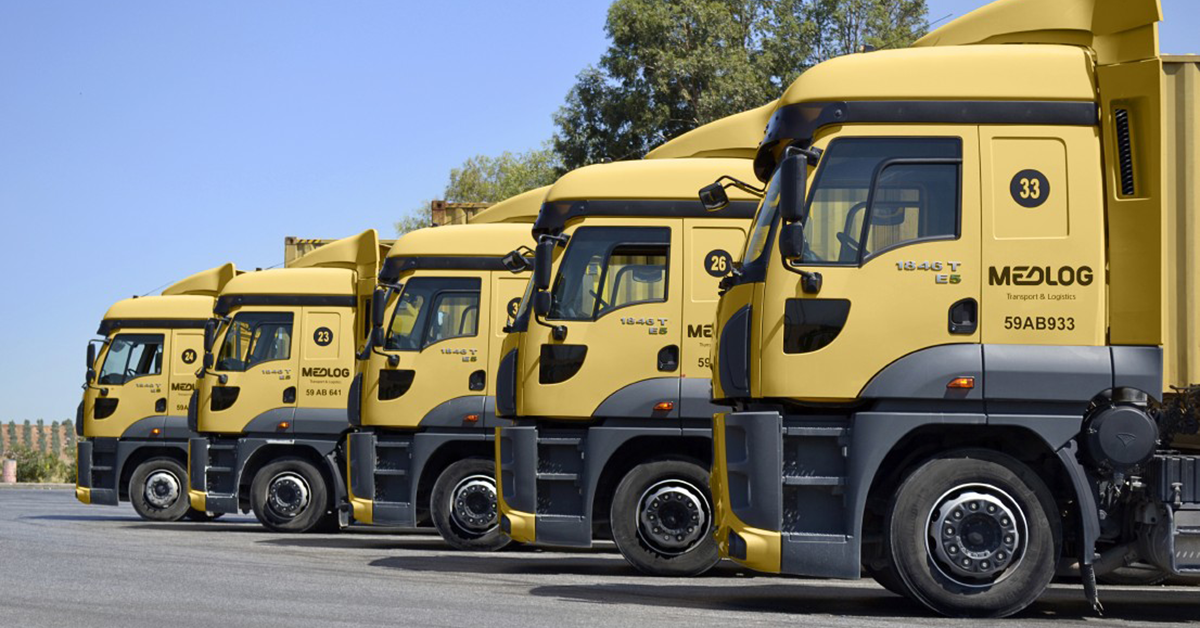
CMA CGM bought CEVA Logistics in 2019 and Bolloré Logistics for €4.85 billion in 2024. MSC, with BlackRock, has bid for Hutchison Ports and, through its inland logistics arm Medlog, opened a rail and barge terminal at Paris-Bruyères linking Le Havre to inland Europe.
Closer to home, Medlog Oceania acquired Seaway’s Intermodal business in 2026, adding road, rail and warehousing services across key container catchment areas in Victoria and Queensland.
It is tempting to read these moves as a single shift towards control of the end-to-end supply chain. Yet they could equally reflect a search for efficiency, customer access, service reliability or commercial position. What is the industry seeking to bring together: the assets that move cargo, the relationships that generate it, or the decisions that connect each stage of the journey?
This piece offers a perspective to test rather than a conclusion: who owns the most assets may matter less than whether decisions across the journey line up efficiently.
That matters because the cargo journey rarely sits within one organisation, and common ownership of some activities does not remove the need to work with the rest of the network. Each participant also defines efficiency differently: terminals seek throughput, rail operators train utilisation, road operators vehicle productivity, shipping lines vessel utilisation, and beneficial cargo owners’ (BCOs) low cost and dependable delivery. These goals are individually reasonable but do not necessarily align.

The question is whether participants’ combined decisions produce an efficient supply chain, not whether each operates efficiently in isolation.
Acquisition, consolidation and vertical integration describe structure more than performance. An acquisition may add capability, yet also change access to customers, capacity or routing, and integrated businesses can still face coordination problems at their boundaries. Network orchestration offers another possibility: coordinating independently owned assets and services without owning them all.
Forwarders bring customer relationships and coordination but rely on others to execute; integrated shipping lines control more of the physical operation but still depend on independent providers. Different models may suit different customers, routes and conditions.
Congestion is where these differences could become visible. A terminal may improve throughput while containers accumulate because inland capacity, collection patterns or empty container movements are misaligned. The cause could be infrastructure shortage, timing mismatch, commercial incentives, regulatory ‘Holds’, or rational individual decisions that together produce an inefficient outcome. Where capacity is genuinely constrained, new infrastructure may be essential, but establishing the cause requires evidence on how cargo moves through the network.
If congestion reflects misaligned decisions rather than a shortage of capacity, the case for Government involvement looks different. Fragmented ownership raises the possibility of coordination gaps but does not itself show that intervention is needed. Government may help where collective benefits extend beyond individual participants, through data-sharing, access arrangements or long-term planning. Closer integration could improve reliability, yet some arrangements might narrow alternatives for independent operators or BCOs.
The more revealing questions concern outcomes rather than structures. Does a change in ownership make the journey more reliable? Does coordination create choice or greater dependence on one network? Can operators’ individual efficiency gains translate into a more efficient overall supply chain? Who will shape the freight network may be answered less by who acquires the most assets than by how assets, relationships and decisions come together in practice. Whether that yields a more efficient and accessible system or simply a different distribution of commercial influence is something to contemplate, not assume.