-
Posted by Peter Creeden
- |
-
25 Aug, 2025
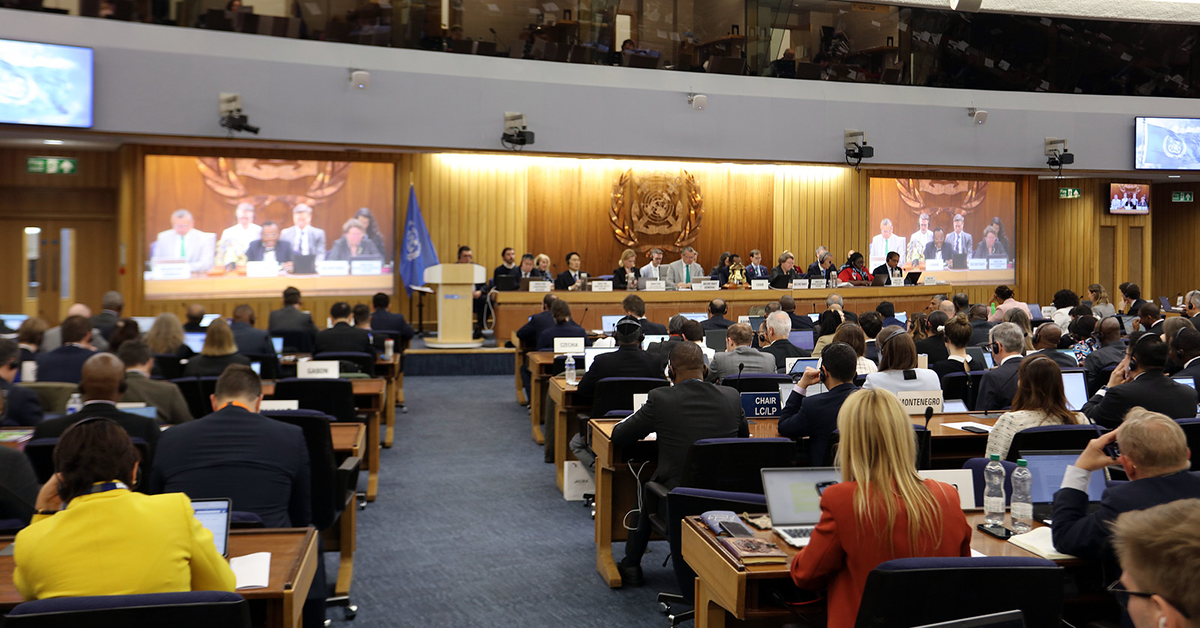
THIS week, I delivered a lecture on Green Logistics at the University of Sydney’s Global Distribution Strategy class. I discussed the International Maritime Organisation (IMO) and its Marine Environment Protection Committee (MEPC) with the students. This prompted me to share some of those insights more broadly here, as the IMO approaches an extraordinary session later this year that could transform the way shipping operates.
The IMO is the United Nations body responsible for regulating international shipping, and the MEPC serves as its primary decision-making forum for environmental issues. In July 2023, the IMO adopted its Revised Greenhouse Gas (GHG) Strategy, which outlines a more ambitious goal of achieving net-zero emissions (100%) by 2050. This new target includes intermediate checkpoints for 2030 and 2040, an increase from the original target of only 70% net-zero emissions. While these milestones provide direction for the sector, they do not yet specify the regulatory tools necessary to achieve them.
The first stage of regulation came through short-term measures: the Energy Efficiency Existing Ship Index (EEXI), the Carbon Intensity Indicator (CII), and the Ship Energy Efficiency Management Plan (SEEMP). These tools encouraged early improvements, but from the outset, it was clear they could not deliver the deep transformation the sector requires. Mid-term measures were always expected to be the decisive step.

That step arrived at MEPC 83 in April 2025, when the focus shifted from strategy to enforceable regulation. Members agreed (63 for and 16 against) on draft amendments to MARPOL Annex VI that will be debated again in October and, if adopted, could enter into force in 2027. At the heart of these mid-term measures is a binding global greenhouse gas (GHG) standard and an integrated carbon pricing mechanism, changes that will put carbon at the centre of voyage economics and reshape how our industry plans for the future.
Net-Zero Framework
The proposal, commonly known as the Net-Zero Framework, is based on two interrelated pillars. The first pillar is a technical component, a gradual reduction in the greenhouse gas (GHG) intensity requirements for marine energy from well to wake. By regulating the lifecycle emissions of fuels instead of focusing solely on combustion, this standard promotes a shift towards lower-carbon alternatives such as green methanol, ammonia, and advanced biofuels. It also allows for efficiency upgrades and operational improvements that can reduce emissions on existing vessels.
The second pillar is an economic component, an integrated pricing mechanism that assigns a cost to higher-intensity energy while rewarding cleaner options. This is not simply an additional tax applied to existing regulations, instead, it is designed to work in conjunction with the technical standard. The system will be administered through each vessel’s flag state, which verifies emissions and fuel data and ensures that contributions are made to the IMO’s Net-Zero Fund. Ships that exceed the emissions benchmark will make payments, while those performing better can receive credits or bank surplus units. All information flows into an IMO-supervised GHG Registry to ensure transparency and accountability.
For example, a vessel running on conventional VLSFO would face higher contributions if it failed to meet the benchmark, while a ship using LNG or methanol with lower well-to-wake intensity could generate credits to reduce costs or offset future obligations. In this way, the pricing signal is directly aligned with the tightening emissions requirements, enabling capital to move with greater confidence.
This architecture matters because it creates the two things that have been missing, a global price signal and a predictable compliance path. Together, they re‑price voyages, reshape how charter parties allocate fuel and emissions risk, and influence where green corridor lanes scale first. Expect clauses around fuel nomination, well‑to‑wake data disclosure, and performance incentives to become standard features of contracts. Ports, meanwhile, will need to sequence investments in storage, handling, and safety systems for alternative fuels. The regulatory curve suggests building readiness in step with demand rather than getting too far in front of it.
The framework is not without controversy. The United States has already said it is unlikely to support adoption in its current form, describing the economic element as a “global carbon tax” and warning of possible countermeasures against countries that back it. That opposition raises the political risk around October’s vote, which requires a two-thirds majority.
At the same time, debates over equity and effectiveness continue. Some member states and NGOs argue the package does too little to cut emissions by 2030 or to channel revenue toward climate-vulnerable economies, while others fear a strong price signal could distort trade and disadvantage developing regions.
The proposal strikes a compromise by combining a fuel-intensity standard with an integrated pricing mechanism, designed to be administrable under MARPOL while still shifting behaviour. Yet the final details, how the price band tightens, how revenues are used, how transitional fuels are treated, will determine its true impact.
Navigating 2025
I need to emphasise that whether the package is adopted remains uncertain, as it requires the support of 108 out of 176 IMO member states. If it passes, shipping will, for the first time, operate under a single global baseline, giving investors, insurers, and counterparties greater confidence. If it fails, regional regimes such as the EU ETS and FuelEU Maritime will expand, leading to a more fragmented, costly, and difficult-to-harmonise compliance environment. Either way, carbon costs and carbon intensity are increasingly central to contracts, routing choices, and long-term competitiveness.
Between now and October, the real task is preparation, adapting supply chains to measure and manage carbon alongside cost and time. This goes beyond compliance. As rules evolve, carbon will carry a cost, ESG metrics will shape contracts, and market access will increasingly depend on demonstrable sustainability performance.
Decisions by the MEPC will directly influence Australia and New Zealand’s trade competitiveness, as exporters begin to face carbon costs while rivals in better-prepared ecosystems gain an advantage. Forwarders and carriers that strengthen their ESG capabilities will not only build trust but also secure long-term strategic relevance.
In this context, I am proud to serve on the board of Greenabl.co, a collective of carbon-neutral shippers working to measure and mitigate 100% of their shipments. Greenabl is supporting companies in their efforts to decarbonise their supply chains by providing standardised reporting and verified, transport-specific credits. By aggregating demand, Greenabl helps send a clear signal to carriers, accelerating the transition to zero-emission fuels. This initiative aims to enable companies to act today rather than waiting for a distant future.
Navigating 2025 involves recognising that the debate phase is ending and the rule-making phase is beginning. October’s MEPC session is not the finish line, it is the starting gun. Whatever the outcome, it is up to each company to start planning how it will adapt, developing strategies that align with emerging ESG regulations. This is the moment to understand what is coming and prepare accordingly because, in the next cycle, freight movements will no longer be judged on cost and time alone but also on their carbon impact.