
-
Posted by David Sexton
- |
-
14 April, 2026
PORT of Newcastle is increasing its diversification away from mineral trades, via a $36m extension to its multipurpose terminal (MPT) berth at Mayfield.
The berth extension is to provide capability for ships of up to 300 metres, up from the current capacity of 220 metres.
The project is expected to take about 15 months to complete.
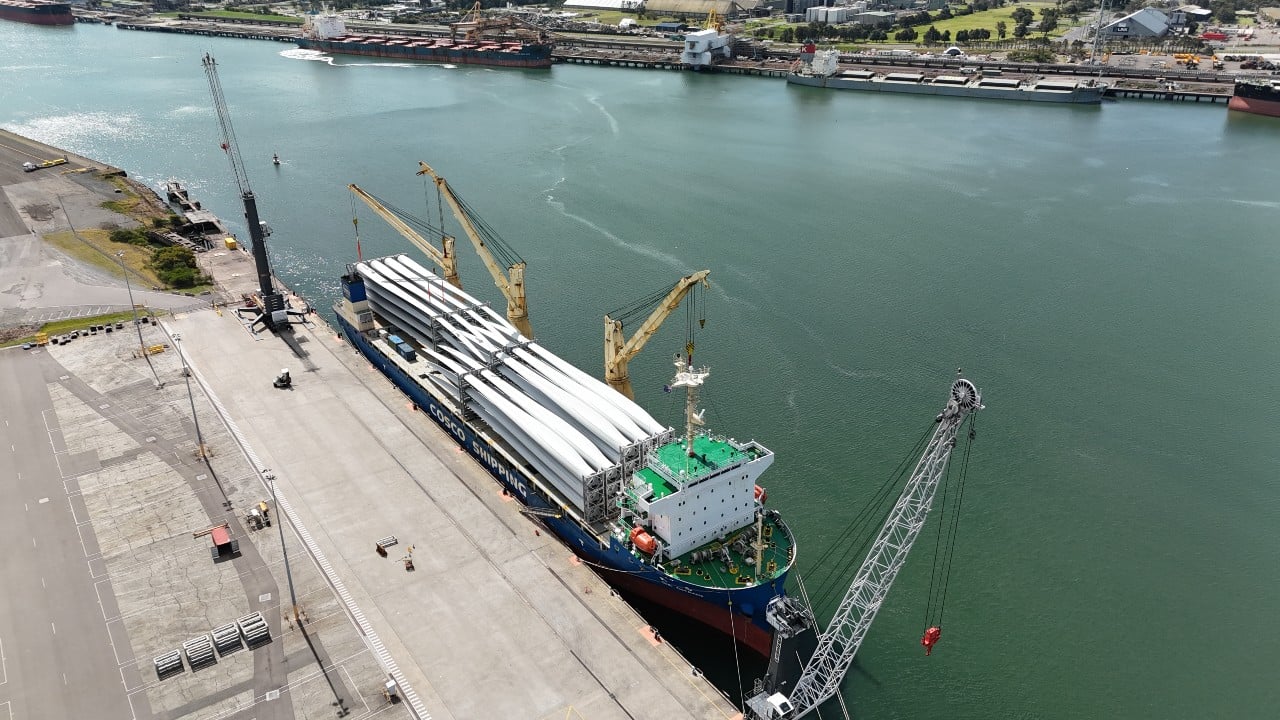
The project is in addition to the port's $28.4 million investment in 2022 in two 104-tonne capacity cranes for wind turbine handling in addition to containers and other cargo.
Port of Newcastle in August of last year welcomed the first of an expected 30,000 wind turbine components set to arrive during the next decade.
This initial shipment carried parts for Squadron Energy’s Uungula Wind Farm, near Wellington in NSW’s Central West.
The final shipment is due in May 2026 of this year.

The New South Wales government has nominated PON as the arrival port for the majority of wind farm projects in their renewable energy zones.
Some 77% of NSW renewable projects, including batteries and solar, specify PON as the preferred gateway.
Port of Newcastle chief executive Craig Carmody said Uungula was “just one of the many renewables projects that rely on the size, efficiency, and connectivity of the Port of Newcastle”.
“The importance of the Port of Newcastle in Australia's energy future cannot be overstated. We are the entry point for the oversized over mass cargo of every single project within the Central West Orana Renewable Energy Zone and over 90% of all wind farm projects across NSW,” Mr Carmody said.
“Optimising our infrastructure is an investment in our region’s future and in the future of Australian energy.
“For 25 years, the Port of Newcastle has been Australia’s leading exporter of energy to Asia. Now, we have also become the main gateway for importing the components that will power the next phase of our nation’s energy transition.”
Mr Carmody said once their Clean Energy Precinct was fully realised, they intended to use the electrons produced in the REZs to export clean energy to the world.
“This is how the Port of Newcastle ensures the Hunter Region continues its legacy as Australia's leading energy export port for generations to come,” he said.