-
Posted by David Sexton
- |
-
24 Jul, 2026
New ships and extra capacity ensure Tasmania is well-placed to handle the fluctuations that inevitably come from the vagaries of international trade.
"I couldn't quite believe the standard of fish, shellfish, lamb, beef... I was absolutely blown away."
THESE words from UK celebrity chef Gordon Ramsay capture the apple isle’s appeal as a source of good food, something reflected in much of its export task.
Few states in the Australian federation are as dependent upon the maritime sector as Tasmania, being separated from the mainland by the intimidating waters of Bass Strait and from the rest of the world by the mighty Southern Ocean.
It is indeed a place for hardy souls. While there is good business to be done, merchants and business operators require resilience and determination.
Leading economist and prominent Tasmanian Saul Eslake said the state had advantages in agriculture and had made progress towards a clean energy transition (mostly hydro but with some wind and solar power which is expected to be enhanced by the proposed Marinus Link cable between Tasmania and Victoria).
He noted export opportunities in premium agricultural products including wine, dairy, beef, selected fruits and vegetables, gin and whisky.
China trade
Tasmania’s trade relationship with China has strengthened significantly since President Xi Jinping’s historic visit to Hobart on 18 November 2014, the first visit by a Chinese head of state to Tasmania helping to establish a uniquely strong and valuable connection.
Seafood and fruit exports are also significant, as noted by Vivian Zhao, the Shanghai-based Tasmanian trade and investment advocate to Greater China.
China is the largest export destination for Tasmanian goods accounting for 33.6% of Tasmania’s total overseas merchandise exports, worth $1.5 billion in March 2026.
“China continues to be a premium market for Tasmania, particularly for high value seafood like rock lobster and abalone, salmon etc as well as counter-seasonal produce such as cherries,” Ms Zhao told Daily Cargo News.
“In the latest season, Tasmanian cherry exports alone reached a record A$70 million, with China and wider Asian markets taking over 70% of shipments and demand from China growing 168% year on year.
“On the seafood side, China is the largest market for Tasmania’s agricultural and seafood products, accounting for 31.71% of Tasmania’s total export value of these products in the 12 months to March 2026.
Ms Zhao said the opportunity for Tasmanian exporters was to leverage the state’s unique position as “one of the few jurisdictions globally powered by 100% renewable electricity”.
“This advantage is particularly strong for high value, time-sensitive freight — especially airfreight for live or fresh products — while also driving the need for more sophisticated in-market distribution capabilities,” she said.
Support for exporters
Tasmania’s maritime task is divided between the ports of Burnie, Devonport and Bell Bay in the north and Hobart in the south.
Overcoming the disadvantages of the Bass Strait barrier has long been the aim of the Tasmanian Freight Equalisation Scheme (TFES), originally an initiative of the Whitlam government in the 1970s.
The TFES provides financial assistance for costs incurred by shippers of non-bulk goods moved by sea across the Bass Strait, with assistance based upon the difference between the freight costs of moving the goods by sea and the notional freight costs of moving them by road over an equivalent distance.
Not everyone is thrilled with the way it is working. At the recent Tasmanian Freight and Logistics Forum in Hobart, organised by the Freight and Trade Alliance, the need for change was palpable.
Speaking to the forum, Senator for Tasmania Tammy Tyrrell (independent at the time of the forum but Labor at the time of publication) said the TFES was “broken” and “no longer fit for purpose".
Senator Tyrrell previously chaired a Senate Select Committee into the TFES. She also told the forum the scheme had failed to keep pace with freight costs in Australia and was “designed for a world that no longer exists”.
“The cost of doing business has gone up and the TFES has not kept up the support [it is supposed to provide], which was never generous to begin with, has been quietly eroded in real terms, year after year,” she said.
She said the result had caused businesses to go backwards, not because they were doing anything wrong, but because they had been “let down by a scheme that is no longer fit for purpose”.
The cost of doing business has gone up and the TFES has not kept up
Senator Tammy Tyrrell
Senator Tyrrell said the Senate Committee that examined the TFES took evidence from businesses, industry groups, freight operators, economists and government departments, to “find out what was actually going on”.
The committee report previously made five recommendations to fix the scheme including “a total, comprehensive review of the scheme, not just tinkering around the edges, but a root and branch examination of whether TFES is designed appropriately for the modern trade environment”.
Senator Tyrrell also raised concerns about the condition of Tasmania’s ports, referring to “ageing infrastructure, underinvestment and capacity constraints”.
“I want to say that clearly, operators, the freight forwarders, the logistics companies, the port workers, they are professional, they are hard-working and they are innovative, but they are being asked to perform at a world class standard without world class support, and that has to change.”

Navigational charges
The forum also brought up discussion about the Navigational and Port Services brought in by Ports Victoria.
This fee took effect from 1 January 2026 and is included in the tariff schedule.
“The NaP Services fee recovers only those costs associated with providing and maintaining navigational and port services,” Ports Victoria has stated.
“These services are necessary and are consistent with international port authority management practices. They provide benefits to all ships and trades using Victoria’s commercial ports.”
But some shipping lines consider this ‘double-dipping’.
“Shipping companies are paying twice for the use of infrastructure that up until recently (1 January this year) has been the responsibility of the Port of Melbourne to maintain,” Patrick Guarino, SeaRoad chief operating officer said..
“Those fees are to manage VTS, harbour control, emergency response and navigational aids. I can’t see how another government department can actually charge the same thing again and that is my issue,” Mr Guarino told DCN after the forum.
“If Ports Victoria don’t have sufficient funds to meet the requirements of the port, that is, in my book, a discussion for Ports Victoria and the Port of Melbourne.”
A consistent picture
Reflecting upon the forum, FTA/APSA’s Brett Charlton said “a consistent picture” emerged of an industry actively investing in its future while navigating a complex and evolving operating environment.
“New vessels, port upgrades and ongoing rail improvements point to a system that is not standing still,” Mr Charlton said.
“At the same time, those at the coalface reinforced that efficiency and resilience will come not just from individual investments, but from how well the broader freight task is coordinated across shipping, ports and landside connections.
New vessels, port upgrades and ongoing rail improvements point to a system that is not standing still
Brett Charlton, Freight and Trade Alliance
“There was a clear sense that Tasmania’s freight network is first rate and continuing to mature, with capacity and capability continuing to build in step with long-term demand.”
Shipping innovation
There is much anticipation at SeaRoad about the expected arrival in months to come of the new Mersey I which has been built in the German city of Flensburg.
SeaRoad’s Patrick Guarino said the new Mersey I would ensure the company could continue to prosper via the movement of a wide range of cargo across Bass Strait which typically includes supermarket goods, parcels and postal items, construction materials as well as motor vehicles.
Mersey I is to provide advantages in volume and speed compared with Mersey II and Liekut (the latter which SeaRoad currently operates on charter).
It will also have an enclosed deck, a contrast with Liekut which is open-deck.
Mersey I is to operate using LNG (although it will be able to use marine diesel), an improvement in terms of carbon footprint.
At 31 metres across and 210 metres in length, Mersey I is essentially as large a ship as possible that can be fitted into Devonport.
Mr Guarino notes Bass Strait is a competitive market with the three operators (Searoad, Straitlink and TT-Line), but volumes tend to be consistent.
“It has been somewhat difficult of late from a volume perspective because the market has been a bit soft. We are anticipating some difficult volumes going forward with higher local fuel prices and the conflict in the Middle East likely to have an impact this winter season,” he said.
“Winter is often an off-peak season for freight across Bass Strait. People who are in business may delay their investments. We just think that things will slow up [for a while].
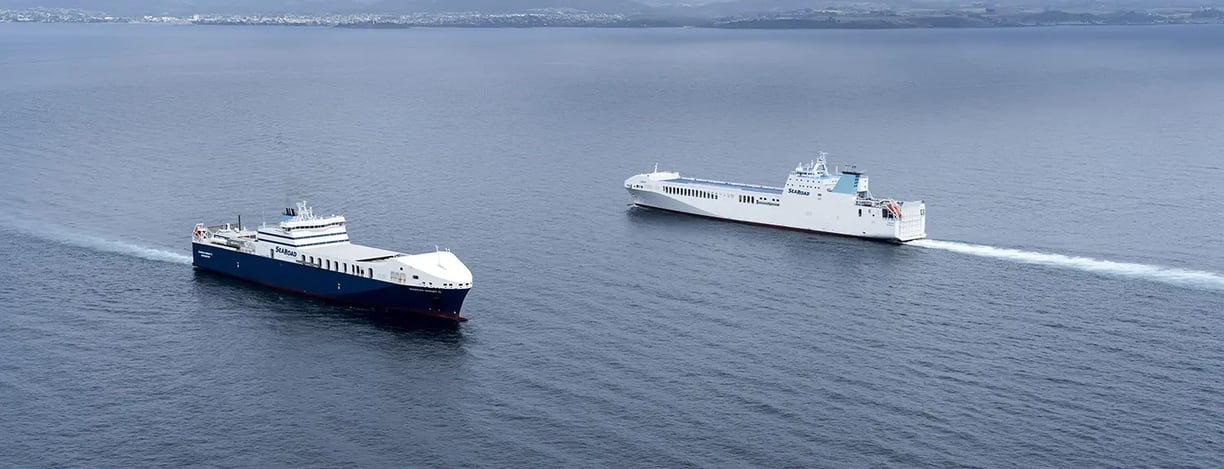
MV Liekut and Searoad Mersey II pass one another in Bass Strait. Image: SeaRoad
Meanwhile, TT-Line recently received a boost with the arrival of ro-pax vessel Spirit of Tasmania V at the start of May.
Spirit of Tasmania V is to stay in Melbourne — at the berth available following the end of the cruise season — before moving to Hobart for final fit-out work and a role in the city’s MONA Dark Mofo festival.
Both it and sister ship Spirit of Tasmania IV are due to enter service at the end of October, with TasPorts, contractors and the Tasmanian government confident the controversial East Devonport terminal will be ready by then.
Spirit of Tasmania V previously discharged fuel pods used during the journey from Leith, Scotland, down the west coast of Africa, around the Cape of Good Hope and across the Indian Ocean to Fremantle where regulatory clearances were completed.
As noted by TT-Line back in 2023, the new Spirit vessels have an increased capacity for passengers from 1400 to 1800, but perhaps the most significant difference is the 60% increase in vehicle lanes for passengers and freight vehicles.
TT-Line recently received support from the Tasmanian government with the announcement of a $506 million equity injection.
The announcement back in May was made by TT Line’s responsible ministers, Kerry Vincent, Minister for Infrastructure and Transport and Eric Abetz, Treasurer. The equity is to be provided over four years, beginning with an immediate $200 million.

Changing times for Strait Link
Fellow carrier Strait Link, recently announced its sale to Igneo Infrastructure Partners (“Igneo”), marking what it said was “an exciting milestone”.
Vendors, Allegro Funds, accepted the Igneo bid over that of rival Morgan Stanley Infrastructure Partners, after Strait Link was put up for sale in August with reported price expectations of up to $500 million.
Strait Link owns and operates the Melbourne-Burnie ro-ros Tasmanian Achiever II and Victorian Reliance II and 164 prime movers, 570 trailers, 4,500 containers and 11 depots across Tasmania and Victoria, plus long-term terminal leases at 1 East Webb Dock, Melbourne and Berth 4 at Burnie, according to information provided to bidders.
Strait Link is the former Toll Shipping, bought as part of the acquisition of (now) Team Global Express in September 2021.
“For many years, Strait Link has played a vital role connecting Tasmania with mainland Australia — supporting industries, enabling trade and helping businesses reach markets with confidence,” the company stated.
“With the backing of Igneo… we are well positioned to continue strengthening the services our customers rely on.”
The port perspective
ADVERTISEMENT

TasPorts is the state-owned company responsible for ten Tasmanian ports and the Devonport Airport.
Chief executive Allan Gray is at the helm after several years in Canada. He described Tasmania as “a high value market, not necessarily a high volume market”.
TasPorts has been investing more than half a billion in infrastructure projects aimed at securing Tasmania's leading freight, logistics and tourism gateways. This includes $188m in confirmed Commonwealth funding towards the rebuild of Macquarie Wharf 6 in Hobart, the balance to come from TasPorts.
Major works are currently underway at three major ports including modernising wharf infrastructure at Terminal 2 in Devonport, a complete rebuild of Macquarie Wharf 6 in Hobart and remediation and strengthening of Berth 4 at the Port of Burnie.
“These projects not only underpin Tasmania’s connectivity with the mainland and our global supply chains, but will provide long-term certainty for our customers,” Captain Gray said.
Modernising infrastructure gives us the opportunity to bring in new technology and techniques that improve efficiency
Captain Allan Gray, TasPorts
Works at Quaylink Terminal 2, used by SeaRoad for the provision of its ro-ro freight service, are also expected to extend the life of the terminal by 30 years, while increasing freight capacity at Devonport by up to 40%.
Macquarie Wharf Redevelopment – stage one is expected to see the complete rebuild of wharf 6 providing a permanent home to Australia’s Antarctic research vessel RSV Nuyina, securing Tasmania’s role as the gateway to Antarctica.
Wharf remediation works for Burnie Berth 4, home to Strait Link’s Bass Strait shipping service, are set to underpin Tasmania’s leading freight gateway, handling around 45% of the state’s containerised freight.
“Modernising infrastructure gives us the opportunity to bring in new technology and techniques that improve efficiency, safety and environmental performance,” Captain Gray said.
He noted the challenge of balancing a role as a government business enterprise (GBE).
“Our challenge as a GBE is to think, plan and act as a commercial entity while also delivering public services and delivering returns to the Tasmanian people,” he said.
BRET project
The Bass Strait Renewable Energy Terminal, or BRET, is a proposed expansion of port infrastructure at Bell Bay to support offshore wind construction in the Bass Strait and Gippsland zones.
Offshore wind requires specific port capability: heavy-lift wharf infrastructure, large laydown areas, deep-water access and integrated logistics support. No port in the Bass Strait region currently has this at the scale required.
According to TasPorts, Bell Bay is well placed to fill that gap. It operates at 27% berth utilisation, has deep-water self-scouring berths, sheltered year-round access, scalable reclaimed land and sits next to Tasmania's largest industrial precinct. It is also geographically closer to many planned wind farm sites than mainland alternatives, which means shorter transit times and lower project costs.
The challenge, however, is funding. National renewable energy funding streams focus on generation and transmission, not the common-user port infrastructure required to build offshore wind at scale.
“That's a gap between national policy ambition and the infrastructure required to deliver it,” Captain Gray said.
“We're seeking Commonwealth funding for a comprehensive business case to properly scope and de-risk the project.”
Airfreight developments
In air freight developments, Australia Post recently announced plans to build a new multimillion-dollar parcel facility near Hobart Airport, aimed at strengthening operations across southern Tasmania to support growing parcel demand in the region.
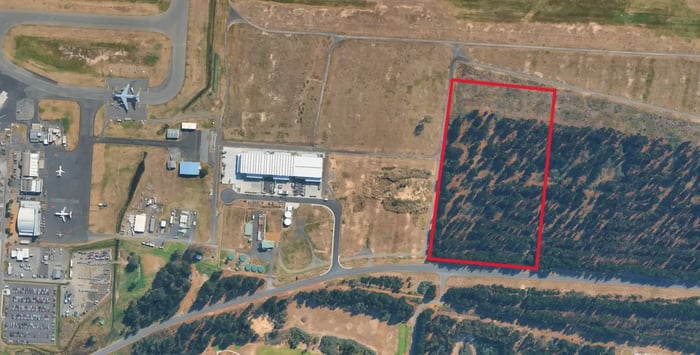
Aerial photo of the site of the multi-million dollar parcel facility near Hobart Airport. Image: Australia Post
Expected to open in late 2027, the new 12,000m2 facility is to be the largest sorting facility in the state, featuring advanced automation capable of sorting up to 6,000 parcels every hour. This is expected to significantly increase network capacity and efficiency, improving turnaround and delivery times for customers.
Australia Post general manager network operations south, Darren Mackenzie said the new facility would play an important role in strengthening parcel services for Hobart customers and surrounding communities, while supporting the continued growth of online shopping.
“Tasmania continues to see strong online shopping growth, with $1.6bn spent online in the past year — an 11% increase year-on-year,” Mr Mackenzie said.
Suburbs like Howrah are recording some of the highest parcel volumes in the state, and this new facility will help us meet that growing demand while giving local retailers the confidence to grow.
“Its convenient location right next to Hobart Airport gives us direct airside access to our dedicated A321 freighter, making Australia Post the only express service provider operating out of Hobart Airport and enabling faster deliveries for customers,” Mr Mackenzie said.
“Safety has been central to the facility’s design, with increased automation significantly reducing manual handling and parcel touchpoints. This not only improves efficiency but creates a safer working environment for our team members,” said Mr Mackenzie.
As one of Australia Post’s fastest growing customers in Tasmania, Bulk Nutrients chief executive Jess Crowley said the facility would give the business confidence to continue scaling locally.
“We're looking forward to the opening of the new parcel facility, as it gives us confidence that Australia Post can support our next phase of growth while keeping our operations local,” Mrs Crowley said.
The site is to target 5-star Green Star accreditation and is planned to feature a 200kW rooftop solar system, battery storage and electric vehicle charging.
We’re not only expanding capacity for passengers, but also strengthening the airport’s ability to support freight and business growth
Kate Gillies, Hobart Airport
The announcement follows Hobart Airport’s construction of a $13m dedicated freight handling facility in 2018, which has since leveraged further multi-million-dollar investment from tenants, including Link Logistics and DHL.
The facility unlocked enormous opportunities for local producers, allowing them to freight their produce directly from Hobart to export destinations interstate and overseas.
Hobart Airport chief financial and commercial officer, Kate Gillies, said further stages of the commercial precinct would be announced soon.
“As we deliver our $200m terminal redevelopment, we’re not only expanding capacity for passengers, but also strengthening the airport’s ability to support freight and business growth,” she said.
“Together, these investments reinforce the airport as a key gateway for Tasmania, connecting people, goods and opportunity more efficiently than ever before.”
This article appeared in the June | July 2026 edition of DCN Magazine