-
Posted by Andrew Hudson
- |
-
12 Oct, 2026
The Australian Prime Minister has very recently delivered a speech before the United Nations stating that the post-1945 international order was no longer “fit for purpose” and that the world will increasingly be dominated by the growing strategic tension between the United States and China.
US v Canada; friction in the “old” world order
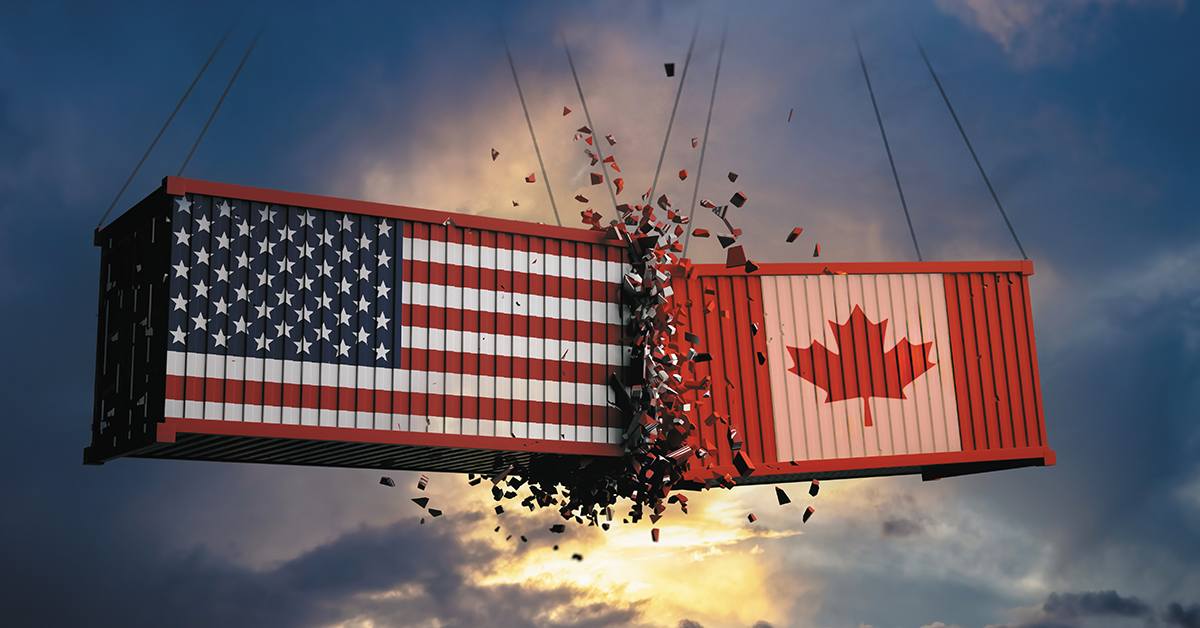
There are important signs that the “old” world order is fracturing, and a new series of strategic alliances will form to manage international economic and political relationships. A prime example is the trade war between the US and Canada. In general terms, before the current Trump presidency there was a generally amicable economic, political and military alliance between the two countries even though there were instances where the relationship was tested, mainly regarding softwood lumber dumping cases. The relationships between the two countries regularly provides material for comedians from both countries. Putting these examples to one side, the relationship was as close as most international relationships. Canada and the US shared one of the largest and most deeply integrated trading partnerships in the world, totalling close to US$1 trillion annually, though bilateral relations have faced significant friction amid recent tariff disputes.
The relationship between the US and Canada is now uncertain and less amicable than before. Famously, at the beginning of his second term as President, President Trump suggested that Canada should become the 51st state of the US, a suggestion that was quickly rejected. Canada was included in countries facing the original “Liberation Day” tariffs imposed by the US and openly challenged by Canada. More recently there has been an escalation in tariffs between the countries with increases in US tariffs on Canadian goods being met with increases in Canadian tariffs on US exports into Canada. Importantly, Canada has been firm and open in its resistance to US pressure.
Another example of the challenge in this trade relationship is found in the United States – Mexico – Canada trade agreement (USMCA) which replaced the previous North American Free Trade Agreement on 1 July 2020. On 1 June 2026, with the mandatory July 1 deadline for the trilateral joint review approaching, Canada formally asked the United States and Mexico to renew the agreement for another 16 years. On 1 July 2026, the United States announced it would not renew the USMCA. This did not give grounds to terminate USMCA, but the parties must now engage in an annual review, for the next 10 years, until the agreement expires on 1 July 2036 or one party gives six months' notice of withdrawal.
As a result, Canada has moved to diversify and enhance its trade relationships with other countries including China, India and the Philippines. Media reports from a recent visit to Europe by the Canadian PM led to speculation Canada may be made an EU "associate member". However, that position does not actually exist under the treaties establishing the EU and the approval of all 27 members of the EU would need to be secured to create such a position. Such an outcome would take significant time and even more political investment.
US and Australia. A similar story to Canada
Australia and Canada have experienced similar changes in their relationships with the US. The historical relationship between Australia and Canada has been close. Both countries were established as colonies of the United Kingdom (UK) and reached political independence while preserving the monarch of the UK as their ultimate presiding authority. Both countries are members of the Commonwealth of Nations, itself largely comprised of former UK colonies. Both countries are parties to the historic Canada-Australia Trade Agreement of 1960 (CANATA) and are parties to the Comprehensive and Progressive Agreement for Trans–Pacific Partnership (CPTPP) which came into effect in 2018 having succeeded the Trans–Pacific Partnership (TPP) when the US left the TPP under the first Trump administration in 2017 before it had come into effect.

Australia also has several political and defence agreements with the US and has a free trade agreement with the US (AUSFTA). Even so, Australian exports have still been subjected to several of the new US tariffs introduced by the second Trump Administration under various guises, while other relationships for defence and security purposes have been retained and, in many cases, expanded.
Can existing international forums restore the existing world order?
Ultimately, if Canada and Australia (and other US allies) are exposed to adverse economic outcomes from the second Trump administration then no country is safe from previous amicable economic relationships being readily set aside.
The next question is whether the international forums for advancing and resolving trade disputes or disagreements can offer any remedies to these issues. The United Nations does not appear to offer any mechanisms for such remedies. The main forum to deal with such economic and trade issues would normally be the World Trade Organisation (WTO) but the existence and utility of the Dispute Settlement Body (DSB) may be seen as compromised by the absence of a functioning WTO Appellate Body (AB).
Is there a way forward for a revised or new global trade mechanism?
The recent Ministerial Conferences of the WTO have been unable to establish a basis to reinstate the primary position of the WTO AB as the body to resolve international trade disputes. Given the current disruption to international trade, and the ongoing international conflicts, it appears that there is little prospect for one new body to be established to advance trade and resolve disputes in the immediate future.
There are still other options to advance the cause.
- Notwithstanding the inherent limitations for the WTO caused by the absence of a fully–functioning DSB, countries are still filing complaints with the DSB and seeking panel rulings on the conduct of other countries. There are still disputes being resolved within the WTO framework without the parties needing to resort to the AB. The WTO still stands as a body which is well placed to undertake work to resolve disputes on compliance with existing WTO agreements and undertake other initiatives to advance the interests of global trade such as the WTO Trade Facilitation Agreement.
- The WTO has also served as the body within which other dispute mechanisms may be developed. One example is the Multi-Party Interim Appeal Arbitration Arrangement (MPIA) which is an interim arbitration mechanism created under Article 25 of the WTO’s DSU to act as a functional replacement for the DSU. Australia was one of the founding members to establish the MPIA.
- The World Customs Organisation (WCO) already provides a basis for agreement on items to advance and facilitate international trade such as the Harmonised System for Tariff Classification of Goods (which are then adopted by member countries but not always identically) and the SAFE Framework of Standards to Secure and Facilitate Global Trade .
- International regional bodies such as APEC and ASEAN are eager to develop trade facilitation and dispute resolution.
- Many of the existing free trade agreements already include provisions to resolve disputes which may arise between nations regarding the terms or application of an FTA.
The question is how to advance beyond the current state of uncertainty and bring about a new world order, likely by way of reform of the WTO. If the major trading countries will not commit to the MPIA, then the answer may be to resort to smaller working groups or Joint Statement Initiatives to piece together the outline of an alternative global mechanism to facilitate trade and resolve disputes.
Ultimately the creation of a new world order for trade would require the support of all the major trading countries. If that does not exist, then there may be no one mechanism but a series of smaller agreements which hopefully work together.
This article appeared in the October | November 2026 edition of DCN Magazine