
-
Posted by David Sexton
- |
-
29 Jul, 2026
TARIFFS announced by the Trump administration early last year together with geopolitical strife have seemingly been less disruptive of global trade than predicted, according to economist Paul Bloxham.
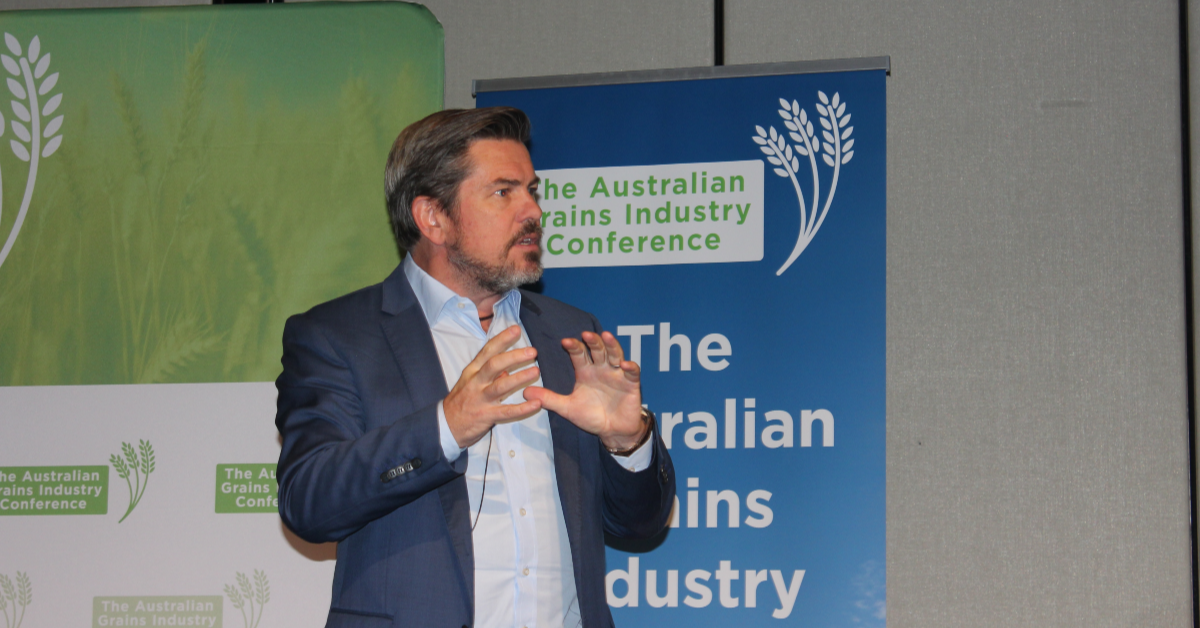
Paul Bloxham is HSBC’s chief economist for Australia, NZ and global commodities and spoke at the Australian Grains Industry Conference.
He posed the question, 'how come the global economy had held up so well' “despite all the things we’ve been watching and hearing in our news flow”?
While all manner of mayhem appeared likely when President Trump announced Liberation Day tariffs in April of last year, the outcome proved less chaotic.
One factor was the President’s supposed tactic of escalation and then de-escalation, something that contributed to the ‘TACO’ (Trump always chickens out) tag.
“At some point in May last year, there was no trade going on between the US and China which are the world’s two largest economies. But a lot of the tariffs that were discussed haven’t arrived,” he said.
“If you have a look at the effective average import tariff into the US, it is 11% right now and that is up from 2% prior to the inauguration of Donald Trump.
“But it is not nearly the sort of peak rates of around 27% around the early [Trump] period.
“Despite all of the things that have been announced on trade policy, a lot of them haven’t stuck, really reflecting the sort of tactics the Trump administration runs.”
Mr Bloxham said the rest of the global economy (ie not the US) had absorbed trade policy changes better than was generally expected.
“It has been more resilient, more flexible, we have managed our way through it. One of the stories I like to highlight, and is under appreciated, is how well China handled the situation through last year.
“China managed 5% growth in its economy and managed to achieve that despite going into a trade war with the US, one of its major trading partners [and having] a 25% fall in its exports to the US.”
This came about not by pivoting to a stronger domestic economy, rather the primary driver of China’s growth was boosting its exports elsewhere, including Europe, Africa, ASEAN and Latin America.
“China’s trade and exports have been the primary driver of its growth,” he said.
“The domestic economy is still quite weak because the property sector is still weak so it has been all about exports. [China has been] very adaptable.”