
-
Posted by Dale Crisp
- |
-
24 Nov, 2026
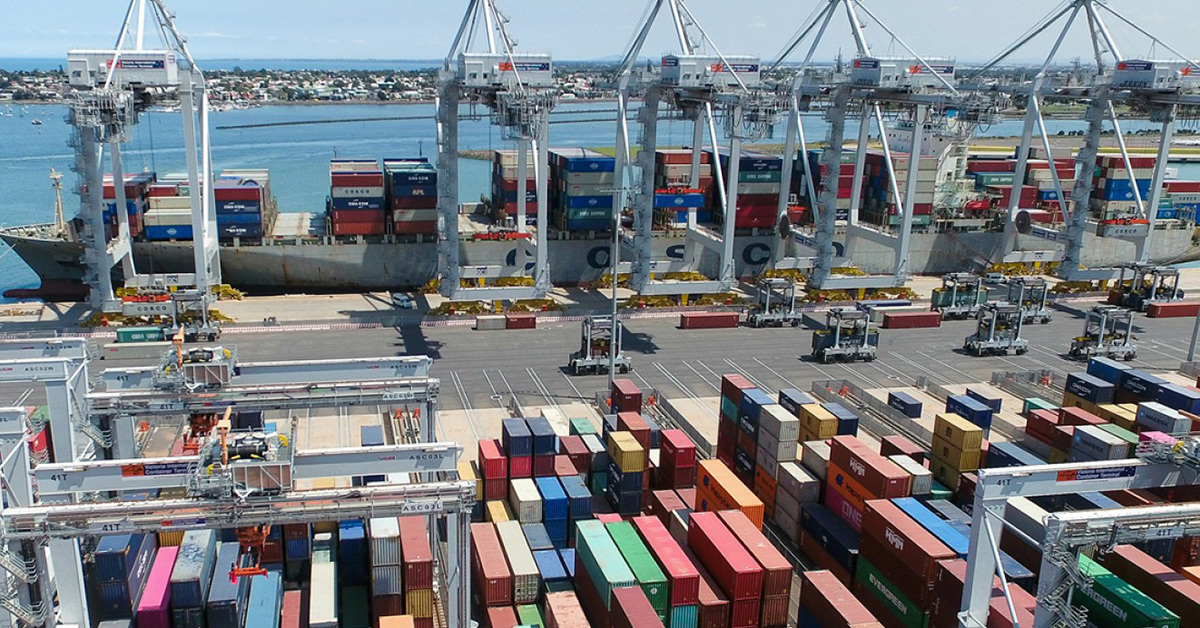
MELBOURNE’s Victoria International Container Terminal has successfully completed its upgrade to the Kaleris N4 4.0 terminal operating system, marking what it says is a major milestone in its continued investment in fully automated operations.
“The upgrade strengthens our digital infrastructure and enables greater flexibility in planning and cargo handling, supporting safe, reliable operations as we expand to meet Victoria’s growing trade needs,” VICT said.
CEO Bruno Porchietto said the true value of automation is measured in the service the terminal delivers to customers.
“N4 4.0 gives our team greater flexibility in how we plan and run the terminal, and gives us access to extended capabilities," Mr Porchietto said.
Kaleris, a US-based provider of mission-critical software for terminal operations, yard and transportation management, and ocean carriers, is owned by ACCEL-KKR and its TOS is perhaps best known under the name Navis N4, which business Kaleris acquired in 2021.
“Our relationship with VICT has grown alongside the terminal itself,” Kirk Knauff, Kaleris president and CEO, said.
“The move to the latest version of N4 is the next chapter in that partnership, and we look forward to supporting VICT as it expands and as Victoria's trade grows.”

Meanwhile, in New Zealand, the country’s first electric straddle carrier has started work at the Port of Tauranga.
A trial of the electric straddle began last week to assess operational impacts, charging times, driver amenability and training requirements, reliability, safety and maintenance requirements, PoT says.
The trial is co-funded by the New Zealand government's Low Emission Transport Fund, administered by EECA (Energy Efficiency and Conservation Authority). The project includes installing charging infrastructure and will cost more than NZ $3.5 million, with EECA contributing $447,000 to accelerate the project.
If successful, it could lead to a wider rollout of electric straddles and a significant reduction in the port’s Scope 1 emissions.
Diesel use in straddles is currently the port’s largest source of greenhouse gas emissions, contributing around 50% of our Scope 1 emissions.
The electric straddle was delivered in August alongside six new hybrid straddles, all manufactured by Kalmar and assembled on site. A quarter of the port's fleet of 53 straddles are now hybrid models, which have proven to be about 25% more fuel efficient than older diesel-electric models, PoT says.