-
Posted by David Sexton
- |
-
22 Oct, 2026
URGENT action on infrastructure investment is needed to ensure Australia’s freight and logistics sectors can meet growing demand and remain globally competitive, the Victorian Transport Association (VTA) says.
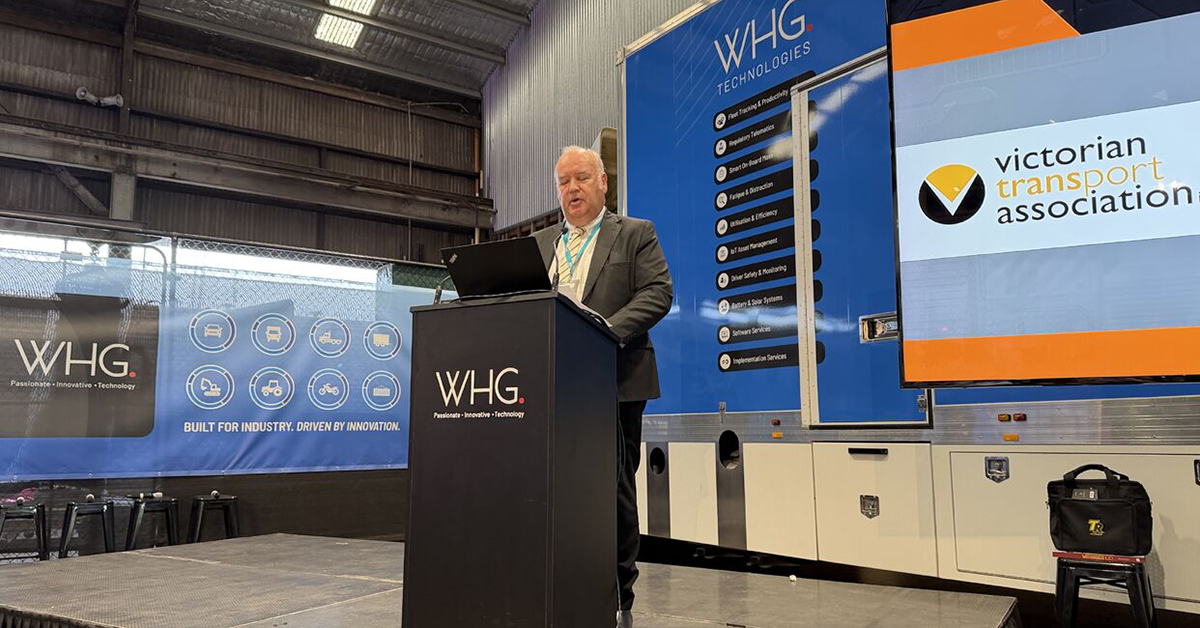
Speaking at TechDrive 2026, VTA chief executive Peter Anderson spoke of the challenges facing the transport sector.
"Technology is a powerful enabler, but it cannot solve every challenge facing the freight industry," Mr Anderson said.
"As freight demand continues to grow, Australia must ensure that our infrastructure, workforce and regulatory settings keep pace."
Mr Anderson said freight operators were facing increasing pressure from rising demand, ageing infrastructure, driver shortages, regulatory complexity and the challenge of transitioning to lower-emission transport solutions.
He said poor road conditions, congestion and inefficient freight connections were increasing costs, reducing reliability and creating supply chain safety risks.
Mr Anderson mentioned the recent abolition of heavy vehicle permit charges in Victoria as an example of practical reform.
"Productivity gains don't always come from major capital projects," he said. "Sometimes they come from removing unnecessary barriers and allowing businesses to invest in their fleets, technology, safety and workforce."

Mr Anderson said the ongoing shortage of heavy vehicle drivers remained one of the most significant challenges.
He called for stronger industry-government collaboration to attract new entrants.
"The transport industry offers sophisticated and rewarding career opportunities, but we need to do more to showcase those opportunities and strengthen workforce participation across the sector," he said.
Mr Anderson also highlighted concerns about sham contracting arrangements within parts of the transport sector.
"The industry is not asking for new rules. We are asking for existing laws to be enforced," he said. "Businesses that invest in their people, safety systems and compliance should not be placed at a competitive disadvantage."
He said the VTA reaffirmed its support for “a practical, evidence-based approach to transport decarbonisation”.
"The industry is committed to reducing emissions, but the transition must be guided by practical experience and operational realities. Electric vehicles will play an important role, but they will be part of a broader mix of technologies that support lower-emission freight transport."