-
Posted by Allen Newton
- |
-
14 Oct, 2026
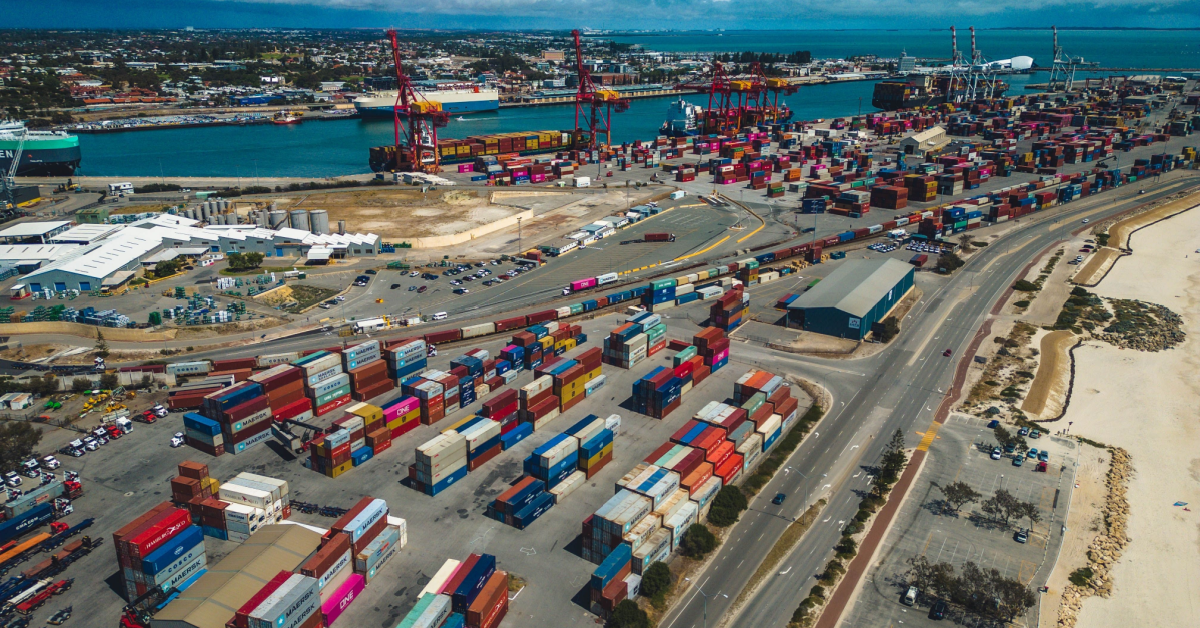
A COALITION of freight and transport bodies says Western Australia must urgently focus on improving freight efficiency through the Port of Fremantle, as new reporting and union commentary suggest the state government is preparing to slow the Westport program amid mounting pressure from the AUKUS defence build.
In a joint media release, Freight & Trade Alliance (FTA), Container Transport Alliance Australia (CTAA) and the Western Australia Transport Industry Association (WATIA) said Fremantle would remain WA’s primary container gateway for “at least the next 10 to 15 years”, regardless of whether Westport proceeded on its original timeline.
The groups said it was critical to maintain business competitiveness and manage cost‑of‑living pressures by ensuring freight through Fremantle is “as efficiently and productively as possible”, emphasising that port performance depended upon landside connections as much as shipping.
They called for continued investment in container rail efficiency and an expansion of Higher Productivity Freight Vehicle access, arguing HPFVs are “more fuel efficient, safer and productive” and would reduce truck movements around the port.
FTA, CTAA and WATIA are organising a roundtable with industry, local governments and business groups to identify practical steps to improve Fremantle’s freight performance while reducing impacts on surrounding communities.
“We recognise the challenges, but there are solutions,” the organisations said. “Industry aims to provide a united voice to government on how best to collectively shape the future of freight through the Port of Fremantle.”
The call for a renewed focus on Fremantle comes as The West Australian newspaper reports the Cook government is struggling to sequence Westport alongside the massive redevelopment of the Henderson defence precinct.
The newspaper reports the circa‑$50 billion Garden Island and Henderson works would consume labour, materials and construction capacity for much of the next decade, with one senior Labor MP telling The West: “Something has got to give and it’s not going to be the US Navy.”
According to The West, more than 6000 workers will be needed for initial Henderson works, the new docks will require three times the concrete Perth’s residential sector uses annually, and Westport’s cost has already risen from $4 billion to $7.2 billion, with some observers predicting it could exceed $12 billion.
Infrastructure Australia and Infrastructure WA have both warned of sequencing risks, with IWA noting the scale of Westport and related projects is “greater than previously attempted by WA State Government agencies".
The Maritime Union of Australia has been warning for more than a year that Westport’s proposed Outer Harbour development in Cockburn Sound conflicts directly with AUKUS submarine operations and the redevelopment of HMAS Stirling.
The union says the state government has not addressed key national‑security questions, arguing that relocating all container trade into Cockburn Sound would place one of Australia’s largest automated ports adjacent to nuclear submarine activities.

The MUA has also raised major workforce conflicts, saying WA cannot deliver Westport and AUKUS concurrently; construction sequencing risks, noting both projects require overlapping labour, concrete, steel and specialist trades; and concerns about inflated freight‑task projections, reducing any urgency to build Westport now.
It also highlighted cyber‑security risks associated with a highly automated port next to defence assets, and the need for Fremantle’s life to be extended, rather than replaced prematurely.
The union has formally called for Westport to be delayed by at least 10 years, aligning with Infrastructure WA’s advice to upgrade Fremantle instead.
MUA WA Branch Secretary Will Tracey has repeatedly argued Westport’s timing is incompatible with AUKUS.
“It simply doesn’t make sense to have Westport being built at the same time as AUKUS in the same location,” Mr Tracey said.
The union has escalated its concerns internationally, with MUA representatives briefing US lawmakers and urging Congress to mandate a formal defence risk assessment of Westport’s proximity to HMAS Stirling.
Against this backdrop, freight bodies say Fremantle’s role becomes even more important.
With Westport potentially delayed, CTAA, FTA and WATIA argue the state must prioritise: higher‑efficiency rail movements; expanded HPFV access; improved landside logistics; coordinated planning with local governments; and community impact mitigation.
They say these measures will support WA businesses and protect supply chain reliability during what is shaping as a prolonged period of infrastructure congestion and workforce competition.
The groups emphasise that Fremantle will remain the backbone of WA’s container trade for at least a decade, and possibly longer depending on Westport’s final sequencing.
The industry roundtable will bring together transport operators, freight forwarders, importers, exporters, local governments and business groups to develop a unified position for government.
Organisers say the goal is to ensure Fremantle remains efficient, resilient and competitive while the state navigates the unprecedented infrastructure demands of the AUKUS defence program and the evolving Westport timeline.
Westport has been approached for comment.