
-
Posted by Dale Crisp
- |
-
23 July, 2026
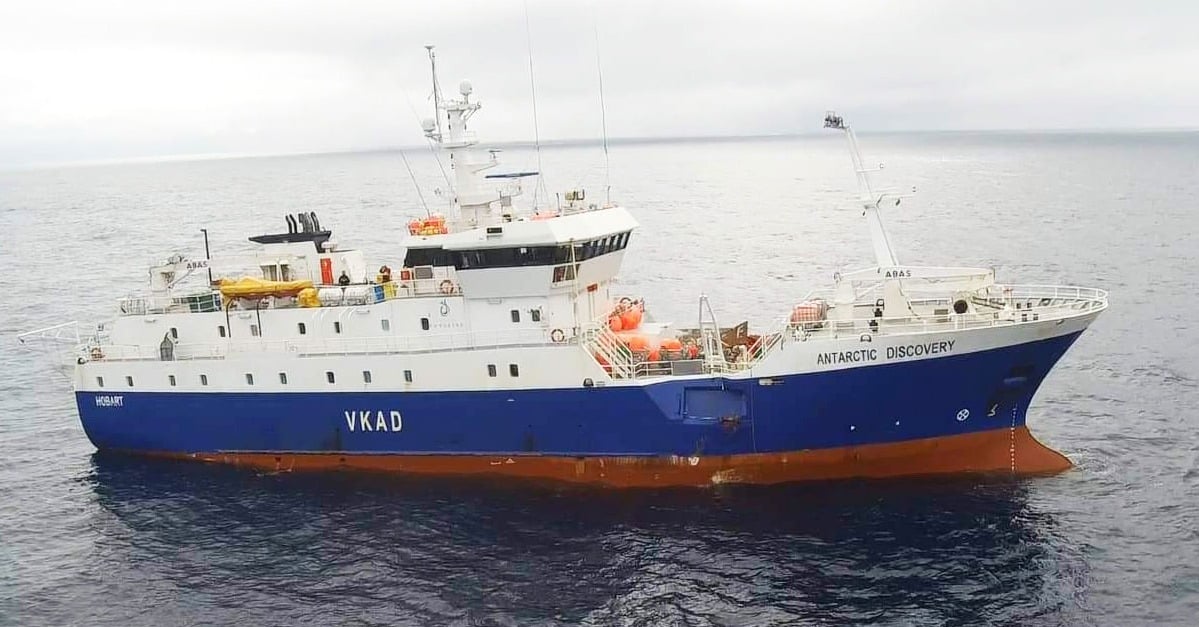
CREWMEMBERS of an Australian-owned longline trawler were poisoned by hydrogen sulphide gas while working in an enclosed space during the vessel’s routine dry-docking in Lyttelton, New Zealand in February last year.
The NZ Transport Accident Investigation Commission has completed its report into the incident, finding that routine pipe maintenance became a serious emergency when workers were incapacitated by the gas released from water contaminated with fish offal.
In January 2025, the fishing vessel Antarctic Discovery, owned and operated by Hobart-based Australian Longline Pty Ltd, was at sea when a valve for discharging fish waste from the forepeak tank into the sea became blocked. Its chief engineer installed a temporary hose to pump to another tank.
The crew finished that pumping work but left the first section of hose connected to the offal pump with its open end tied near the top of a ladder that gave access down to the vessel’s bow thruster machinery space, just aft of the forepeak tank.
In February 2025, the vessel was in dry dock for maintenance. Two apprentice fitters descended the ladder to the bow thruster machinery space to work on pipe components.
The switch panel for the offal pump was immediately adjacent. It is about as likely as not that one of the fitters accidentally pressed the pump’s unlabelled start button.
Water contaminated with rotting fish offal rained down on them from the hose’s open end at the top of the ladder. Foul-smelling toxic hydrogen sulphide gas (a known by-product of decaying fish) began building up.
The fitters climbed the ladder through the falling contaminated water and escaped to the open air, TAIC reports, raising the alarm. The vessel superintendent investigated the scene and was briefly overcome by gas.

The chief engineer and second engineer came from another direction and collapsed. Crew using breathing apparatus rescued the chief engineer.
Four affected workers were taken to hospital and later recovered.
TAIC identified four systemic safety issues with lessons, it says, well beyond the fishing industry. It demonstrates why organisations should review:
- Make machinery safe before work begins: isolation procedures must protect workers not just from hazards latent in the equipment being worked on, but also from adjacent systems.
- Enclosed/confined spaces: Spaces with hazards or characteristics typical of enclosed or confined spaces must be identified and managed as such, regardless of what they’re called.
- Multiple organisations, same worksite: When organisations overlap at the same worksite, safety depends active coordination of work and responsibilities.
- Safety-critical modifications: Repairs and modifications receive appropriate approval, documentation and oversight, including where Class approval is required.
TAIC reports that Australian Longline has already taken extensive safety action, including strengthening isolation procedures, contractor induction, toolbox meetings, enclosed-space registers and the offal pumping system.
“TAIC welcomes these actions; they reduce the likelihood of a similar accident,” the Commission concluded.
Australian Longline says it is proud to be the sole Australian operator fishing for both Patagonian and Antarctic Toothfish.
“Our vessels work to the sustainability standards set by CCAMLR and AFMA that are monitored by the Marine Stewardship Council helping protect the fishery and assure its future," the company stated.