
DHL warehouse aimed at innovation and sustainability benefits
-
Posted by David Sexton
- |
-
18 March, 2026
A NEW warehouse facility in western Sydney reflects DHL Supply Chain’s focus on innovation and sustainability, the company says.
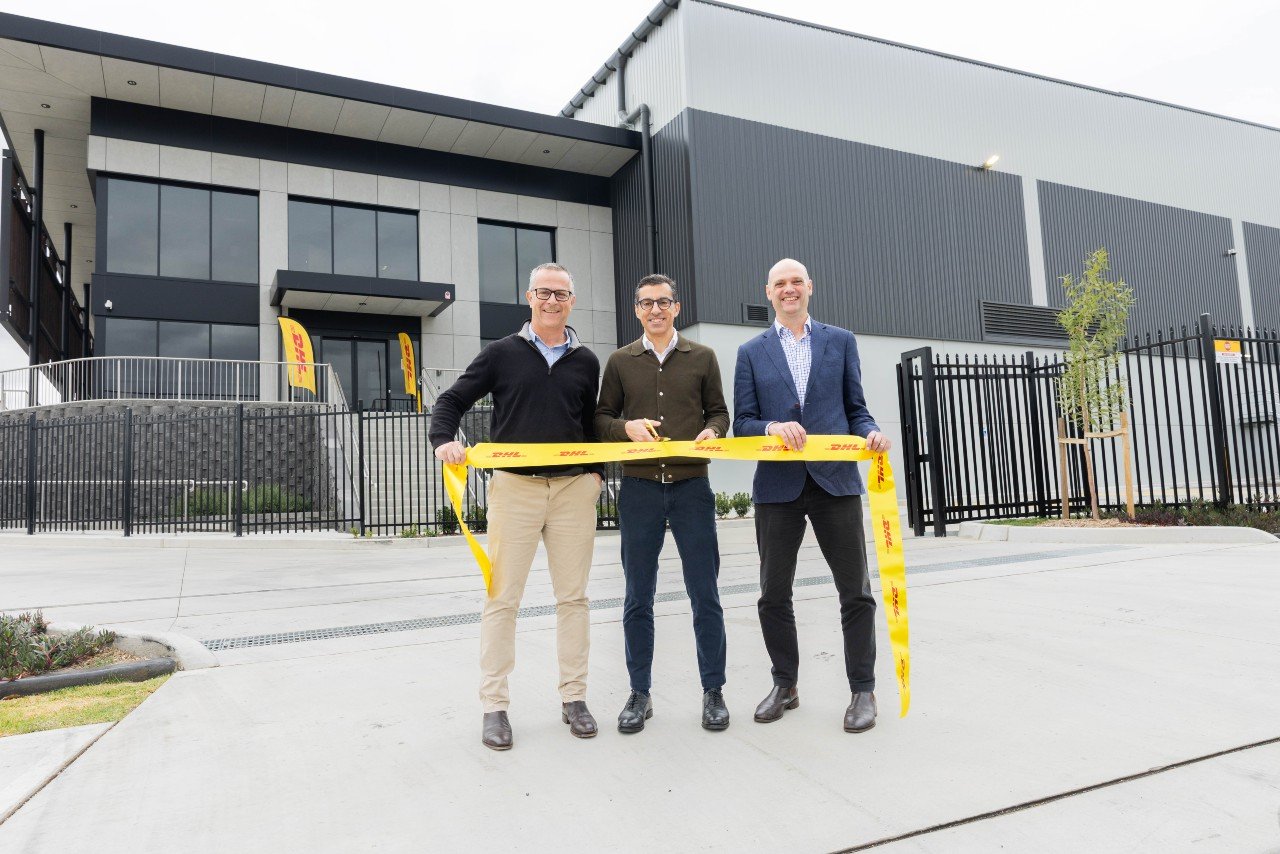
DHL has officially opened its newest warehouse in Erskine Park, marking what it says is “a significant milestone” in supporting the evolving logistics requirements of Australia’s technology and automotive sectors.
The 21,078 square metre warehouse is said to enhance DHL’s national distribution capabilities.
The facility offers ambient storage with selective racking and block stack areas, eight recessed docks, six on-grade doors, and a mezzanine for rework and value-added services.
DHL Supply Chain Australia chief executive Steve Thompsett said the new Erskine Park facility reflected their ongoing investment in “innovation, sustainability, and infrastructure”.
“It’s purpose-built to support reverse-logistics operations and deliver high-performance logistics solutions for our customers as well as a great site for our workforce,” Mr Thompsett said.
“It unlocks new opportunities for growth, agility, and customer service excellence.”
The facility includes energy and resource efficient features such as 256 kWp rooftop solar panels that reduce grid electricity reliance, rainwater harvesting for non-potable uses, LED lighting with efficient controls to reduce electricity consumption, and EV charging.
DHL Supply Chain Asia-Pacific chief executive Javier Bilbao attended the site opening and described Australia as “a key market for us”.
“We remain committed to supporting the country’s growth, including its technology and automotive sectors,” Mr Bilbao said, noting their Strategy 2030 included investing to strengthen supply chain resiliency and flexibility by expanding warehouse capacity.
The Erskine Park facility is a multi-user site serving more than five customers, including key players in the consumer electronics, white goods, and automotive space.
It supports both business-to-business (B2B) and business-to-customer (B2C) operations with advanced reverse logistics services, including supply chain circularity with returns management, returns shipping, and technical services such as consumer electronics inspection and spare parts returns.