
-
Posted by David Sexton
- |
-
17 Nov, 2026
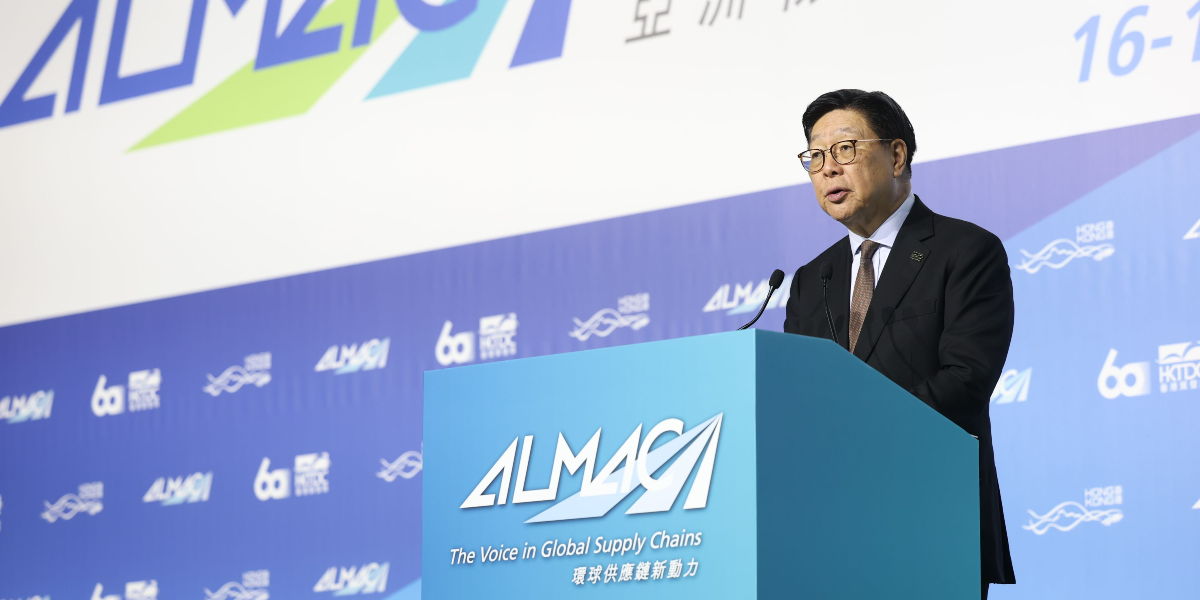
GLOBAL supply chains are changing and economic fragmentation is also reshaping international trade, the 16th Asian Logistics, Maritime and Aviation Conference (ALMAC).
The conference was held in Hong Kong this week and was organised by the Hong Kong Special Administrative Region (HKSAR) government and the Hong Kong Trade Development Council,
In his welcoming addressing, HKTDC chair Frederick Ma reflected upon a changing environment.
“Global supply chains are undergoing profound change. Geopolitical tensions and economic fragmentation are reshaping established trade patterns,” Professor Ma said.
“At the same time, digitalisation, new technologies and the transition to a greener economy are transforming how goods and services move around the world.”
Under the theme Driving Inclusive Growth through Innovation and Sustainability, the conference aims to align with the National 15th Five-Year Plan, the HKSAR government’s first Five-Year Plan for Hong Kong and the latest policy address to enhance Hong Kong’s competitiveness and support sustainable economic development, while reinforcing the city’s position as an international trading and maritime centre and an aviation hub.

As an annual event for the industry, the two-day conference brings together more than 80 speakers, including government officials and global industry leaders, to explore topics inclusive of the transformation of global supply chains, opportunities in ASEAN and along the Silk Road, high-value-added supply chain services and green energy, helping businesses to seize global opportunities and explore emerging markets.
Professor Ma said AI and electronics had become an important driver of export growth, while the rising share of air freight by value reflected a shift towards high-value, technology-intensive trade.
This year’s conference features an enhanced international presence.
Jennifer Nordquist, deputy director-general of the World Trade Organization, delivered a keynote address entitled Global Spectrum: Transforming Supply Chains for Inclusive Prosperity, exploring how governments and businesses could strengthen supply chains.
“For policymakers, the priority must be to maintain fair trade policies, invest in infrastructure, simplify border procedures, and strengthen international cooperation.
“For businesses, it means diversifying suppliers to de-risk over-dependence on just a few markets, embracing digital technologies, and building partnerships across networks in new markets,” Ms Nordquist said.
On the first day, the session The Acceleration for Growth: Collaboration, Innovation and Sustainability was moderated by Kelvin Leung, international vice-president (East Asia) and past president (Hong Kong) of the Chartered Institute of Logistics and Transport.