Port of Brisbane unveils Vision 2060
-
Posted by David Sexton
- |
-
05 Jun, 2025
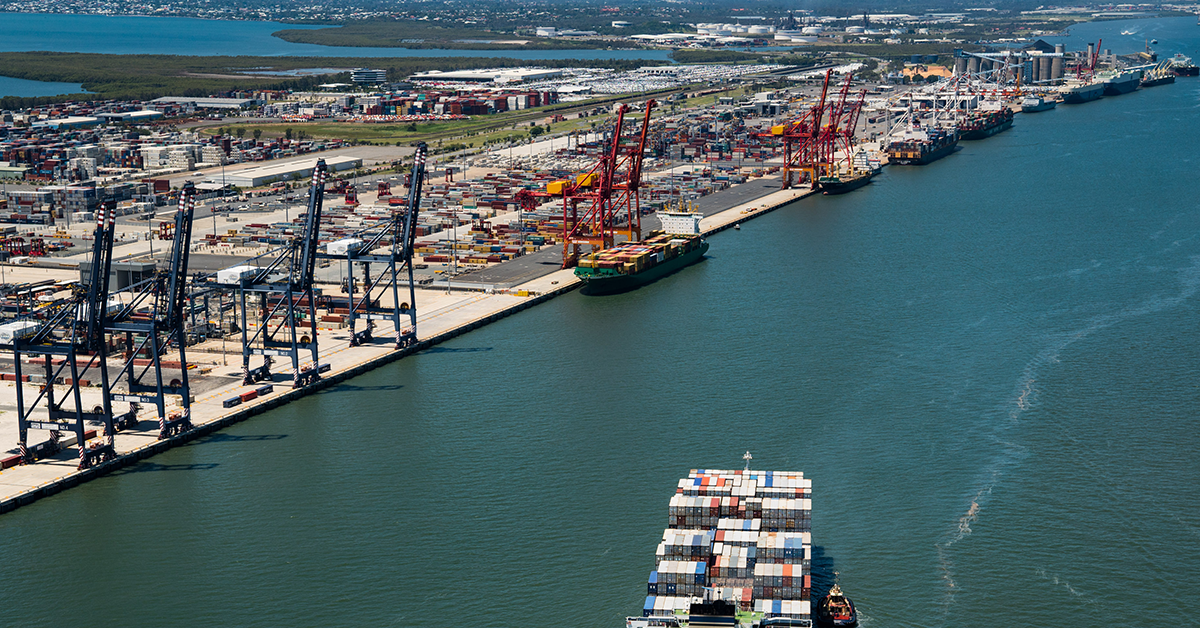
STRENGTHENING the Queensland economy, future-proofing trade and supporting the transition to a more sustainable and efficient port are key aims of Vision 2060, a plan or roadmap for the Port of Brisbane.
The roadmap was announced this week with three key themes or ‘horizons’.
These are listed as:
- Seamless connectivity – developing an integrated, intelligent logistics ecosystem that unlocks new efficiencies, supports global supply chains, and connects Queensland businesses to the world.
- Clean energy – scaling and integrating renewables with solar, wind and hydrogen solutions that supports a port-wide net zero emissions future and positions the Port as a clean energy leader.
- Designed for future generations – prioritising resilient infrastructure, a skilled workforce, environmental conservation and sustainable economic growth.
Chief executive Neil Stephens said Vision 2060 was about anticipating and leading change.
“The way we trade and move goods is evolving, and Vision 2060 positions the Port of Brisbane to be at the forefront of that change,” Mr Stephens said.
According to Port of Brisbane, the roadmap was developed in collaboration with industry, government and community partners in the context of a growing Queensland population with projected increases in everything from container trade to cruise shipping.
There is also the potential for significant increased energy demand as the world decarbonises.
This “significant growth” is expected to bring both challenges and opportunities.
“This is an opportunity to create a port that is cleaner, smarter and more connected, that will drive Queensland’s continued prosperity for generations to come,” Mr Stephens said.
“Vision 2060 is an invitation to all our stakeholders – a call to innovate, collaborate and shape a globally competitive port that continues to deliver long-term value.”
Modelling from Deloitte Access Economics suggest by 2060, the port and its supply chain could contribute $25 billion in economic value to Queensland.
Mr Stephens said sustainability was central to their plans.
“Our vision goes beyond business as usual. Ultimately, this is about ensuring Brisbane’s port of the future is driven by seamless connectivity, powered by clean energy and designed for future generations,” he said.
“The port will continue to lead and create shared value, working closely with local communities to create jobs and develop partnerships that have a positive impact.”
An enhanced Brisbane International Cruise Terminal is also expected to play a pivotal role in driving Queensland’s cruise industry into the future.
“We know the demand is there for more cruising and we believe additional capacity at the BICT will help Brisbane become the national capital for cruising in the decades to come,” Mr Stephens said.
Vision 2060 identifies several initiatives designed to deliver a world-class supply chain for Southeast Queensland, including:
- Dedicated freight road and rail connections
- Integrated regional logistics hubs
- Autonomous zero-emission road corridors
- Channel capacity upgrades
- Cruise terminal expansion
- Electrified port operations
- Renewable energy generation
- Low-carbon fuel infrastructure
- AI-enabled cargo coordination
- Workforce development and innovation precinct