
Tariff fears stoke freight congestion
-
Posted by David Sexton
- |
-
17 Jul, 2026
US IMPORTERS shifting cargo ahead of possible further tariffs has been highlighted as a cause of greater congestion and vessel utilisation across global freight networks.
Logistics giant DHL has just released its latest report Logistics of Things report.
The report highlighted that the early freight peak was here to stay, with demand outpacing capacity across global air and ocean freight networks as shippers brought cargo forward amid tariff uncertainty.
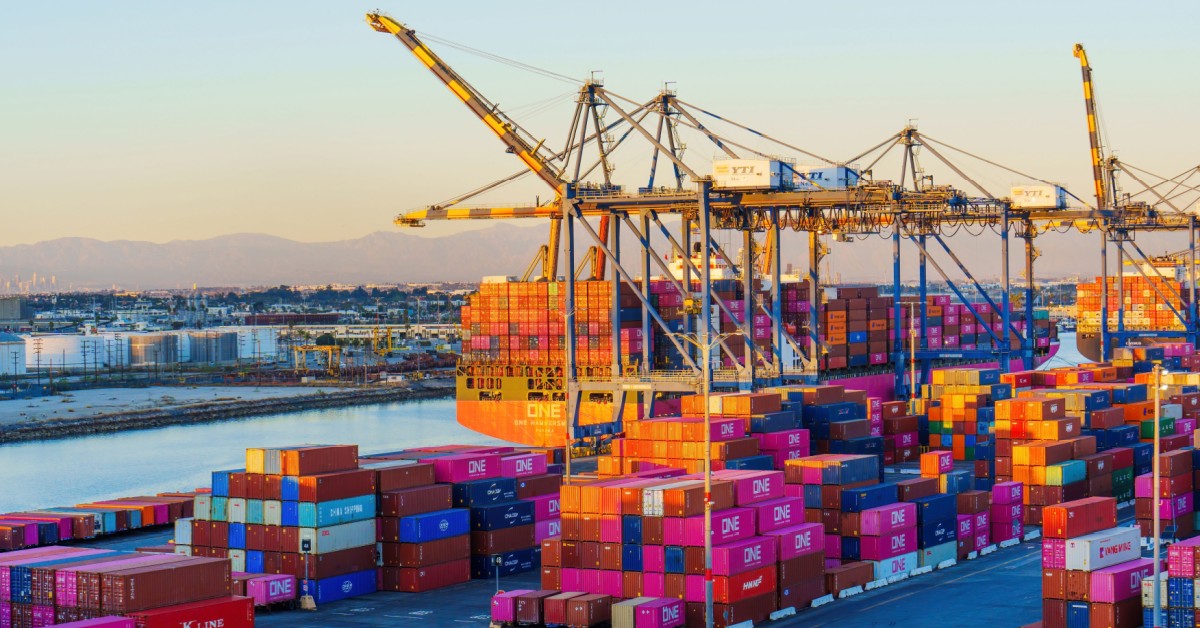
Across major export hubs, vessel utilisation was said to be climbing, congestion is worsening and capacity becoming harder to secure.
“Traditionally, freight demand builds gradually in the second half of the year as retailers replenish inventories ahead of major shopping events and manufacturers prepare for year-end demand,” said Niki Frank, chief executive of DHL Global Forwarding Asia Pacific.
“This year, those familiar pressures are emerging earlier — and for reasons that extend far beyond traditional seasonal cycles.
"An intense and prolonged peak season is already underway due to the convergence of several demand drivers”.
The upcoming 24 July expiration of the U.S. 10 percent Section 122 tariff will have introduced uncertainty into procurement and sourcing decisions.
According to DHL some shippers were reported to be moving cargo earlier, resulting in additional demand layered on top of already strong freight flows.
Retail inventory replenishment is also a major factor, as businesses are positioning goods ahead of holiday sales and year-end demand cycles.
“Individually, each of these developments would be manageable,” said Bjoern Schoon, senior vice president, Ocean Freight, DHL Global Forwarding Asia Pacific.
“Collectively, they are creating a market where demand is growing faster than what capacity can comfortably absorb.”
One of the largest changes affecting logistics networks was the rise of new energy supply chains.
China’s exports of solar products, batteries, and electric vehicles reached US$21.9 billion in March 2026, up 70% year-on-year.
Solar exports increased 84%, lithium-ion batteries rose 69%, and EV exports climbed 65% during the same timeframe.
Unlike traditional retail cargo, new energy shipments are said to move according to project timelines and investment cycles.
According to DHL, when combined with holiday inventory builds and manufacturing exports, freight rates had become a signal of compression across the network.
The impact was increasingly visible at ports, with more than 3.7m TEU tied up globally in late June and congestion returning to post-pandemic levels.
Effective capacity consequently, according to DHL, was to remain constrained despite expected global container fleet growth of 4% in 2026.
The air freight market was facing a “similar dynamic”, with airlines concentrating capacity on key corridors while aircraft delivery delays and a global order backlog limited supply growth.
“When available capacity is concentrated on higher-demand corridors, price increases become less of a surprise and more of a reflection of how tight networks are being used,” said Fabio Weiss, senior vice president, air freight, DHL Global Forwarding Asia Pacific.