-
Posted by Allen Newton
- |
-
20 Mar, 2026
PERTH’S Swan River is set to become a showcase for two new electric vessel builders.
Western Australian shipbuilder Echo Marine has been awarded a contract for the delivery of the state’s first fully electric passenger ferries and New Zealand marine technology company Vessev will introduce electric hydrofoiling passenger vessels.
Echol Marine’s project, in partnership with Lloyd’s Register (LR), is a part of the Perth Transport Authority’s (PTA) Metronet Swan River Ferry Service Expansion program.
It will see the design and construction of five new battery-electric ferries for operation on Perth’s Swan River.
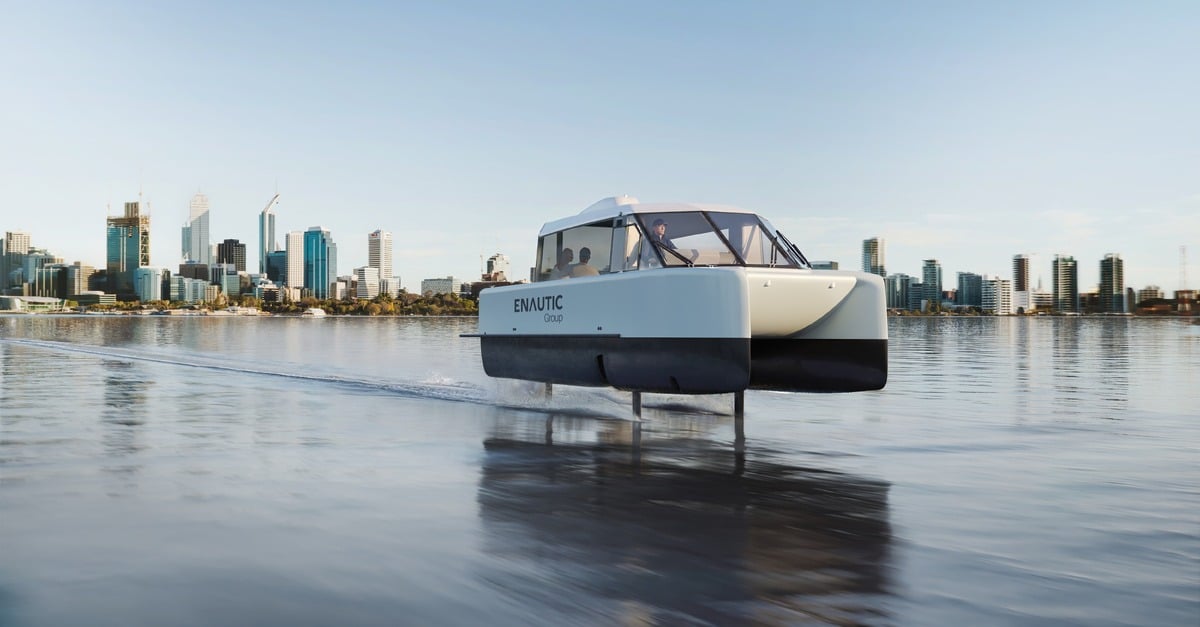
The Vessev project will see its electric hydrofoiling vessels introduced by WA’s Enautic Group.
Several Vessev VS–9 vessels have been reserved and will operate on Perth’s Swan River, in what Vessev said was one of Australia’s most underutilised transport corridors.
The VS–9s will initially operate through Enautic’s AquaFlights brand which offers hydrofoiling experiences including e-foil scooter and Waveflyer boat hire.
“The focus for the VS–9s will be on premium tourism experiences including wine cruises, twilight sailings and private charters, with plans to introduce commuter routes in the future,” Vessev said in a media release.
“Where other large commercial ferries are typically restricted to speeds of 5–8 knots along much of the river, the VS–9 can cruise at 25 knots while producing virtually no wake. This enables dramatically faster travel times and opens the door to a new model of water-based commuter and tourism transport.”
The project is being led by aerospace engineer and entrepreneur Josh Portlock, founder and executive chairman of the Enautic Group. Mr Portlock said electric hydrofoiling represented a major opportunity to rethink how cities use their waterways.
“Hydrofoiling is what makes electric water transport genuinely viable. It delivers the speed, range and sustainability you need without compromise,” Mr Portlock said.
“The VS–9 is exactly the type of vessel that makes this model possible. Starting with premium tourism allows people to experience the technology first-hand while laying the groundwork for a future where electric hydrofoiling becomes one of the fastest and most sustainable ways to move around the city.”
Its media release said the VS–9, Vessev’s flagship passenger vessel, is an 8.8 metre electric hydrofoiling catamaran with carbon fiber foils that deliver a smooth, quiet, low-wake ride. With a cruise speed of 25 knots and range of up to 50 nautical miles, the VS–9 consumes up to 90% less energy than a traditional vessel of a similar size.
The first vessels are expected to be delivered in early 2027. Vessev is working collaboratively with applicable classification societies and local regulatory bodies to ensure compliance with all local requirements for this innovative vessel type, the release said.
Echo Marine has also opted for an electric solution with LR providing classification and technical assurance services throughout the design and build, supporting what it says is the safe introduction of a new generation of zero-emission vessels.
LR and Echo are collaborating closely to bring what it says is first-of-its-kind electric propulsion technology into public transport service in Australia.
“The program sets a new benchmark for zero-emission ferry design and construction in the region,” a Lloyds media release said.
“As one of the first fully electric ferry fleets in Australia, the project presents unique technical and regulatory considerations, including high-voltage battery integration, evolving standards and the safe deployment of new propulsion systems in a public transport environment.
“LR’s early involvement helped define a clear approval pathway, ensuring that technical decisions were validated from the outset and aligned with emerging requirements for electric vessels."
Lloyds has also shared international reference cases and practical insights to benchmark the design against proven solutions.
“This has provided additional confidence in critical areas such as battery safety systems, system integration and operational performance," Lloyds stated.
Project manager for Echo Marine, Anthony Livanos, said collaboration with Lloyd’s Register has been instrumental in reducing uncertainty around regulatory interpretation and safeguarding passenger safety, vessel efficiency, and delivery timelines.
“As governments across Australia and New Zealand accelerate decarbonisation efforts, this project showcases how close cooperation between owner, builder and class can successfully bring new technology into service,” Mr Livanos said.