Brisbane goes batty for Whyte Island rehabilitation
-
Posted by Ken Hickson
- |
-
30 Sep, 2025
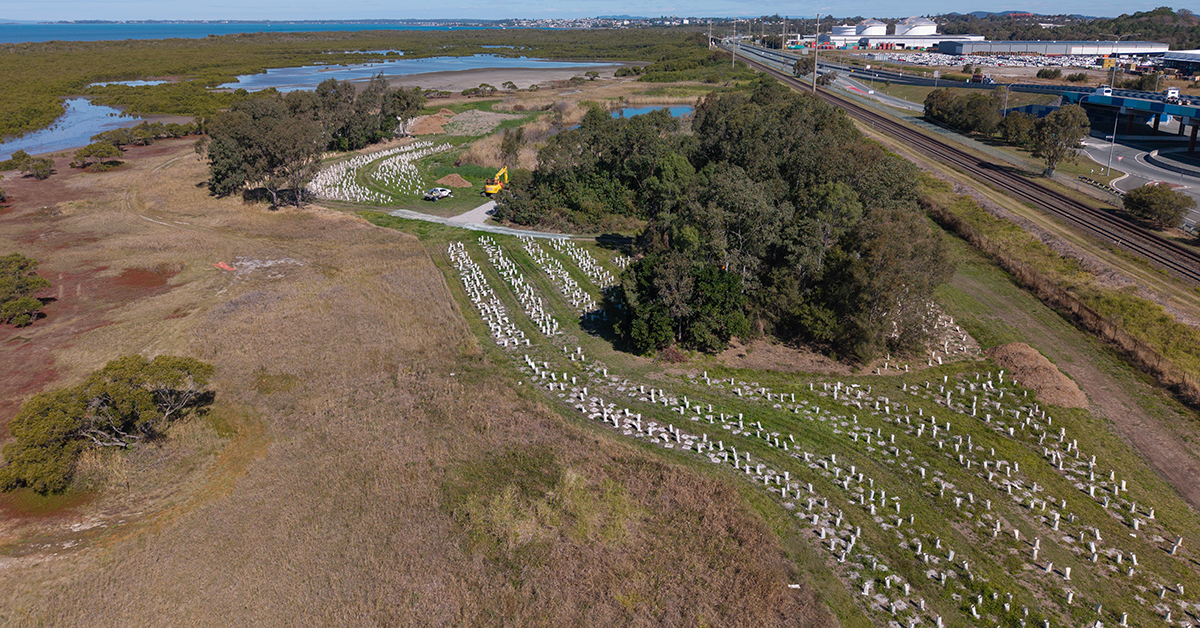
MICRO bat boxes and the planting of thousands of native plants are among environmental restoration measures occurring at Whyte Island, Port of Brisbane.
The restoration work is occurring under the auspices of the port and the Bulimba Creek Catchment Coordinating Committee (B4C), with a focus on protecting critical coastal habitats.
Whyte Island is home to saltmarsh, mangrove and forest ecosystems, adjacent to a large claypan that serves as a vital roosting and feeding ground for migratory shorebirds.
Port of Brisbane chief executive Neil Stephens said the restoration works were already enhancing ecological integrity since beginning last year.
“Since commencing the project, we’ve removed invasive species and weeds, installed 10 micro bat boxes, installed fencing to stop unauthorised access and planted more than 6,200 native plants to accelerate regeneration,” Mr Stephens said.
He said the port also had seen significant rehabilitation of sensitive estuarine wetland and saltmarsh and a 20% to 40% increase in recent shorebird counts compared with previous years.
More than seven hectares have been rehabilitated to date, in keeping with the Queensland Herbarium BioCondition assessment framework.
“We’re also looking at future opportunities to open the area for low-impact access by environmental and educational groups,” Mr Stephens said.
“It’s a unique natural asset, and we’re committed to sharing it in a way that respects and preserves its ecological significance.”
The rehabilitation plan has been developed and delivered in collaboration with B4C, First Nations contractor Tuff Yards and environmental consultants BMT.
PBPL launched Vision 2060 in June this year, an ambitious roadmap aimed at strengthening Queensland’s economic position, future-proofing trade and support the transition to a more sustainable and efficient port.
It emphasised the importance of climate-resilient infrastructure and environmental stewardship to futureproof one of Australia’s most important trade gateways.
The port’s environmental management program was also covered in DCN’s report Australian ports and protecting mangrove reserves drawing attention to the Whyte Island rehabilitation project along with several rehabilitation projects at sites around the port during the last 10 years.